


CMETS Electric Manufacturing: Powering the Future with Intelligent Energy Storage
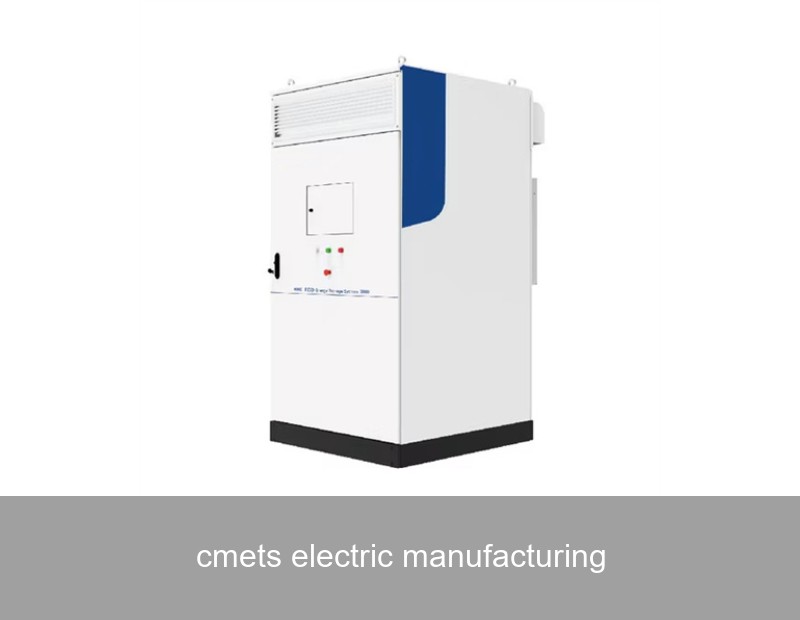
If you're in the electric manufacturing sector, you've felt the pressure. Rising energy costs, grid instability, and ambitious sustainability goals are not just talking points—they're real challenges impacting your bottom line and operational resilience. This is where the concept of CMETS (Commercial, Manufacturing, Energy, Technology, Systems) for electric manufacturing becomes critical. It's a holistic approach to managing energy as a strategic asset, and at its core lies one transformative technology: advanced battery energy storage systems (BESS). Let's explore how forward-thinking manufacturers are turning energy from a cost center into a competitive advantage.
Table of Contents
The Phenomenon: The Manufacturing Energy Squeeze
a production line humming at full capacity, robotic arms welding with precision, and ovens curing coatings at exact temperatures. Suddenly, a brief grid dip—lasting less than a second—causes sensitive machinery to fault. The line stops. You're facing hours of downtime, scrapped materials, and missed deadlines. This isn't a rare nightmare; it's a growing reality for electric manufacturing plants across Europe and the U.S. The dual forces of electrification (think electric vehicle component lines or heat pump assembly) and increasingly intermittent renewable grid power are exposing manufacturers to unprecedented volatility.
The traditional response—drawing more power from the grid—is now a costly and unreliable strategy. This is the energy squeeze: the need for more clean, reliable, and affordable power, with fewer options from the aging grid infrastructure. It demands a new playbook.
The Data: Why Storage is a Manufacturing Imperative
Let's move beyond anecdotes and look at the numbers. The business case for integrating energy storage into CMETS electric manufacturing facilities is compelling:
- Cost Savings: Manufacturers can avoid peak demand charges, which often constitute 30-70% of a commercial electricity bill. By discharging stored energy during peak periods, facilities can flatten their demand profile.
- Reliability: According to a U.S. Department of Energy report, power outages cost the U.S. economy billions annually, with manufacturing being one of the hardest-hit sectors. A seamless backup power source is critical.
- Sustainability: Pairing on-site solar with storage allows a plant to maximize its consumption of self-generated renewable energy, often increasing the solar utilization rate from 30-40% to over 80%, drastically reducing Scope 2 emissions.
| Challenge | Impact | Storage-Enabled Solution |
|---|---|---|
| Peak Demand Charges | High, unpredictable utility costs | Peak shaving to reduce maximum draw from grid |
| Grid Outages/Dips | Production downtime, product loss | Uninterruptible Power Supply (UPS) functionality |
| Intermittent Solar/Wind | Underutilized renewable assets | Energy time-shifting to store excess generation |

This data paints a clear picture: energy storage is no longer a luxury or a mere sustainability project. It's a core operational technology for resilient and profitable manufacturing.
Case Study: Stahlwerke Bremen GmbH - Cutting Costs and Carbon
Let's examine a real-world application. A mid-sized automotive parts manufacturer in Bremen, Germany, faced a common triad of issues: steep Strompreise (electricity prices), a desire to expand their rooftop solar array, and strict internal decarbonization targets. Their production involves energy-intensive processes like electrolysis and precision milling.
The Project: In 2023, they deployed a 2.5 MW / 5 MWh containerized battery energy storage system on their facility grounds. The system was specifically programmed for CMETS electric manufacturing optimization, with three primary modes:
- Arbitrage & Peak Shaving: The system automatically charges during low-cost, high-renewable grid periods and discharges during expensive peak hours.
- Solar Self-Consumption Maximization: It stores excess solar power generated at midday for use in the evening and night shifts.
- Backup Power: For critical quality control labs and assembly lines.
The Results (18-month period):
- €180,000+ saved on annual energy costs through demand charge management and arbitrage.
- Solar self-consumption rate increased from 35% to 89%.
- Provided full backup power for critical loads during two grid disturbances, preventing an estimated €500,000 in potential production losses.
- Reduced their facility's carbon footprint by an estimated 420 metric tons of CO2e annually.
This case demonstrates the tangible, multi-faceted ROI that a strategic CMETS approach delivers.
The Solution: Building Your Intelligent CMETS Framework
So, how do you translate this into action? A successful CMETS electric manufacturing strategy is built on layers of intelligence.
Layer 1: The Hardware Core - The Battery System
Not all batteries are created equal for industrial use. You need high-cycle life, safety (especially with lithium-ion chemistries), and the ability to handle high power draws. Lithium Iron Phosphate (LFP) chemistry has become the industry standard for its stability and longevity.
Layer 2: The Digital Brain - Energy Management System (EMS)
The hardware is just a vessel. The real magic is in the software. An advanced EMS uses AI and real-time data (from the grid, your production schedule, and weather forecasts) to make millisecond decisions on when to charge, discharge, or hold. It aligns energy assets with production goals.
Layer 3: The Integration Layer
The system must seamlessly integrate with your existing infrastructure: your solar inverters, building management system, and even production planning software. This creates a true, responsive energy technology system.

How Highjoule Powers Smart CMETS for Manufacturers
This is where Highjoule's expertise becomes pivotal. Since 2005, we've specialized in designing and deploying intelligent storage solutions for complex commercial and industrial applications. For the electric manufacturing sector, we don't just sell batteries; we provide a strategic energy resilience partnership.
Our H-Series Industrial BESS is engineered for the rigors of manufacturing environments. With its modular, containerized design, it can be scaled from 500 kWh to multi-megawatt installations. Its NEMA 3R rating ensures protection against dust and moisture, crucial for plant settings. Most importantly, it's governed by our Adaptive EMS Platform, which can be customized for your specific utility rate structure, production cycles, and sustainability targets.
For a large electronics manufacturer in Texas, Highjoule implemented a system that not only performs peak shaving but also participates in the ERCOT grid's frequency regulation market—creating a new revenue stream from their energy asset. This level of sophisticated, value-stacking is at the heart of the modern CMETS philosophy.
Our services extend beyond installation. We offer comprehensive Energy Resilience Audits, long-term performance monitoring, and O&M support, ensuring your system delivers value for decades. Think of us as an extension of your facilities team, focused on making your energy infrastructure as lean, reliable, and innovative as your production line.
Key Highjoule Differentiators for Manufacturing:
- Industrial-Grade Durability: Systems built for 24/7 operation and harsh conditions.
- Advanced Grid Services Software: Enables potential revenue generation in certain markets.
- Turnkey Integration: Seamless connection with solar, generators, and critical loads.
- Global Support Network: With teams in Europe and North America, we provide localized service and expertise.
What's the First Step to Unlocking Your Plant's Energy Potential?
The journey toward a resilient, cost-effective, and sustainable CMETS electric manufacturing operation begins with a question. Have you mapped your facility's energy consumption against time-of-use rates and production schedules? Do you know the true cost of a 15-minute power interruption on your most profitable line? The data you already hold is the key to defining your storage strategy.
We invite you to consider: If you could eliminate your top 5 highest demand charges from last year, what would you reinvest those savings into? New equipment? R&D? Workforce development? The opportunity is tangible, and the technology is proven and ready.
 Inquiry
 Online Chat