


Understanding and Reducing Cold Storage Machinery Cost: A Smart Energy Guide
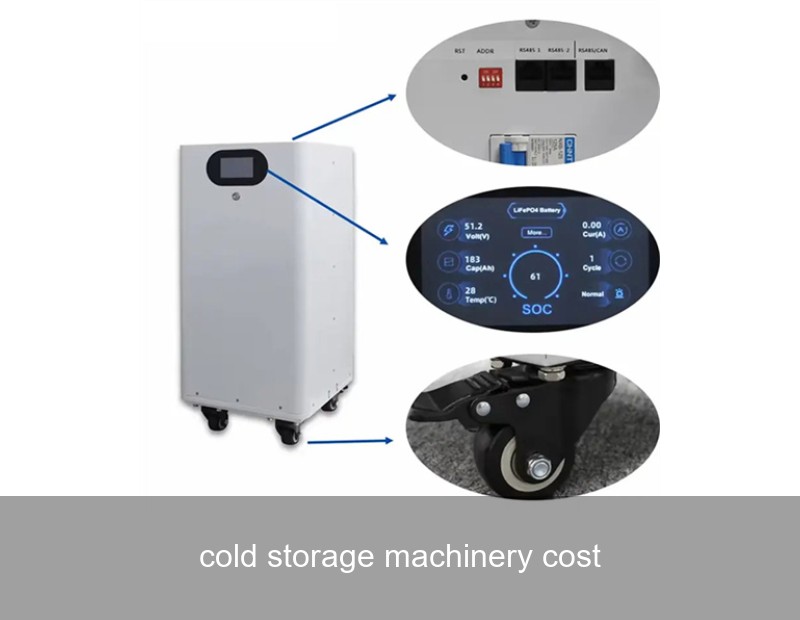
If you operate in cold storage, you know the chilling reality: your refrigeration machinery is likely the single largest line item on your energy bill. The cold storage machinery cost isn't just the initial capital outlay; it's a relentless, energy-hungry operational expense that can freeze your profit margins. But what if there was a way to turn down the heat on these costs? This article explores the true drivers behind these expenses and how modern, intelligent energy storage is providing a sustainable solution for facilities across Europe and the US.
Table of Contents
- The Cost Iceberg: More Than Just Equipment
- The Data Behind the Energy Hunger
- Case Study: A German Logistics Firm's Thawing Profits
- The Solution: Stabilizing Power with Intelligent Battery Storage
- How Highjoule's Energy Storage Systems Tackle the Cold
- Beyond Savings: Resilience and Sustainability
- Is Your Facility Ready for a Cost-Thaw?
The Cost Iceberg: More Than Just Equipment
When business owners think of cold storage machinery cost, compressors, condensers, and evaporators come to mind. This is the visible tip of the iceberg. The submerged, massive part is the ongoing operational cost, dominated by electricity. Refrigeration systems run 24/7, with compressors cycling on and off, creating highly variable and often peak-demand loads that utilities charge a premium for. Furthermore, power quality issues like voltage sags can strain sensitive compressor motors, leading to premature wear and maintenance—another hidden cost layer.

This volatile energy consumption pattern doesn't just result in high bills; it also places your facility at the mercy of time-of-use rates and demand charges. The phenomenon is universal, from a California produce warehouse to a German pharmaceutical storage hub.
The Data Behind the Energy Hunger
Let's look at the numbers. According to the U.S. Department of Energy, the food and beverage sector—where cold storage is critical—accounts for about 10% of total U.S. manufacturing energy use. Refrigeration can consume 60-70% of a cold storage facility's total electricity. Demand charges, which are based on the highest 15-30 minute power draw in a billing cycle, can constitute up to 50% of a commercial electricity bill in many U.S. states and European markets.
This creates a financial double-whammy: high overall consumption (kWh) plus punitive peak demand (kW) charges. The traditional approach has been to upgrade to more efficient compressors or improve insulation. While vital, these measures often don't address the core issue of when and how that power is drawn from the grid.
Case Study: A German Logistics Firm's Thawing Profits
Consider the real-world example of "KühlLog GmbH" (a pseudonym), a mid-sized cold storage logistics provider in Bavaria. Facing annual electricity costs soaring above €280,000, with nearly €95,000 attributed to demand charges, they needed a solution that would work with their existing cold storage machinery.
The Challenge: Their facility's load would spike dramatically during the 7 AM operational start-up and again during afternoon compressor cycling, coinciding with peak grid rates.
The Intervention: In 2023, they deployed a 500 kW / 1,000 kWh battery energy storage system (BESS) configured for peak shaving and energy arbitrage.
The Results (12-month period):
| Metric | Before BESS | After BESS | Change |
|---|---|---|---|
| Peak Demand Draw from Grid | 850 kW | 650 kW | -23.5% |
| Monthly Demand Charges | ~€7,900 | ~€4,800 | -39% |
| Grid Energy Consumption | 1.2 GWh/year | 1.05 GWh/year | -12.5% (via time-shifting) |
| Total Annual Energy Cost Savings | €68,000 | ~24% reduction | |
The system paid for itself in under 5 years, all while protecting critical refrigeration assets from grid instability. This case illustrates that managing energy is now as important as managing temperature when controlling total cold storage machinery cost.
The Solution: Stabilizing Power with Intelligent Battery Storage
The key to unlocking these savings is decoupling your refrigeration load from the grid's volatile supply and pricing. An intelligent battery energy storage system acts as a power buffer. Think of it as a "shock absorber" for your facility's electrical system.
- Peak Shaving: The BESS discharges during your short, high-power demand periods (when compressors all kick on), capping the draw from the grid and slashing demand charges.
- Load Shifting: It charges from the grid or on-site solar during off-peak, low-cost hours (or when solar is abundant), and discharges during expensive peak hours, reducing energy (kWh) costs.
- Power Quality Management: It provides instantaneous power to smooth voltage fluctuations, protecting sensitive cold storage machinery from harmful transients.
How Highjoule's Energy Storage Systems Tackle the Cold
At Highjoule, with nearly two decades of experience since 2005, we've engineered our Industrial-Pro BESS specifically for high-demand applications like cold storage. Our systems go beyond simple battery packs.
Our integrated solution features advanced thermal management to ensure reliable performance even in your facility's low-ambient environments, and AI-driven energy management software (EMS) that learns your unique load profile—including the specific cycling patterns of your cold storage machinery. The EMS proactively schedules charge/discharge cycles to maximize savings without ever compromising your critical temperature set points. For facilities with on-site solar, our systems seamlessly integrate renewables, turning intermittent generation into a firm, reliable power source for round-the-clock cooling.
We provide end-to-end support, from initial energy analysis and financial modeling to installation, grid interconnection assistance, and ongoing performance monitoring. This holistic approach ensures that the reduction in your operational cold storage machinery cost is measurable, guaranteed, and sustainable.
Beyond Savings: Resilience and Sustainability
The benefits extend beyond the balance sheet. As noted by the International Energy Agency, the declining cost and increasing capability of battery storage are key enablers for the energy transition. For your facility, a BESS provides:
- Backup Power: Critical ride-through during short grid outages, preventing product spoilage worth millions.
- Carbon Footprint Reduction: Enabling greater use of renewables and reducing reliance on peak, often fossil-fuel-based grid power.
- Future-Proofing: Preparing your operation for increasingly complex utility rate structures and potential carbon regulations in both the EU and US.
Is Your Facility Ready for a Cost-Thaw?
The equation is clear. The total cold storage machinery cost is no longer just a maintenance and efficiency discussion; it's an energy intelligence imperative. The technology to dramatically cut these costs and increase resilience is here, proven, and financially compelling.
What would a 20-30% reduction in your annual energy spend do for your competitive edge? And how much value would you place on ensuring your refrigeration never fails during a grid disturbance?
 Inquiry
 Online Chat