


Powering Your Refrigerator with a Solar Panel: A Complete Off-Grid Guide
Have you ever wondered if you could keep your fridge running, even during a power outage or in a remote cabin, using nothing but the sun? The concept of using a solar panel for a refrigerator is not only possible but is becoming a cornerstone of modern energy resilience and efficiency. Whether you're looking to cut electricity bills, reduce your carbon footprint, or ensure essential food and medicine preservation during grid failures, pairing solar with your refrigerator is a smart move. This guide will walk you through everything you need to know, from the "why" to the "how," with real-world data and practical insights.
Why Consider a Solar Panel for Your Refrigerator?
Let's start with the "why." Refrigerators are essential appliances that run 24/7. In a typical European or American household, the refrigerator alone can account for about 13% of total home electricity use. Now, imagine that constant draw during a blackout or in an area with unreliable grid power. The consequences range from spoiled food to the loss of critical temperature-sensitive medications.
The phenomenon is clear: our dependence on constant, reliable power for preservation is absolute. The data supports the need for a backup. According to the U.S. Energy Information Administration, the average duration of a power interruption in the U.S. in 2021 was nearly 7 hours. In some European regions, extreme weather events are causing more frequent outages. The logical step for resilience and efficiency is to decouple this essential load from the grid using solar power.
Understanding Your Refrigerator's Power Requirements
The first technical step is understanding your fridge's appetite for power. You can't just buy any solar panel; you need to size your system correctly.
- Nameplate Rating: Check the label inside the fridge for volts (V), amps (A), and watts (W).
- Daily Energy Consumption: This is key. Look for the kWh/year or kWh/24h figure on the EU energy label or the US EnergyGuide sticker. A modern, energy-efficient fridge might use around 1 kWh per day. An older model could use 2-3 kWh or more.
- Starting Surge: Compressors require a brief surge of power (2-3 times the running wattage) to start. Your inverter must handle this.
For example, a fridge rated at 150 running watts with a 450-watt surge, using 1.2 kWh daily, is a good candidate for solar.
Key Components of a Solar-Powered Refrigerator System
A functional system is more than just a panel. It's an integrated ecosystem designed for reliability.
| Component | Purpose | Key Consideration |
|---|---|---|
| Solar Panel(s) | Converts sunlight into DC electricity. | You'll likely need 300-600 watts of panel capacity to account for inefficiencies and less-than-ideal sun. |
| Charge Controller | Regulates voltage/current from panels to battery, preventing overcharge. | MPPT (Maximum Power Point Tracking) types are more efficient, especially in variable weather. |
| Energy Storage (Battery) | Stores solar energy for use at night and on cloudy days. | Lithium-ion (like LiFePO4) is superior for depth of discharge, cycle life, and efficiency compared to lead-acid. |
| Inverter | Converts battery DC power to AC power for a standard fridge. | Must be a pure sine wave inverter (protects sensitive electronics) and rated for the fridge's starting surge. |
Image: A complete rooftop solar and battery storage system. Source: Unsplash

This is where expertise matters. An undersized battery will leave you without power, while an oversized system is an unnecessary cost. The integration and intelligence of these components are critical.
Real-World Case Study: Off-Grid Clinic in Southern Europe
Let's look at a tangible example. A small medical clinic in a rural area of Greece needed a reliable power source for its vaccine refrigerators and basic lighting. Grid power was unstable, especially during peak summer months.
- Challenge: Ensure 24/7 power for two pharmaceutical-grade refrigerators (total daily load: ~2.5 kWh) and critical lighting.
- Solution: A custom off-grid solar system was installed.
- 1.8 kW of solar panels on the clinic's flat roof.
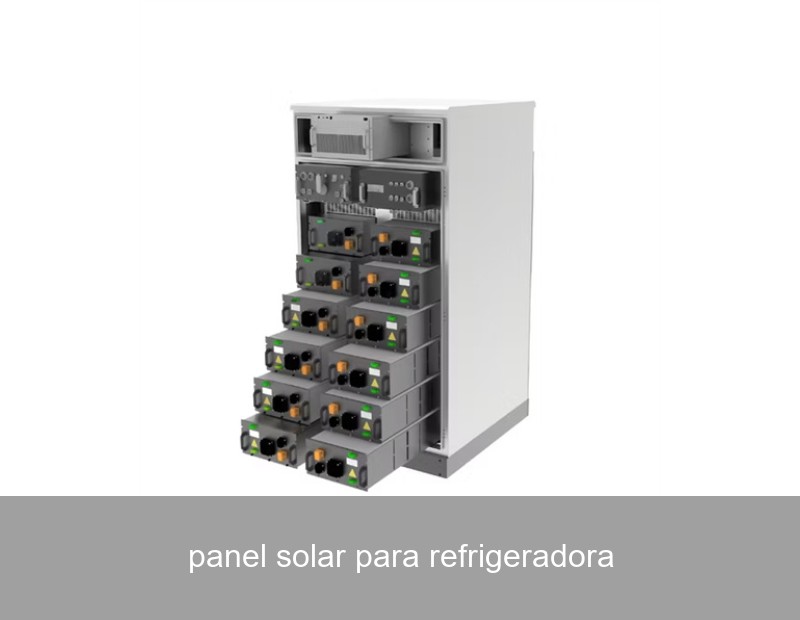
- A 5.12 kWh Highjoule LiFePO4 battery storage unit.
- A 3 kW hybrid inverter with integrated MPPT charge controller.
- Result: The system has operated flawlessly for over two years. It provides 100% uptime for the vaccines, eliminated fuel costs and noise from a previous diesel generator, and has even reduced the clinic's overall energy expenses by 60%. The clinic staff now reports zero anxiety about medicine spoilage during heatwaves or storms.
This case highlights that a correctly sized and professionally installed solar panel for refrigerator applications isn't just for homes; it's a viable, critical solution for commercial and community needs.
Highjoule's Tailored Solutions for Reliable Solar Power
As a global leader in advanced energy storage since 2005, Highjoule understands that powering critical loads like refrigeration requires more than just hardware—it requires intelligent, integrated systems. Our approach goes beyond simply selling components.
For residential and small business applications, our Highjoule Home Energy Hub is an ideal solution. It combines a high-efficiency inverter, a smart MPPT solar charger, and our proprietary lithium-iron-phosphate (LiFePO4) battery into one sleek, manageable unit. Its intelligent energy management software can prioritize solar power to your refrigerator during an outage, ensuring your essentials stay cold for days.
Image: A modern home battery storage system installation. Source: Unsplash

For larger-scale needs, like the clinic example or for industrial cold storage, our Highjoule C&I (Commercial & Industrial) Energy Storage Systems are modular and scalable. They can be seamlessly integrated with existing solar PV arrays to form a robust microgrid, guaranteeing that refrigeration and freezing units remain operational, protecting inventory and reducing demand charges from the utility.
Our systems are designed with the European and North American markets in mind, meeting all relevant safety and grid-compliance standards (like UL 9540 in the US and CE markings in Europe). We provide not just products, but full-cycle support from system design to commissioning.
Key Installation and Maintenance Considerations
Even with the best equipment, proper setup is non-negotiable.
Professional Installation is Recommended
While DIY kits exist, working with electricity and roofing often requires certified professionals. They ensure optimal panel placement, correct wiring gauges, safe battery enclosure, and proper system grounding. This is crucial for safety, performance, and often for maintaining equipment warranties and insurance coverage.
Maintenance is Minimal but Important
- Panels: Periodically clean dust, pollen, or snow for maximum production.
- Battery System: Modern LiFePO4 batteries like Highjoule's are virtually maintenance-free. The system's built-in Battery Management System (BMS) monitors health and performance.
- Monitoring: Use the system's app or portal (a standard feature with Highjoule systems) to track energy production, consumption, and battery state of charge. This helps you understand your usage patterns and confirms everything is working optimally.
So, as you consider the independence and security of a solar panel for your refrigerator, what is the first step you will take to audit your home's or business's most critical loads and explore making them resilient with the sun's power?
 Inquiry
 Online Chat