


Understanding Commercial Battery Storage UK Cost: A Smart Investment Guide
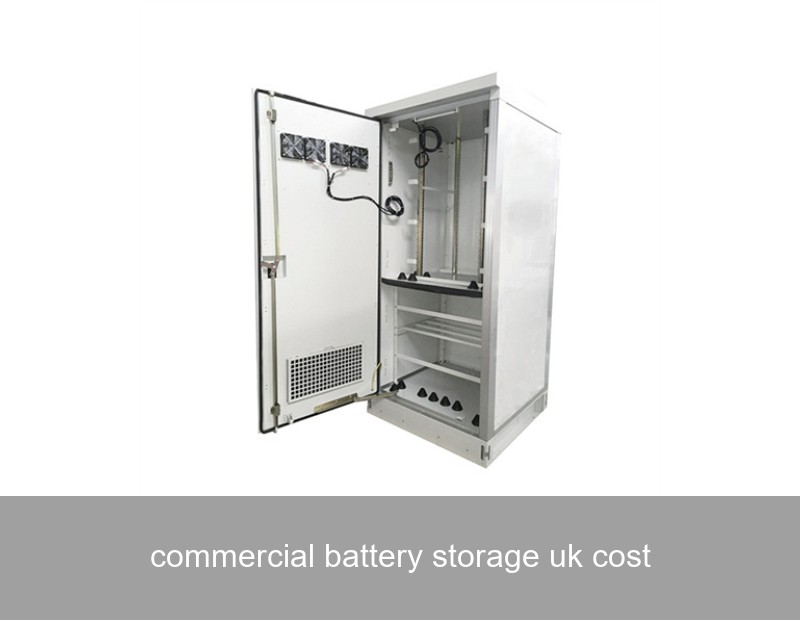
If you're a business owner or facility manager in the UK, you've likely felt the sting of rising electricity prices and the pressure to meet sustainability goals. The conversation is rapidly shifting from whether to invest in energy resilience to how to do it effectively. At the heart of this shift is commercial battery storage. But what exactly goes into the commercial battery storage UK cost, and more importantly, what is the true return on this investment? This article will demystify the costs, explore the compelling financial and operational benefits, and show how leading solutions from providers like Highjoule are making this technology an indispensable asset for forward-thinking UK businesses.
Table of Contents
The Cost Puzzle: More Than Just a Price Tag
When businesses first inquire about commercial battery storage UK cost, they often expect a simple per-kWh figure. However, treating a battery energy storage system (BESS) as a simple commodity misses the point. A modern BESS is a sophisticated, intelligent asset. The upfront capital expenditure (CAPEX) is just one part of the equation. The real metric is the levelized cost of storage (LCOS)—which factors in the system's lifetime energy throughput, efficiency, degradation, and all operational revenues. Think of it not as a cost, but as a capital deployment into a new, profit-generating pillar of your infrastructure.
Key Factors Influencing Your System's Cost
Several interlinked elements determine the final investment figure for a robust commercial storage system.
1. System Scale and Configuration
The core drivers are capacity (kWh – how much energy it can store) and power (kW – how fast it can discharge). A small retail store might need a 50kW/100kWh system, while a large manufacturing plant could require a 2MW/4MWh installation. Costs don't scale linearly; larger systems typically benefit from economies of scale.
2. Technology and Components
Lithium-ion phosphate (LFP) batteries are the current standard for commercial applications due to their safety, longevity, and cycle life. Beyond the battery racks, costs include:
- Power Conversion System (PCS): The bi-directional inverter that manages AC/DC conversion.
- Battery Management System (BMS): The crucial "brain" ensuring safety and health.
- Energy Management System (EMS): The software platform that automates revenue generation and savings.
- Installation & Balance of Plant: Civil works, electrical integration, safety systems, and grid connection.
3. Grid Connection and Complexity
A site with a simple, robust grid connection will have lower integration costs than one requiring a transformer upgrade or complex protection studies. The expertise of your provider in navigating DNO (Distribution Network Operator) requirements is critical here.
| System Size (kWh) | Typical Application | Estimated CAPEX Range* | Key Cost Drivers |
|---|---|---|---|
| 100 - 500 kWh | Small Business, Retail, Offices | £100,000 - £400,000 | Unit hardware costs, standard installation |
| 500 kWh - 2 MWh | Medium Industrial, Logistics, Supermarkets | £400,000 - £1.2 million | Grid connection, containerised solution, EMS sophistication |
| 2 MWh+ | Large Manufacturing, Renewable Farms, Multi-site Portfolios | £1.2 million+ | Civil works, complex grid integration, advanced market bidding software |
| *Ranges are indicative and vary based on specific site conditions, technology choice, and provider. A detailed feasibility study is essential. | |||
Building the Financial Case: Savings and Revenue Streams
This is where the story gets exciting. A battery transforms from a cost centre to a revenue generator through multiple streams:
- Arbitrage: Buying and storing electricity when cheap (e.g., at night) and using it during expensive peak periods.
- Peak Shaving: Automatically discharging to cap your maximum grid import, slashing costly Triad and DUoS charges.
- Frequency Response: Providing fast-acting grid stability services to National Grid for contracted payments (e.g., Dynamic Containment).
- Backup Power: Enhancing operational resilience against outages, avoiding lost production.
- Optimising On-site Generation: Storing excess solar or wind power for later use, maximising self-consumption.
According to a National Grid ESO report, the need for flexible assets like batteries is set to grow exponentially, creating sustained revenue opportunities.
A Real-World UK Case Study: From Cost to Profit
Let's make this tangible. Consider a mid-sized food processing plant in the Midlands with an average demand of 800kW and high refrigeration loads.
The Challenge: High exposure to peak-time tariffs (DUoS) and Triad charges, totalling over £85,000 annually. Limited space for on-site generation.
The Solution: Installation of a 500kW/1MWh containerised battery storage system. The system's intelligent EMS was programmed with a primary focus on peak shaving and arbitrage, with the capability to participate in frequency response markets during quiet production periods.
- Peak Charge Savings: £72,000 (85% reduction)
- Arbitrage Revenue: £18,000
- Frequency Response Revenue: £15,000
- Total Annual Benefit: ~£105,000
With a total project cost of £450,000, the simple payback period was under 4.5 years. For a system with a 15-year design life, this represents a tremendously positive NPV (Net Present Value) and IRR (Internal Rate of Return), fundamentally changing the commercial battery storage UK cost narrative from expense to high-yield investment.

Image Source: Unsplash (Representative image of a commercial BESS installation)
The Highjoule Solution: Optimising for UK Commercial Needs
Navigating this complex landscape requires a partner with deep technical expertise and a proven track record. This is where Highjoule's nearly two decades of experience come into play. We don't just sell hardware; we deliver optimised financial outcomes.
Our approach for UK businesses starts with a comprehensive Energy Asset Feasibility Study. We model your half-hourly consumption data against current and forecast market prices, identifying the precise system size and operational strategy to maximise your ROI. Our integrated hardware-software platform, the Highjoule H-PowerCube, is engineered for the UK market. It features industry-leading LFP battery chemistry, a high-efficiency PCS, and our proprietary Adaptive EMS.
This AI-driven EMS is the key. It doesn't just run pre-set programs; it continuously learns from your load patterns and dynamically bids into multiple revenue streams—from wholesale arbitrage to balancing markets—ensuring your asset earns its keep 24/7. For multi-site operators, like retail chains or logistics hubs, our FleetView platform provides centralised control and portfolio optimisation, turning distributed batteries into a unified, grid-scale virtual power plant (VPP).

Image Source: Unsplash (Representative image of an energy management system dashboard)
The Future Outlook for UK Businesses
The UK's energy transition, backed by policy and market mechanics, is unequivocally favouring flexibility. Ofgem's network charging reforms and the expansion of capacity markets are creating clearer, longer-term signals for storage assets. The question is no longer if battery storage is viable, but how soon can you afford to wait? Early adopters are already locking in attractive returns and gaining a competitive edge through lower operational costs and enhanced green credentials.
What specific load profile or energy cost challenge does your business face that a smart battery storage system could solve, and how would a 4-6 year payback period impact your strategic planning?
 Inquiry
 Online Chat