


Your Complete Guide to the Hybrid Inverter Kit with Battery
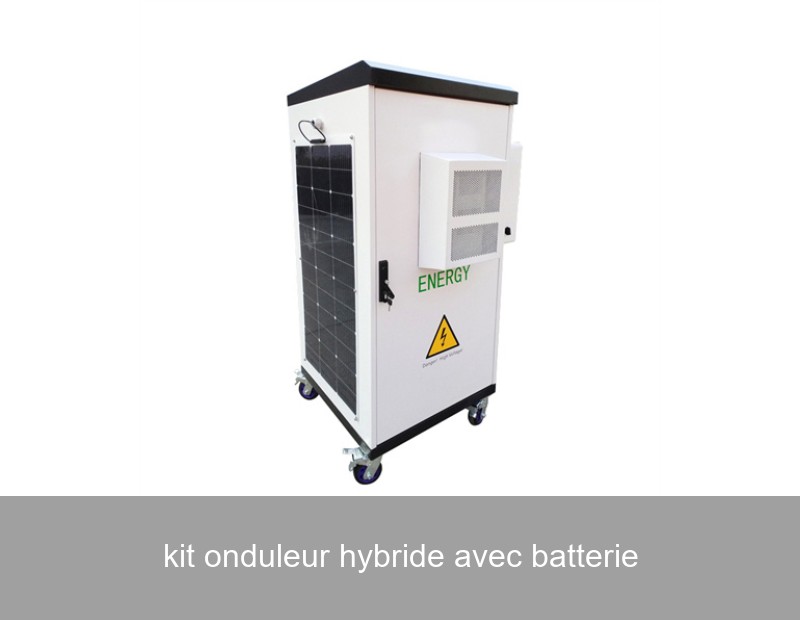
Have you ever watched your electricity meter spin and wondered, "What if I could capture that sunshine on my roof and use it at night?" That simple question is at the heart of a powerful energy solution gaining massive traction across Europe and the US: the hybrid inverter kit with battery. This isn't just a collection of parts; it's an integrated energy management system designed to maximize your self-consumption of solar power, provide backup during outages, and ultimately, give you control over your energy costs. In this guide, we'll demystify how these kits work, their real-world benefits, and what you should consider for your home or business.
Table of Contents
- What is a Hybrid Inverter Kit with Battery?
- Why the Surge in Popularity? The Data Behind the Trend
- Key Components of a High-Performance Kit
- Real-World Impact: A Case Study from Bavaria
- Choosing the Right Kit for Your Needs
- Is a Hybrid Kit the Future of Your Home's Energy?
What is a Hybrid Inverter Kit with Battery?
Let's break it down. A traditional solar setup uses a standard inverter to convert the direct current (DC) from your panels into alternating current (AC) for your home, sending any excess to the grid. A hybrid inverter kit with battery changes this game entirely. The core component, the hybrid inverter, is a smart device that does three key jobs: it converts DC from solar panels to usable AC, it can convert AC from the grid to DC to charge a battery, and it can convert DC from the battery back to AC when needed. It's the brain of your personal power station.
Paired with a high-capacity battery storage system, this kit allows you to store the solar energy you don't use immediately. When the sun sets or during a power cut, your system seamlessly switches to battery power. Companies like Highjoule have refined this technology into pre-engineered, intelligent solutions. Our Highjoule HPS Series, for instance, integrates a high-efficiency hybrid inverter with our proprietary lithium iron phosphate (LiFePO4) batteries and smart energy management software into a single, streamlined package. This ensures all components communicate perfectly for optimal performance, safety, and longevity.

Image: A modern, integrated hybrid inverter and battery storage unit. Source: Unsplash
Why the Surge in Popularity? The Data Behind the Trend
The move towards hybrid inverter kits with batteries isn't just a niche trend; it's a direct response to global energy dynamics. The phenomenon is clear: homeowners and businesses want energy independence and resilience. The data paints a compelling picture:
- Rising Energy Costs: In Europe, household electricity prices have seen significant volatility, with some countries experiencing increases of over 50% in recent years (Eurostat). Locking in a lower cost per kWh with solar+storage becomes financially attractive.
- Declining Feed-in Tariffs (FiTs): Governments are phasing out generous payments for solar energy exported to the grid. It's now more valuable to use your solar power than to sell it.
- Grid Resilience Concerns: From heatwaves in California to winter storms in Texas, grid reliability is a growing concern. A hybrid system with backup capability provides critical peace of mind.
The logic is a powerful staircase: Phenomenon (high bills, grid instability) leads to Analysis (self-consumption is key) which drives Solution (battery storage via a hybrid kit). This logical progression is why sales of residential battery storage in the US grew by over 200% year-over-year in recent quarters, according to industry reports.
Key Components of a High-Performance Kit
Not all kits are created equal. A robust hybrid inverter kit with battery is defined by the quality and synergy of its parts.
| Component | Function | What to Look For |
|---|---|---|
| Hybrid Inverter | The system's brain. Manages energy flow between solar panels, battery, home, and grid. | High peak efficiency (>97%), multiple MPP trackers for complex roof layouts, grid-forming capability for true off-grid backup. |
| Battery Storage | Energy reservoir. Stores excess solar energy for later use. | Lithium Iron Phosphate (LiFePO4) chemistry for safety and long cycle life (6000+ cycles), modular design for expandability, robust thermal management. |
| Battery Management System (BMS) | The battery's guardian. Monitors cell health, voltage, and temperature to ensure safe operation. | Advanced, multi-layer BMS with active balancing and communication with the inverter. |
| Energy Management Software | The user interface. Provides monitoring, control, and optimization of your energy usage. | User-friendly app, ability to set modes (e.g., maximize self-consumption, backup priority), and compatibility with smart home systems. |
At Highjoule, our kits are built with this holistic philosophy. The HPS Series inverter features grid-forming technology, allowing it to create a stable microgrid during an outage. It's paired with our PowerStack LiFePO4 batteries, known for their stability and 10,000-cycle design life. Crucially, our EnergyOS platform ties it all together, letting you automate your energy strategy from your smartphone.
Real-World Impact: A Case Study from Bavaria
Let's move from theory to practice. Consider the Müller family home in southern Germany, a region with decent solar irradiation but high electricity costs. Their goal: achieve 80% energy self-sufficiency.
- Installation: A 10 kWp solar array coupled with a Highjoule HPS-10 hybrid inverter kit featuring 15 kWh of PowerStack battery storage.
- Data & Results: In the first full year of operation, the system achieved an 85% self-consumption rate (the portion of solar energy used directly in the home or stored). Before adding the battery, this rate was only around 30%. The household's annual electricity bill was reduced by over 90%, from approximately €2,300 to under €200, primarily covering grid fees and consumption during prolonged winter gloom.
- Insight: The key was the system's intelligent logic. The EnergyOS software learned the family's consumption patterns, prioritizing battery charging from solar and strategically discharging during high-cost evening peak hours. During two brief grid outages, the transition to backup power was instant and uninterrupted.
This case underscores that a well-designed hybrid inverter kit with battery isn't just an appliance; it's an active financial and resilience asset.

Image: Monitoring energy flow and self-consumption via a smart app. Source: Unsplash
Choosing the Right Kit for Your Needs
So, how do you select the ideal system? Ask yourself these questions:
- What is your primary goal? Is it bill savings, backup power, or maximizing green energy use? This determines battery size and inverter capabilities.
- What is your current or planned solar PV capacity? Your inverter size should match your solar array. A good installer will perform a detailed energy audit.
- What is your critical load during an outage? Calculate the power needs of essentials like refrigeration, lighting, and heating systems to size your battery appropriately.
- Do you want future expandability? Opt for a modular battery system that allows you to add more storage later as needs or budgets change.
This is where partnering with an experienced provider like Highjoule makes a difference. We don't just sell hardware; we provide a complete power solution, from initial consultation and system design using advanced modelling tools to professional installation by certified partners and long-term performance monitoring. Our systems are engineered for the diverse climates and grid standards of both Europe and North America.
Is a Hybrid Kit the Future of Your Home's Energy?
The energy landscape is shifting from a one-way street to an interactive, decentralized network. The hybrid inverter kit with battery is the enabling technology for this shift at the individual property level. It turns a passive solar producer into an active energy manager. With the integration of smart tariffs and future vehicle-to-grid (V2G) capabilities, these systems will only become more central to a sustainable and resilient energy future.
The real question isn't just about technology, but about control. Are you ready to take control of where your power comes from, how much you pay for it, and how secure it is when the wider grid faces challenges? What would energy independence look like for your household or business?
 Inquiry
 Online Chat