


Commercial Power Batteries: The Smart Business Decision for Energy Independence
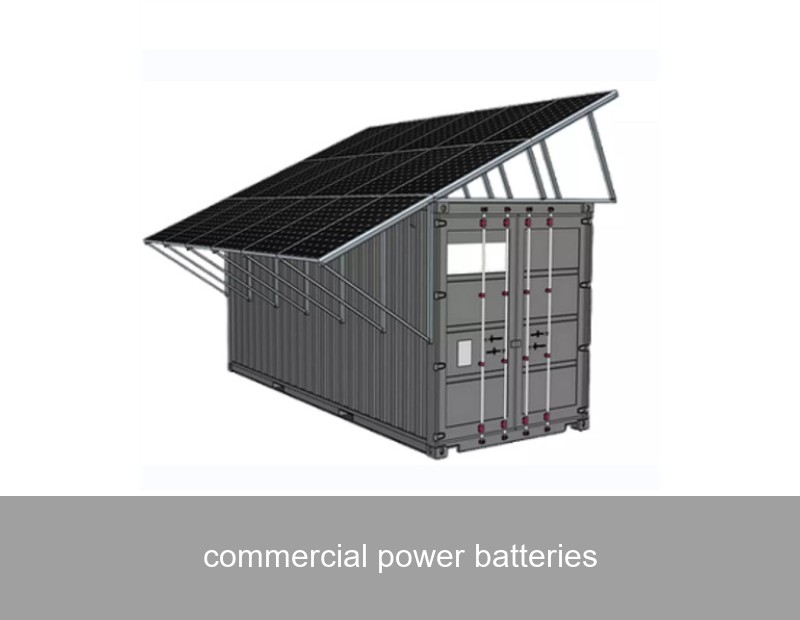
Let's talk about a silent revolution happening behind the scenes of successful businesses. It's not about a new software or marketing strategy, but about something more fundamental: commercial power batteries. You've likely heard the term, but what does it truly mean for your bottom line? Simply put, these are large-scale battery storage systems designed to give businesses control, resilience, and significant savings over their electrical power. Unlike small home batteries, commercial power batteries are robust energy assets, capable of powering everything from a manufacturing floor to a chain of retail stores. For leaders in Europe and the US navigating volatile energy markets and ambitious sustainability goals, understanding this technology isn't just technical—it's strategic.
The Rising Demand: Why Every Business is Looking
a mid-sized factory manager in Germany watches as the afternoon electricity prices on the spot market suddenly spike due to low wind generation. Her production line is at peak capacity, and the energy bill is soaring. Meanwhile, a data center manager in California receives a "Flex Alert" warning of potential rolling blackouts during a heatwave. The risk of downtime is a constant threat. These aren't hypotheticals; they're daily realities driving the surge in demand for commercial battery storage.
The phenomenon is clear. Businesses are no longer passive consumers of grid power. The data tells a compelling story:
- Market Growth: The U.S. energy storage market set a record in Q4 2023, with grid-scale installations (which include large commercial systems) growing by 101% year-over-year (source: Wood Mackenzie).
- Price Volatility: In Europe, day-ahead electricity prices have experienced extreme fluctuations, with peaks often 3-5 times higher than baseload prices, making predictable operations challenging.
- Policy Push: Incentives like the Investment Tax Credit (ITC) in the US, which now extends to standalone storage, and various EU Green Deal funding mechanisms are accelerating adoption.
The logic is a powerful staircase: Phenomenon (unpredictable costs and grid instability) leads to Analysis (data shows financial and operational risk) which demands a Solution (on-site, controllable energy storage). That's where a modern Commercial Battery Energy Storage System (BESS) comes in.

Image Source: Unsplash - A modern commercial battery energy storage system.
Key Benefits of a Commercial Battery Energy Storage System (BESS)
So, what exactly does a commercial BESS deliver? Think of it as a strategic energy reservoir and a financial tool rolled into one.
- Peak Shaving & Cost Savings: This is the most immediate benefit. Your system intelligently discharges power during expensive peak demand periods, "shaving" the top off your energy usage. This directly reduces high demand charges from your utility, which can constitute up to 50% of a commercial electricity bill.
- Backup Power & Resilience: When the grid fails, your operations don't have to. Commercial power batteries provide seamless, instantaneous backup power to keep critical loads running, protecting against data loss, production halts, and revenue interruption.
- Energy Arbitrage: Buy low, use high. The system charges from the grid or your solar panels when electricity is cheap (e.g., at night), and uses that stored energy when prices are high. It's a simple trading principle applied to your own energy supply.
- Sustainability & ESG Goals: By maximizing consumption of your on-site solar power and reducing reliance on fossil-fuel-peaking plants, you significantly cut your carbon footprint. This is a tangible step towards corporate sustainability targets.
- Grid Services & Revenue: In some markets, businesses can participate in demand response programs or frequency regulation services, earning revenue by allowing the grid operator to use their battery's capacity to stabilize the network.
| Business Challenge | BESS Solution | Direct Outcome |
|---|---|---|
| High, unpredictable energy bills | Peak Shaving & Energy Arbitrage | Reduced operational costs (15-40% savings on energy costs) |
| Grid outages disrupting operations | Uninterruptible Power Supply (UPS) functionality | Enhanced business continuity & risk mitigation |
| Pressure to meet carbon reduction targets | Integration with renewables & optimized consumption | Lower Scope 2 emissions, progress on ESG reports |
| Need for new revenue streams | Participation in grid service markets | Ancillary revenue generation |
Real-World Case Study: A Supermarket's Success Story
Let's move from theory to practice. Consider a real-world example from the UK retail sector. A national supermarket chain with high refrigeration loads and stringent food safety standards faced two major issues: vulnerability to power cuts and soaring energy costs during the evening peak.
They deployed a 500 kWh / 750 kW commercial battery system at one of their distribution centers. Here’s what happened:
- Financial Performance: The system's intelligent energy management software automatically shifts load. By avoiding peak-time grid consumption, the site achieved a 28% reduction in its monthly energy costs. The payback period was calculated at under 5 years.
- Operational Resilience: During a local grid fault, the battery system seamlessly provided backup power for critical cooling systems for over 2 hours, preventing an estimated £150,000 in potential spoiled inventory.
- Sustainability Impact: Coupled with their existing rooftop solar, the system increased the site's consumption of self-generated renewable energy from 60% to over 85%.
This case underscores a vital insight: commercial power batteries are not just an expense; they are a hardening of your business infrastructure against financial and operational volatility. The question shifts from "Can we afford it?" to "Can we afford not to have it?"
Choosing the Right System for Your Business
Not all systems are created equal. Key considerations include:
- Chemistry: Lithium Iron Phosphate (LFP) is now the dominant choice for commercial applications due to its superior safety, long cycle life (often over 6,000 cycles), and stability, compared to older NMC formulations.
- Software & Intelligence: The hardware stores energy, but the software creates value. Look for systems with advanced AI-driven platforms that can forecast energy prices, optimize charging/discharging schedules, and integrate with building management systems.
- Scalability & Integration: Can the system start small and expand as your needs grow? Does it seamlessly integrate with existing or planned solar PV installations?
- Safety & Compliance: Ensure the system meets stringent local and international standards (like UL 9540 in the US, IEC standards in Europe) and includes comprehensive fire suppression and remote monitoring.
The Highjoule Advantage: Smart, Sustainable Power
This is where Highjoule's nearly two decades of expertise becomes critical. Since 2005, we've been at the forefront of designing and deploying intelligent storage solutions. We understand that a commercial power battery is more than a product; it's a tailored energy strategy.
Our flagship H-Series Commercial BESS is engineered for this exact purpose. Built with market-leading LFP battery cells, it offers unmatched safety and longevity. What truly sets it apart is the Highjoule EnergyOS™, our proprietary smart energy management platform. Think of it as the brain of your energy ecosystem. EnergyOS™ continuously analyzes your load patterns, weather forecasts, and real-time electricity market data (where available) to make autonomous, profit-maximizing decisions for your stored energy.

Image Source: Unsplash - Smart energy management control system.
For businesses with solar, our systems perform solar self-consumption optimization, ensuring not a watt of your clean generation goes to waste. For those concerned with resilience, our systems are designed for critical backup, providing peace of mind that essential operations will continue. From initial consultation and financial modeling to installation, grid connection, and 24/7 performance monitoring, Highjoule provides a complete turnkey service, making the transition to smart energy seamless.
The Future of Business Energy
The trajectory is undeniable. The grid is evolving from a one-way street to a dynamic network, and businesses with intelligent, flexible assets like commercial power batteries will be the winners. They will enjoy lower costs, greater resilience, and a stronger sustainability profile. The technology has matured, the financial models are proven, and the need is pressing.
So, as you look at your next quarterly energy report or review your business continuity plan, ask yourself this: Is your current energy strategy a source of risk, or is it a strategic asset waiting to be unlocked? What would the ability to predict and control 90% of your energy costs do for your long-term planning and competitiveness?
We invite you to explore what a tailored energy resilience and savings plan could look like for your specific operation. What's the first question you would need answered to take the next step?
 Inquiry
 Online Chat