


Commercial Solar to Sell: Turning Your Rooftop into a Revenue Powerhouse
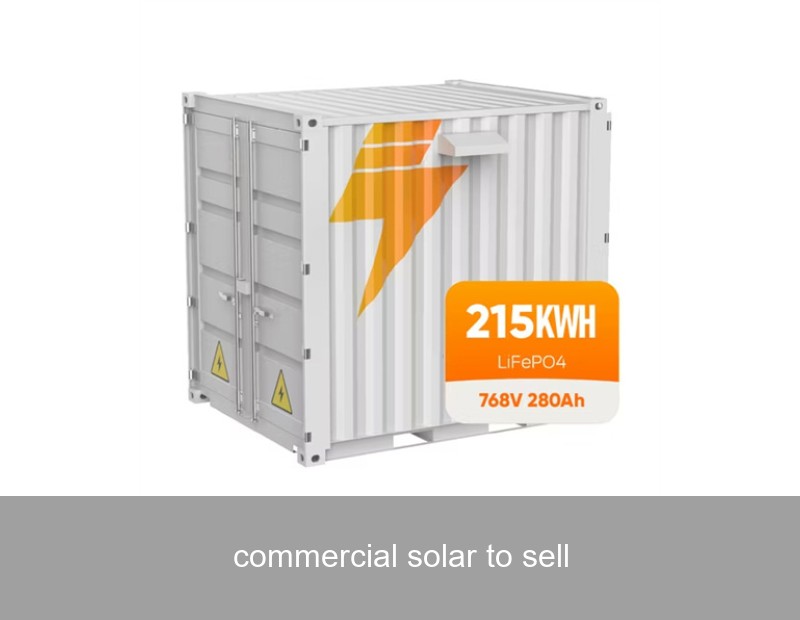
Imagine your commercial property's vast, unused rooftop. Under the sun, it's just a surface. But what if it could become a strategic asset, actively generating income? This is no longer a futuristic concept but a present-day reality for forward-thinking businesses across Europe and the US. Commercial solar to sell—the practice of generating solar energy and selling it back to the grid or directly to consumers—is transforming energy from a cost center into a profit center. This guide will illuminate how you can leverage this opportunity, navigate the complexities, and maximize your return on investment with modern technology.
Table of Contents
The Rise of the Prosumer: From Consumer to Seller
For decades, businesses were passive energy consumers. Today, technology empowers them to become "prosumers"—both producers and consumers. The driver? A powerful combination of falling solar technology costs, rising grid electricity prices, and supportive policies like feed-in tariffs (FITs), net metering, and Power Purchase Agreements (PPAs) in many regions. For instance, the U.S. Energy Information Administration (EIA) notes that wholesale electricity prices can exhibit significant volatility, creating a lucrative window for stable, self-generated solar sales. This shift is fundamental: your roof is no longer a cap on your building; it's the foundation of a new, clean energy business.
The Economics: More Than Just Bill Savings
While slashing operational energy bills is the first benefit, the revenue from selling solar energy creates a compelling secondary income stream. Let's break down the financial model:
- Direct Grid Sales: Under feed-in tariff schemes, every kilowatt-hour (kWh) you export earns a guaranteed, often premium, rate.
- Net Metering: Excess energy spins your meter backward, earning you credits that offset consumption during non-sunny hours, effectively selling power at retail price.
- Reduced Grid Dependence: By generating your own power, you insulate your business from unpredictable price spikes in the wholesale energy market.
- Enhanced Property Value: Studies consistently show commercial properties with solar installations command higher valuations and attract sustainability-minded tenants.
The financial performance hinges on one critical factor: maximizing the utilization of every photon that hits your panels. This is where intelligent system design becomes paramount.
The Critical Role of Battery Storage
Solar generation is inherently intermittent—peaking at midday. Grid demand and the highest feed-in rates, however, often occur in the early evening. Without storage, you're forced to sell low and buy high. Integrating a commercial battery energy storage system (BESS) is the game-changer. It allows you to store midday surplus and strategically dispatch it when sale prices are at their peak, a process known as energy arbitrage. This dramatically increases the revenue potential of your commercial solar to sell project.

Image Source: Unsplash - A prime example of a commercial rooftop ready for solar monetization.
Key Components of a Revenue-Generating Solar System
Building a system designed for sales, not just savings, requires specific components:
| Component | Role | Consideration for "Selling" |
|---|---|---|
| High-Efficiency PV Panels | Convert sunlight to DC electricity | Maximize energy yield per limited roof space. |
| Smart Inverters | Convert DC to grid-compliant AC power | Must have advanced grid-support functions for stable export. |
| Battery Storage (BESS) | Stores excess energy for later use | Enables time-shifting of energy for peak-price sales. Cycle life and depth of discharge are critical. |
| Energy Management System (EMS) | The "brain" of the operation | Automates the decision to consume, store, or sell based on real-time price signals and consumption patterns. |
Case Study: A European Logistics Hub's Success
Let's look at a real-world application. A major logistics company in Germany operated a 40,000 sq. meter warehouse with high, consistent daytime energy use but significant remaining solar potential. Their goal: generate additional revenue and hedge against energy costs.
The Project: They expanded their existing rooftop PV system by 500 kWp and integrated a 750 kWh Highjoule IntelliBESS solution with a sophisticated EMS.
- The EMS was programmed to prioritize powering warehouse operations first.
- Any surplus was used to charge the batteries until full.
- Instead of exporting all excess immediately at midday prices, the system held the stored energy.
- During the high-demand, high-price period between 5-8 PM, the system discharged the battery, selling 100% of this stored energy back to the grid at a price approximately 40% higher than the midday rate.
Outcome: This intelligent arbitrage strategy, enabled by storage, increased their annual revenue from solar energy sales by an estimated €28,000, while also providing backup power for critical cooling systems. This project exemplifies the advanced commercial solar to sell model in action.
How Highjoule Powers Your Commercial Solar Venture
As a global leader in advanced energy storage since 2005, Highjoule is uniquely positioned to be your partner in this energy transition. We don't just sell batteries; we provide integrated, intelligent systems that maximize the financial return of your solar asset.
Our flagship solution for commercial applications is the Highjoule IntelliBESS Platform. It's a modular, containerized or skid-mounted battery system built with industry-leading lithium-iron-phosphate (LFP) cells for safety and longevity. What truly sets it apart is the Highjoule Neuron EMS—an AI-driven software platform that continuously learns your load profile and optimizes energy flow against real-time market data or tariff structures.
For businesses exploring commercial solar to sell, Highjoule offers:
- Feasibility & Financial Modeling: Our experts analyze your site, local tariffs, and market rules to project your revenue potential.
- Turnkey Solutions: Seamless integration of storage with new or existing solar PV, handled by our certified network of partners.
- Compliance & Grid Interconnection Support: Navigating the technical requirements of grid connection for power sales can be complex. We ensure our systems meet all local grid codes in Europe and North America.
- Ongoing Performance Monitoring: Remote monitoring and analytics guarantee your system performs at its revenue-optimizing best for decades.

Image Source: Unsplash - Representative of modern commercial battery storage system monitoring.
Getting Started: Your Path to Solar Sales
Embarking on a commercial solar to sell project involves clear steps:
- Site & Policy Assessment: Evaluate your roof's solar potential and, crucially, research the specific incentive programs, feed-in tariffs, or net metering rules in your region (e.g., EU renewable energy directives or state-level policies in the US).
- Financial Modeling: Work with a provider like Highjoule to model different scenarios (solar-only vs. solar+storage) to understand payback periods and ROI.
- System Design & Financing: Design the optimal system size and technology mix. Explore financing options, including third-party ownership via PPAs, which can require no upfront capital.
- Installation & Grid Approval: Partner with an experienced installer for seamless execution and secure the necessary utility interconnection agreements.
- Commission & Optimize: Switch on your system and configure your EMS strategy to start generating—and selling.
The Future is Adaptive
The energy landscape is evolving towards dynamic pricing and local energy markets. A system equipped with intelligent storage isn't just ready for today's feed-in tariffs; it's future-proofed for tomorrow's real-time trading platforms. Your commercial solar asset can become an adaptive tool for financial and energy resilience.
Is your business ready to transform its rooftop from an overhead cost into a dynamic, profit-generating asset? What would a detailed financial model for your specific property reveal about your potential revenue from solar sales?
 Inquiry
 Online Chat