


Concorde Battery Corporation: A Legacy of Deep-Cycle Power and Its Modern Energy Heirs
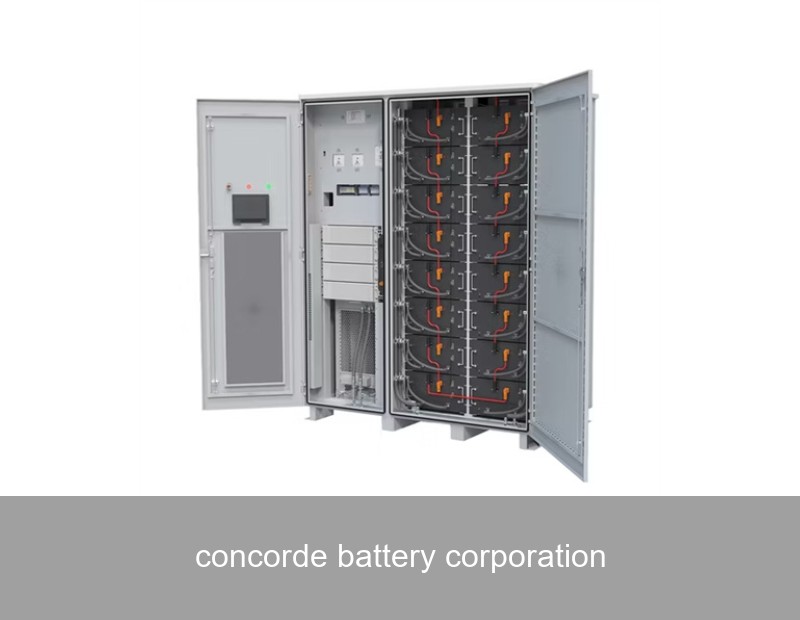
When you think of reliable, deep-cycle battery power, especially for demanding applications, one name has stood the test of time: the Concorde Battery Corporation. For decades, Concorde's batteries, particularly their renowned SunXtender and Lifeline AGM (Absorbent Glass Mat) lines, have been the trusted heart of off-grid solar systems, marine vessels, and specialty vehicles. Their legacy is built on robust, maintenance-free power. But as the global energy landscape pivots decisively towards intelligent, grid-connected renewable systems, a crucial question arises: how does the proven reliability of veteran battery technology translate into the smart, interconnected energy storage solutions demanded by today's homes and businesses? The answer lies not in replacing that legacy, but in evolving it—integrating advanced battery chemistry with sophisticated energy management to create truly future-proof power systems.
Table of Contents
- The Concorde Phenomenon: Why Deep-Cycle Reliability Became Legend
- The Data-Driven Shift: From Standalone Batteries to Integrated Systems
- Case Study: A German Winery's Transition to Intelligent Storage
- The Modern Heirs: Beyond the Battery with Highjoule's Integrated Approach
- Open Questions for Your Energy Future
The Concorde Phenomenon: Why Deep-Cycle Reliability Became Legend
Concorde Battery Corporation earned its sterling reputation by solving a fundamental problem: providing consistent, deep-discharge power in environments where failure was not an option. Their valve-regulated lead-acid (VRLA) AGM batteries offered key advantages:
- Maintenance-Free Operation: No need to add water, reducing upkeep and risk.
- Spill-Proof and Safe: The absorbed electrolyte made them ideal for mobile or sensitive installations.
- Long Cycle Life: Engineered for repeated deep discharges, a critical factor for solar energy storage.
- Low Self-Discharge: They retained charge longer when idle.
This made them, and continues to make them, a superb choice for specific off-grid and mobile applications. Think of a remote telecommunications site or a sailboat crossing an ocean—scenarios where simplicity and brute-force reliability are paramount. However, the energy needs of a modern European household or a U.S. manufacturing facility are vastly more complex. It's not just about storing energy; it's about orchestrating it intelligently with the grid, solar panels, and home appliances.

Image Source: Unsplash - Representative of modern renewable energy systems requiring intelligent storage.
The Data-Driven Shift: From Standalone Batteries to Integrated Systems
The phenomenon is clear: global demand is moving towards integrated, lithium-ion based storage solutions. Let's look at the data. According to the International Energy Agency (IEA), global energy storage capacity is set to expand dramatically by 2030, with grid-scale and behind-the-meter (like home and business) storage leading the charge. Lithium-ion technology dominates this expansion due to its higher energy density, longer lifespan in partial-cycling scenarios (typical of daily solar charging), and superior efficiency.
Furthermore, the value proposition has shifted. A study by the National Renewable Energy Laboratory (NREL) highlights that the greatest economic and grid-resilience benefits come from storage systems that can perform multiple services: peak shaving (reducing grid demand during expensive hours), providing backup power, and optimizing self-consumption of solar energy. This requires a Battery Energy Storage System (BESS)—a seamless integration of battery cells, a sophisticated Battery Management System (BMS), bi-directional inverters, and smart software.
| Feature | Traditional Deep-Cycle AGM (e.g., Concorde) | Modern Integrated Lithium BESS (e.g., Highjoule) |
|---|---|---|
| Core Strength | Deep-discharge reliability, simplicity | Intelligent energy management, multi-functionality |
| Energy Density | Lower (bulkier for same capacity) | Higher (more compact) |
| Cycle Life (for daily solar use) | Good, but degrades faster with partial cycles | Excellent, optimized for daily charge/discharge |
| System Integration | Component-based (requires separate inverter, etc.) | All-in-one, plug-and-play with smart grid interaction |
| Key Application | Off-grid, marine, RV | Grid-tied residential, commercial, microgrids |
Case Study: A German Winery's Transition to Intelligent Storage
Let's make this concrete with a real-world example from Rhineland-Palatinate, Germany. A family-owned winery, "Weingut Schmitt," had a 100 kWp rooftop solar array. They initially used a large bank of high-quality AGM batteries (inspired by the Concorde philosophy of robustness) for load shifting. However, they faced challenges: the system required frequent monitoring, its usable capacity was limited by deep-cycle precautions, and it couldn't interact dynamically with the grid to capitalize on variable electricity prices.
In 2022, they partnered with Highjoule to retrofit a 120 kWh Highjoule C&I Stack lithium-ion BESS. The results over one year were telling:
- Energy Cost Reduction: By using the AI-driven Highjoule EnergyOS platform to perform automated peak shaving and time-of-use arbitrage, they reduced their grid energy costs by 68%.
- Increased Solar Self-Consumption: The system's faster response and higher round-trip efficiency increased their direct use of solar power from 35% to over 80%.
- New Revenue Stream: By participating in a local grid flexibility program (enabled by the system's advanced grid communication protocols), the winery earned €2,300 in ancillary service revenue in the first year.
- Reduced Footprint & Maintenance: The new BESS occupied 60% less space and required zero routine maintenance.
This case illustrates the paradigm shift. The winery didn't just need a "battery"; they needed an intelligent energy asset.
The Modern Heirs: Beyond the Battery with Highjoule's Integrated Approach
At Highjoule, we view ourselves as the logical evolution of the reliability standard set by pioneers like Concorde Battery Corporation. We build on that foundational demand for dependability but elevate it for the 21st-century grid. Our solutions are designed for the European and North American markets, where energy prices, grid stability, and sustainability goals are top of mind.
For residential clients, our Highjoule Home Vault is more than a battery. It's an all-in-one AC-coupled system featuring UL-certified lithium iron phosphate (LFP) cells, renowned for safety and longevity. Its integrated inverter and EnergyOS Home app allow homeowners to seamlessly manage solar storage, backup power, and even electric vehicle charging schedules.
For commercial and industrial applications, our modular C&I Stack series provides scalable power from 50 kW to multi-megawatt levels. These systems are engineered for maximum return on investment. They actively manage demand charges, provide uninterrupted power for critical operations, and can be configured for island-mode microgrids—a crucial feature for enhancing energy resilience in areas prone to outages.

Image Source: Unsplash - Representative of industrial-scale battery energy storage system installation and monitoring.
Our core philosophy is that the hardware is only as good as the intelligence that controls it. The Highjoule EnergyOS platform is the brain of our systems, using predictive algorithms and real-time grid data to make decisions that optimize for cost, carbon footprint, and resilience automatically.
Where Does Concorde's Legacy Fit Today?
This isn't an obituary for AGM technology. Concorde batteries remain an excellent solution for specific, often off-grid, applications where absolute simplicity and proven chemistry are key. However, for the vast majority of homeowners and businesses looking to integrate solar, reduce bills, and gain energy independence while staying connected to the grid, the future is intelligent, lithium-based storage systems.
Open Questions for Your Energy Future
The journey from a trusted battery brand to a comprehensive energy strategy can seem complex. But it starts with a few directed questions: Is your current storage solution actively saving you the maximum amount of money possible, or is it just storing energy? Could your facility benefit from generating revenue through grid services while enhancing its sustainability profile? As you consider the legacy of reliability that companies like Concorde Battery Corporation established, ask yourself: What does the next generation of energy resilience and intelligence look like for your home or business?
 Inquiry
 Online Chat