


Understanding the True Cost for Solar Panel for Home: A Smart Homeowner's Guide
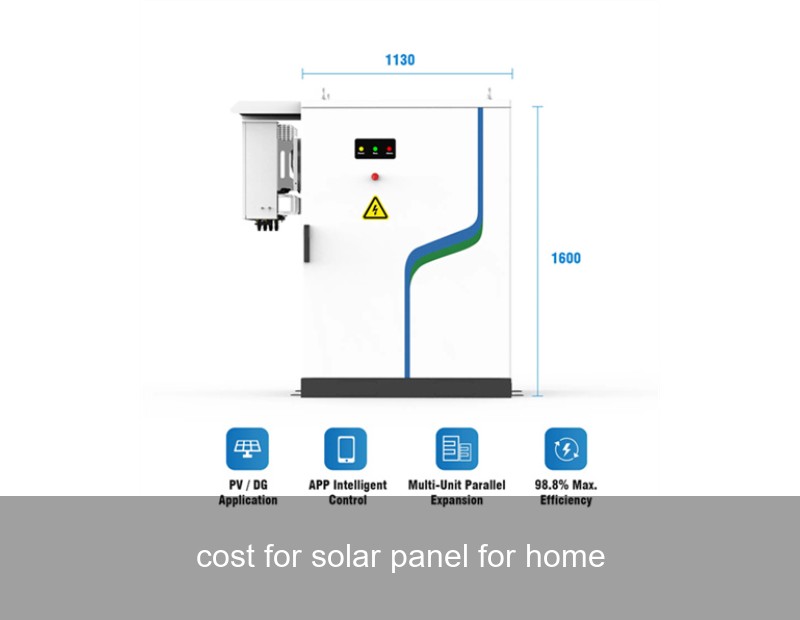
So, you're thinking about going solar. It's an exciting decision, promising energy independence and lower bills. But when you start researching the cost for solar panel for home installations, the numbers can seem like a confusing puzzle. Is it just the panels? What about the "hidden" components that make the system actually work? The initial quote is just one piece of the story. True value lies in a system's long-term performance, reliability, and the intelligence that maximizes your savings. Let's demystify the real investment behind home solar power.
Table of Contents
- Breaking Down the Solar Panel System Cost
- The Critical Piece Beyond the Panels: Your Energy Storage System
- Real-World Savings: A Case Study from Sunny California
- Maximizing Your Investment: Key Factors That Impact Value
- How Highjoule Integrates Intelligence into Your Solar Investment
- Is Your Home Ready for the Next Generation of Solar Power?
Breaking Down the Solar Panel System Cost
When you receive a quote for a home solar system, it typically bundles several key components. Understanding each helps you see where your money is going:
- Solar Panels (Modules): These are the most visible part, converting sunlight into DC electricity. Prices vary by efficiency and brand, but they typically account for about 15-25% of the total system cost.
- Inverter(s): This is the brain of your PV system. It converts the DC electricity from your panels into the AC electricity your home uses. Microinverters (one per panel) or string inverters are a crucial cost and performance factor.
- Mounting Hardware & Racking: The secure, often aluminum, structure that attaches panels to your roof. Its quality ensures your system withstands decades of weather.
- Balance of System (BOS): This includes wiring, conduits, switches, and the electrical panel upgrades.
- Permitting, Installation, & Labor: Professional installation ensures safety, compliance with local codes, and optimal performance. This is a significant portion of the cost.
- The Often-Overlooked Game Changer: The Battery. While not in every initial quote, an energy storage system is increasingly becoming a core part of the modern home solar equation.
According to the U.S. Department of Energy, the average cost per watt for residential solar has dropped dramatically over the past decade. However, the final price tag is highly personalized, depending on your energy consumption, roof characteristics, and local incentives.
The Critical Piece Beyond the Panels: Your Energy Storage System
Here's a pivotal insight: solar panels alone don't power your home at night or during a grid outage. Without storage, excess energy you produce midday often gets sold back to the grid at a low rate, only for you to buy it back at night at a higher price. This is where the calculus of the true cost for solar panel for home shifts.
Adding a battery storage system like the Highjoule HomePower series transforms your solar array from a money-saver into a resilient energy asset. It allows you to:
- Store Excess Energy: Use your solar power 24/7, drastically increasing self-consumption.
- Gain Backup Power: Keep essential loads running during grid failures.
- Optimize for Time-of-Use (TOU) Rates: In regions like California or parts of Europe with TOU pricing, you can avoid drawing power from the grid during expensive peak hours by using your stored energy.
The initial investment includes the battery unit, its dedicated inverter/charger, and advanced energy management software. While this increases upfront cost, it dramatically enhances the system's value proposition and return on investment (ROI) over its 20+ year lifespan.

Image Source: Unsplash (Professional photography of residential solar installation)
Real-World Savings: A Case Study from Sunny California
Let's look at real data. The National Renewable Energy Lab (NREL) has extensively studied solar-plus-storage economics. Consider a typical 7.5 kW solar system in Los Angeles, paired with a 10 kWh battery.
| Scenario | System Description | Estimated Upfront Cost (After ITC) | Annual Bill Savings | Key Benefit |
|---|---|---|---|---|
| Solar Only | 7.5 kW PV System | $16,500 | $1,800 | Reduces daytime grid consumption |
| Solar + Storage | 7.5 kW PV + 10 kWh Battery | $25,000 | $2,400+ | Adds peak shaving, backup power, and higher self-consumption |
While the combined system costs more upfront, the annual savings are significantly higher, especially under TOU rates. The battery enables the homeowner to avoid buying electricity at peak rates (which can be $0.40-$0.50/kWh) by using stored solar energy. Over the system's life, this can mean tens of thousands of dollars in additional savings and provides priceless peace of mind during public safety power shutoffs.
Maximizing Your Investment: Key Factors That Impact Value
To ensure you get the best return on your solar investment, look beyond just the price per watt.
- System Design & Component Quality: High-efficiency panels and a durable, weather-resistant racking system matter. More critically, the inverter and battery chemistry (like Lithium Iron Phosphate, LFP, known for safety and longevity) define system reliability.
- Smart Energy Management: This is the unsung hero. Can your system learn your usage patterns, automatically decide when to charge/discharge the battery, and integrate with future smart home devices? This intelligence maximizes savings.
- Installation Expertise & Warranty: A certified installer ensures optimal production. Look for comprehensive warranties that cover not just panels, but also performance, inverters, and batteries for 10+ years.
- Financing & Incentives: The U.S. federal Investment Tax Credit (ITC) and various state or local rebates in Europe can reduce net cost by 30% or more. Factor these into your payback period calculation.
How Highjoule Integrates Intelligence into Your Solar Investment
At Highjoule, we view the cost for solar panel for home as an investment in a comprehensive, intelligent energy ecosystem. Our role is to provide the core technology that makes solar power truly work for you, around the clock.
Our Highjoule HomePower 10 and HomePower 15 battery storage systems are built with ultra-safe LFP chemistry and are designed for seamless integration with any new or existing solar array. What sets them apart is the Highjoule EnergyOS platform. This cloud-connected software intelligently manages your energy flow based on real-time electricity rates, weather forecasts, and your household consumption patterns.
For larger homes or small businesses, our Highjoule C&I Stack series offers modular, scalable storage solutions. This means your system isn't just a static purchase; it's a flexible asset that can grow with your energy needs. By providing the critical storage and intelligence layer, Highjoule ensures that every kilowatt-hour your solar panels produce is used in the most economical and efficient way possible, fundamentally improving the long-term ROI of your entire solar investment.

Image Source: Unsplash (Representative image of a sleek home battery installation)
Is Your Home Ready for the Next Generation of Solar Power?
The conversation is evolving from "What do solar panels cost?" to "What is the value of a resilient, self-sufficient home energy system?" The most forward-thinking homeowners are now planning for solar-plus-storage from the start, recognizing that the synergy between generation and intelligent storage is where the greatest financial and practical benefits are realized.
As you evaluate quotes and consider your energy future, what specific questions will you ask your installer about system intelligence, storage readiness, and long-term performance guarantees to ensure your investment is truly future-proof?
 Inquiry
 Online Chat