


The Ultimate Guide to Finding the Perfect Condo Generator for Sale
If you're a condo board member, property manager, or an owner in a multi-unit building, you've likely faced the anxiety of a power outage. The sudden silence, the flickering lights, and the realization that essential systems are down. For modern condominiums, reliable backup power isn't a luxury; it's a critical component of resident safety, property value, and legal compliance. But the traditional "condo generator for sale" search often leads to loud, diesel-guzzling behemoths that are complex to install and maintain. Today, we're exploring a smarter, cleaner, and more resilient path forward: modern battery energy storage systems (BESS) as the cornerstone of a condo's power resilience strategy.
Table of Contents
The Problem with Traditional Condo Generators
For decades, the immediate answer to backup power needs has been the fossil-fueled standby generator. While they provide a function, they come with a significant bundle of challenges that condo associations are now reckoning with.
- Space & Installation Headaches: They require dedicated, often sizable, equipment rooms or rooftop space, complex exhaust systems, and large fuel tanks with strict environmental compliance.
- Noise and Emissions: Their operation creates noise pollution for residents and neighbors and emits greenhouse gases, conflicting with many cities' sustainability goals and building certifications.
- Maintenance & Fuel Costs: They demand rigorous weekly or monthly testing, fluid changes, and a guaranteed fuel supply, which can be costly and logistically challenging during widespread outages.
- Limited Scope: Typically, they are wired only to life-safety systems (elevators, hallway lighting, fire pumps) due to capacity limits, leaving individual units in the dark.
This old model is being disrupted. According to the U.S. Department of Energy, the declining cost and rising efficiency of battery storage are creating new paradigms for energy resilience.
The Modern Solution: Battery Storage & Smart Microgrids
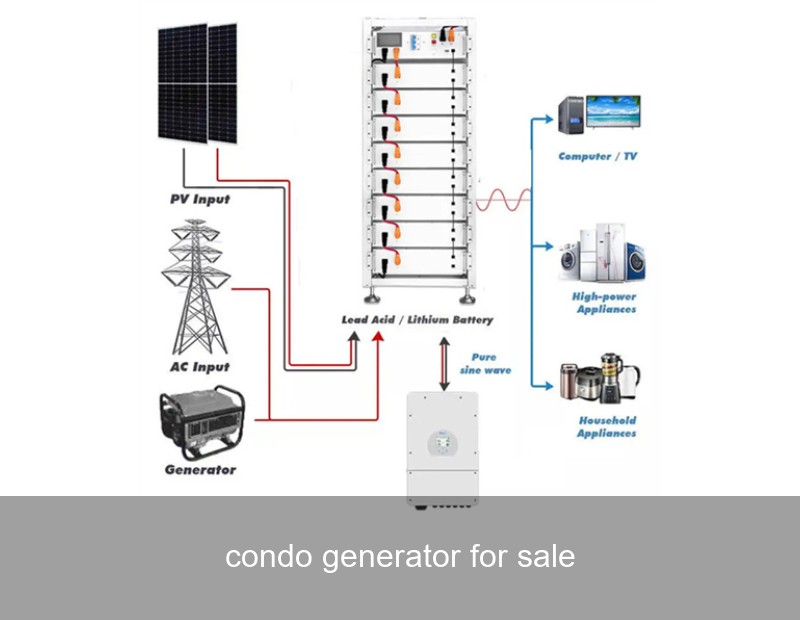
So, what's the alternative when you're looking for a "condo generator for sale"? Think beyond a single machine. Think of an intelligent, integrated energy system. A modern battery storage system, often paired with solar PV, forms the heart of a building-scale microgrid.
Here’s how it works: A large-scale battery system is installed in your building's basement, parking garage, or utility area. It is continuously charged from the grid during off-peak, low-cost hours. When the grid fails, it automatically and instantaneously (within milliseconds) switches to powering critical building loads. Unlike a roaring generator, it operates silently and with zero on-site emissions.

The real intelligence comes from software. A smart energy management system can decide when to use the stored power. It can provide backup during outages, but also perform "peak shaving" – using battery power during times of high grid demand to reduce the building's peak utility charges, a significant portion of commercial electricity bills. This turns a cost center (backup power) into a revenue-saving asset.
Case Study: A Chicago Condo's Transformation
Consider the real-world example of "The Parkside Residences," a 120-unit luxury condominium in Chicago, Illinois. Facing frequent brief grid disturbances and seeking to enhance sustainability, the board evaluated a new diesel generator. The quote: $150,000 for a unit to power only common areas, plus $15,000/year in estimated maintenance and fuel costs.
They chose a different path. In 2023, they installed a 500 kWh battery storage system integrated with their existing rooftop solar array. The system was designed to:
- Provide 8+ hours of backup power for all common areas (lighting, elevators, lobby) AND critical circuits in every unit (outlets for refrigeration, medical devices, communications).
- Automatically reduce the building's demand from the grid during peak afternoon hours in summer.
| Metric | Traditional Diesel Generator Plan | Installed Battery + Solar System |
|---|---|---|
| Upfront Cost | $150,000 | $210,000 |
| Estimated Annual Operating Cost | $15,000 | $ -3,200 (net savings from peak shaving) |
| Payback Period | N/A (Pure cost) | ~6.5 years (from utility savings + ITC) |
| Resident Coverage | Common Areas Only | Common Areas + Critical Unit Power |
| Noise & Emissions | High | Zero On-Site |
After one year, the system successfully navigated three grid outages seamlessly. More importantly, its peak-shaving functionality generated over $3,200 in net savings on the building's utility bill, turning the investment into a positive cash flow asset. The project also qualified for the 30% Federal Investment Tax Credit (ITC), significantly lowering the net capital cost.
Key Benefits for Your Condominium
Transitioning from a search for a simple "condo generator for sale" to planning a comprehensive resilience system delivers multifaceted value:
- Enhanced Resilience & Safety: Silent, instant, and reliable power that can keep more than just elevators running.
- Financial ROI: Through peak shaving, demand charge reduction, and potential participation in grid services programs (like demand response), the system pays for itself over time.
- Increased Property Value: A modern, clean-energy system is a powerful marketing tool, appealing to environmentally conscious buyers and future-proofing the property.
- Sustainability Leadership: Dramatically reduces the building's carbon footprint and supports grid stability by using clean, stored energy.
- Quiet & Clean Operation: No fumes, no noise complaints, and often easier permitting processes in environmentally progressive municipalities.
How Highjoule Powers Condo Resilience
This is where Highjoule's expertise becomes critical. Since 2005, we have evolved from an advanced battery provider to a global integrator of intelligent, software-defined energy storage solutions. For condominiums and multi-tenant dwellings, we don't just sell a battery; we deliver a guaranteed outcome: uninterrupted power and predictable energy costs.
Our approach for condo communities involves a full-service partnership:
- Custom Feasibility & Design: Our engineers analyze your building's load profiles, utility bills, and physical layout to design an optimal system sized for both backup needs and financial savings.
- The Highjoule H-Series Commercial ESS: We deploy our scalable, containerized or rack-mounted H-Series systems. These are built with industry-leading lithium-iron-phosphate (LFP) battery cells for maximum safety and longevity, managed by our proprietary JouleMind AI software platform.
- JouleMind AI Platform: This is the brain of the operation. It autonomously manages energy flow, deciding when to charge, discharge, or hold based on weather, grid conditions, and building usage patterns to maximize economics and readiness.
- Comprehensive Support: From navigating incentives like the ITC to long-term performance monitoring and maintenance, we ensure your system delivers value for decades.

Our systems are designed for the unique challenges of multi-family buildings, ensuring seamless integration with existing electrical infrastructure and providing clear, dashboard-based insights for board members and facility managers.
Your Path to Uninterrupted Power
The question for your condo board is no longer simply, "Which generator should we buy?" The more strategic, forward-looking questions are: "How do we ensure resilient, clean, and cost-effective power for all our residents for the next 25 years?" and "How can we turn a mandatory safety expense into a strategic investment that saves money and increases our property's appeal?"
The technology is here, proven, and financially viable. The shift from reactive backup to proactive energy intelligence is underway in forward-thinking communities across the U.S. and Europe. What specific energy challenge is your condo association prioritizing in its next capital planning meeting?
 Inquiry
 Online Chat