


Understanding the True Cost of Putting Solar Panels on Your Home or Business
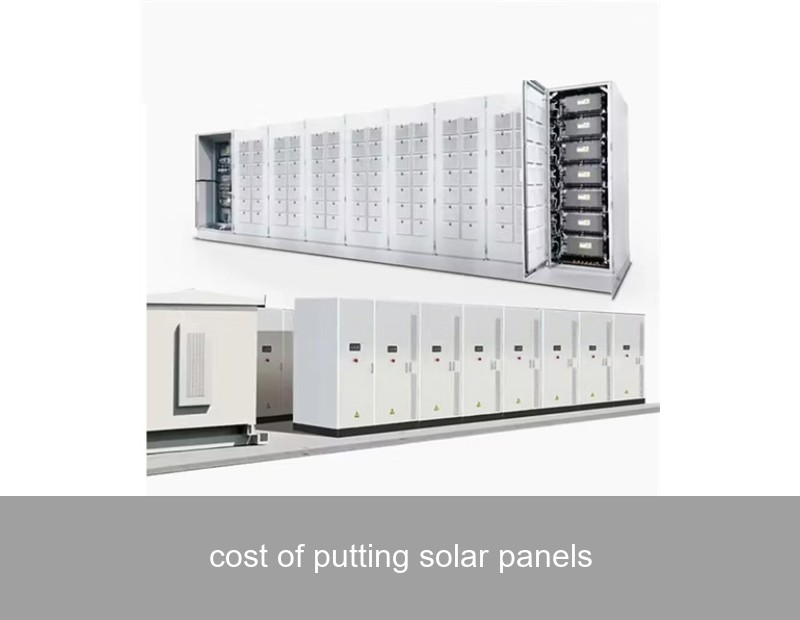
Thinking about going solar? You're not alone. Across Europe and the U.S., more homeowners and businesses are looking to harness the sun's power. But when you start researching, the big question quickly becomes: what is the actual cost of putting solar panels on my property? It's a crucial question, and the answer is more nuanced than a simple price tag. It's an investment that involves upfront costs, long-term savings, and importantly, the value of energy independence. Let's break it down.
Table of Contents
- Breaking Down the Costs: More Than Just Panels
- The Hidden Factor: Why Your Storage Solution Defines Value
- Case Study: A Bavarian Dairy Farm's Energy Transformation
- Navigating the Financial Landscape: Incentives and Financing
- The Highjoule Advantage: Smart Storage for Maximum ROI
- Future-Proofing Your Solar Investment
Breaking Down the Costs: More Than Just Panels
The initial quote for a solar panel system often focuses on the modules themselves. However, the total cost of putting solar panels is a sum of several components:
- Equipment (Hardware): This includes the solar panels, inverters (which convert DC solar power to usable AC power), mounting hardware, and crucially, the battery energy storage system (BESS).
- Soft Costs: These are non-hardware expenses like permitting, inspection fees, installer labor, and system design.
- Maintenance & Operation: While solar panels are low-maintenance, budgeting for occasional cleaning and system monitoring is wise.
According to the U.S. Department of Energy, soft costs can represent a significant portion of the total price, especially in residential installations. In Europe, VAT rates and local grid connection fees also play a major role.

Image: The installation process is a key component of the overall cost. Source: Unsplash
The Price Range: What Can You Expect?
Prices vary widely based on location, system size, and equipment quality. As of 2023, a typical residential solar system in the U.S. might range from $15,000 to $25,000 before incentives. In Germany or the UK, a similar 4-5 kW system might cost €10,000 to €18,000. But here's the critical shift in thinking: this isn't just an expense; it's a capital investment with a measurable return.
The Hidden Factor: Why Your Storage Solution Defines Value
This is where the conversation about the true cost of putting solar panels gets interesting. Without a storage solution, you're only capturing part of the solar value proposition. You generate power during the day, but what about at night or on cloudy days? You end up exporting excess energy to the grid at low rates and importing expensive power when the sun isn't shining.
Adding a battery storage system changes the entire equation. It allows you to:
- Increase Self-Consumption: Use your solar power 24/7, drastically reducing grid imports.
- Provide Backup Power: Keep critical loads running during grid outages.
- Participate in Grid Services: In some markets, you can earn revenue by providing grid stability services.
Therefore, evaluating the cost without considering storage is like buying a car and only budgeting for the wheels. The battery is the engine of your energy independence.
Case Study: A Bavarian Dairy Farm's Energy Transformation
Let's look at a real-world example from our work at Highjoule. A medium-sized dairy farm in Bavaria, Germany, was facing rising and unpredictable energy costs for milking systems, cooling, and general operations. Their initial solar quote for a 100 kW rooftop system was around €85,000. However, their analysis showed that without storage, they would still be importing 60% of their power from the grid due to nighttime operations.
They partnered with Highjoule to integrate a 150 kWh commercial battery storage system alongside the solar array. The total project cost increased, but the financial outcome was transformative:
| Metric | Without Storage | With Highjoule Storage |
|---|---|---|
| Upfront System Cost | ~€85,000 | ~€155,000 |
| Grid Electricity Import | 60% of needs | 15% of needs |
| Estimated Payback Period | 9 years | 6.5 years |
| Energy Self-Sufficiency | ~40% | ~85% |
The data speaks for itself. By investing in a complete solar-plus-storage solution, the farm turned a larger upfront cost into a faster-returning, more resilient, and far more valuable asset. They now have a predictable energy cost for the next 20+ years and are shielded from volatile market prices, a concern for many businesses across Europe today. You can explore more real-world data on the International Energy Agency's reports.
Navigating the Financial Landscape: Incentives and Financing
Thankfully, governments are actively encouraging this transition. The effective cost of putting solar panels is significantly lowered by a variety of incentives:
- In the U.S.: The federal Investment Tax Credit (ITC) currently offers a 30% tax credit for solar and storage installations. Many states add additional rebates or performance-based incentives.
- In the EU: Programs vary by country, from Germany's KfW development bank loans with low interest to Italy's Superbonus 110% scheme (recently revised) and VAT reductions on solar equipment in several member states.
Furthermore, financing options like solar leases, Power Purchase Agreements (PPAs), and green loans have made it possible to install systems with little to no money down, with monthly payments often lower than the previous electricity bill.

Image: A modern home integrating solar, storage, and EV charging for a comprehensive energy solution. Source: Unsplash
The Highjoule Advantage: Smart Storage for Maximum ROI
At Highjoule, we believe the right storage system is what unlocks the full potential of your solar investment. Since 2005, we've specialized in designing intelligent, integrated storage solutions that go beyond just holding a charge. Our systems, like the Highjoule H-Series for residential applications and the MegaJoule platform for commercial & industrial use, are built with advanced lithium-iron-phosphate (LiFePO4) batteries known for safety and longevity.
What sets our approach apart is software intelligence. Our Adaptive Energy Management System (AEMS) doesn't just store and release energy; it learns your consumption patterns, forecasts weather, and can integrate with time-of-use electricity rates. It automatically decides the most economical moment to store solar energy, use it, or even sell it back to the grid, optimizing your financial return every single day. For businesses with microgrid needs, our systems provide critical resilience and can manage multiple energy sources seamlessly.
Future-Proofing Your Solar Investment
The energy landscape is evolving rapidly. When considering the cost of putting solar panels, think about future needs. Are you planning to buy an electric vehicle? Your storage system can become your personal charging station. Do you expect energy prices to rise? Your locked-in solar cost becomes a strategic advantage. A Highjoule system is designed to be scalable and adaptable, ensuring your investment continues to deliver value for decades.
Choosing a partner with deep expertise in both solar integration and battery technology is crucial. It's the difference between buying components and getting a guaranteed energy outcome. For a deeper dive into battery technologies, resources like ScienceDirect's engineering topics offer valuable technical background.
So, What's Your Next Step in the Energy Journey?
The conversation about cost is ultimately a conversation about value, control, and sustainability. The true metric isn't just the price on the initial invoice, but the lifetime cost of your energy and the peace of mind that comes with a resilient, self-sufficient power supply.
What energy challenges is your home or business facing today, and how could a tailored solar-plus-storage solution not only address them but also open new opportunities for savings and growth?
 Inquiry
 Online Chat