


Beyond the Price Tag: Understanding the True Cost of PV Panel for Sale
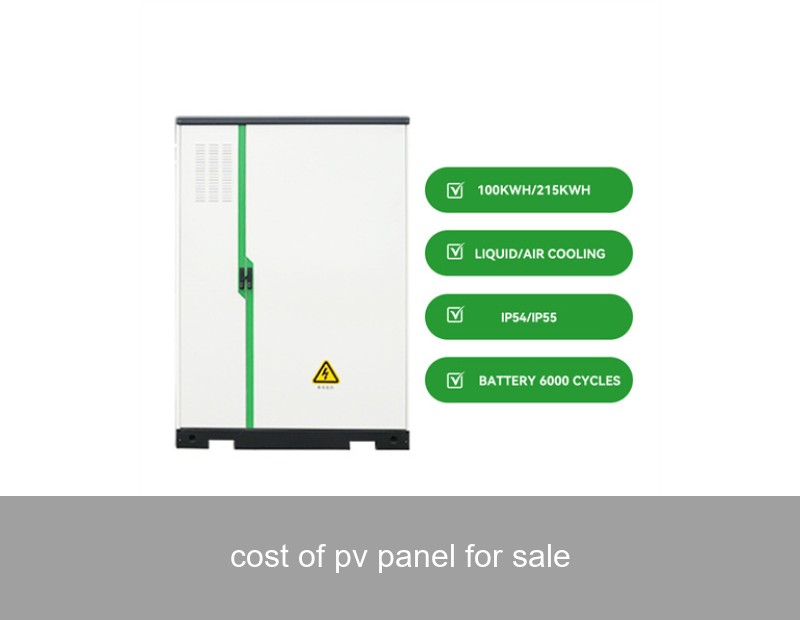
If you're researching the cost of PV panel for sale, you've likely seen striking headlines about prices falling to historic lows. It's tempting to think the journey ends at finding the cheapest panel per watt. But as a seasoned expert in renewable energy systems, I'm here to share a crucial insight: the sticker price is just the opening chapter of the story. The true cost—and ultimately, the value—of your solar investment is a multifaceted equation involving technology, integration, and long-term performance. Let's peel back the layers and explore what you're really investing in when you buy solar panels.
The Price vs. Cost Phenomenon: Why the Cheapest Panel Can Be the Most Expensive
We see it all the time. A homeowner or business owner finds a fantastic deal on PV modules, only to face unexpected expenses down the line. The phenomenon is simple: Price is what you pay upfront. Cost is what you incur over the system's 25-30 year lifespan. A low-efficiency panel might have a lower price, but it requires more roof space, more mounting hardware, and more labor to install for the same power output. Conversely, a premium, higher-efficiency panel commands a higher price but generates more electricity in a constrained area, often with better degradation warranties, leading to a lower lifetime cost of energy.

Image Source: Unsplash - Panel efficiency directly impacts long-term cost and space requirements.
Breaking Down the Components of True Cost
To make an informed decision, you must look at the total cost of ownership. Here are the key components:
- Hardware Costs (CapEx): This is the visible "cost of PV panel for sale," but it also includes inverters, mounting systems, wiring, and importantly, the energy storage system if applicable.
- Soft Costs: Often overlooked, these include permitting, inspection, interconnection fees, and installer labor. In markets like the U.S., soft costs can constitute a significant portion of the total system price.
- Installation & System Design: A poorly designed system with suboptimal string configuration or shading issues will underperform for decades, increasing your cost per generated kilowatt-hour.
- Operation & Maintenance (O&M): Regular cleaning, monitoring, and potential repairs add to the long-term cost. Higher-quality components typically have lower O&M needs.
- Opportunity Cost of Inefficiency: This is the "hidden" cost. Every kilowatt-hour your system doesn't produce due to panel degradation, inverter failure, or lack of storage (leading to export at low rates) is a cost.
| Factor | Low-Price Panel Focus | High-Value System Focus |
|---|---|---|
| Upfront Price per Watt | Low | Higher |
| Efficiency & Power Density | Lower (requires more space) | Higher (maximizes constrained space) |
| Annual Degradation Rate | e.g., 0.7% | e.g., 0.3-0.5% (more power over 25 yrs) |
| Warranty Coverage | 10-12 years product, 25-30 years power | Up to 25 years product & power |
| System Integration | Can be complex with 3rd-party parts | Seamless with compatible storage/inverters |
| Lifetime Energy Yield | Lower | Significantly Higher |
From Data to Reality: A European Case Study
Let's ground this in a real-world example. Consider a medium-sized commercial bakery in Southern Germany with a high, consistent daytime energy load. They installed a 100 kWp system in 2020.
- Initial Approach: They sourced low-cost Tier 2 panels at €0.25/W. The system was built with a standard string inverter.
- The Challenge: Despite the low panel price, the bakery exported over 40% of its solar generation to the grid in the afternoon (when self-consumption was low), receiving a feed-in tariff of only €0.08/kWh. Meanwhile, they had to buy electricity from the grid in the early morning and evening at €0.32/kWh.
- The Solution & Result: In 2023, they partnered with Highjoule to retrofit a Highjoule HES-200 battery energy storage system (BESS). The 120 kWh battery stores excess midday production for use during peak price hours. This simple addition increased their self-consumption from ~60% to over 90%. The levelized cost of energy (LCOE) for their combined PV+storage system dropped by 31%, and the payback period for the storage addition is projected to be under 7 years thanks to the massive arbitrage. The initial low cost of PV panel for sale became irrelevant; the total system economics were transformed by intelligent storage.
Optimizing Your Total Cost of Ownership: The Integration Imperative
The case study highlights the modern imperative: solar panels should not be bought in isolation. To truly minimize your lifetime energy cost, you must think in terms of an integrated energy system. This is where the choice of partner becomes as critical as the choice of panel.
An advanced, AI-driven energy management system (EMS) can dynamically decide when to consume solar power directly, when to charge batteries, and when to export, based on weather forecasts, consumption patterns, and real-time electricity prices. This turns a static solar array into a responsive financial asset. According to the National Renewable Energy Laboratory (NREL), pairing solar with storage and smart controls can increase the value of solar by 20-40% depending on the market.
How Highjoule's Solutions Transform the Cost Equation
At Highjoule, founded in 2005, we approach the cost of PV panel for sale from this holistic perspective. We don't just supply components; we provide intelligent, integrated systems that optimize the total cost of ownership for our commercial, industrial, and residential clients across Europe and the U.S.
- Highjoule HPS Series (Hybrid Power Systems): These all-in-one units combine a high-efficiency inverter, MPPT charge controller, and grid connection with seamless integration of our battery storage. By ensuring perfect communication between PV modules and storage, they maximize every kilowatt-hour produced, directly lowering your effective energy cost.
- Highjoule Apex EMS: Our proprietary Energy Management System is the brain of the operation. It uses machine learning to predict generation and consumption, automatically optimizing energy flows to reduce bills. For a business on a time-of-use tariff, this is where the real savings are unlocked.
- Professional Services & Design: Our technical experts design systems based on LCOE, not just upfront cost. We model 25-year performance, degradation, and financial returns, ensuring your investment in PV panels is supported by a system built for longevity and value.

Image Source: Unsplash - Integrated commercial solar-plus-storage system for maximizing self-consumption.
The Future Outlook: Where Are PV Panel Costs Headed?
While module prices are expected to remain competitive, the future of cost reduction lies in system-level innovation. Think smarter inverters, more durable and higher-density batteries, and AI-driven optimization software. The International Energy Agency (IEA) notes that while manufacturing scale has driven past price drops, further reductions will require advancements in installation techniques, supply chain resilience, and product standardization. The goal is no longer just cheaper panels, but cheaper, more reliable, and more valuable solar electricity delivered when and where you need it.
So, What's Your True Energy Goal?
As you evaluate the cost of PV panel for sale, I leave you with this question: Is your primary objective to minimize the initial invoice, or to maximize your energy independence and minimize your lifetime electricity bills? The answer will fundamentally guide whether you purchase a commodity component or invest in a intelligent energy solution.
What specific energy challenge—be it peak shaving, backup power, or simply reducing a volatile utility bill—are you hoping your solar investment will solve?
 Inquiry
 Online Chat