


Solar Power Supply for Home: Your Guide to True Energy Independence
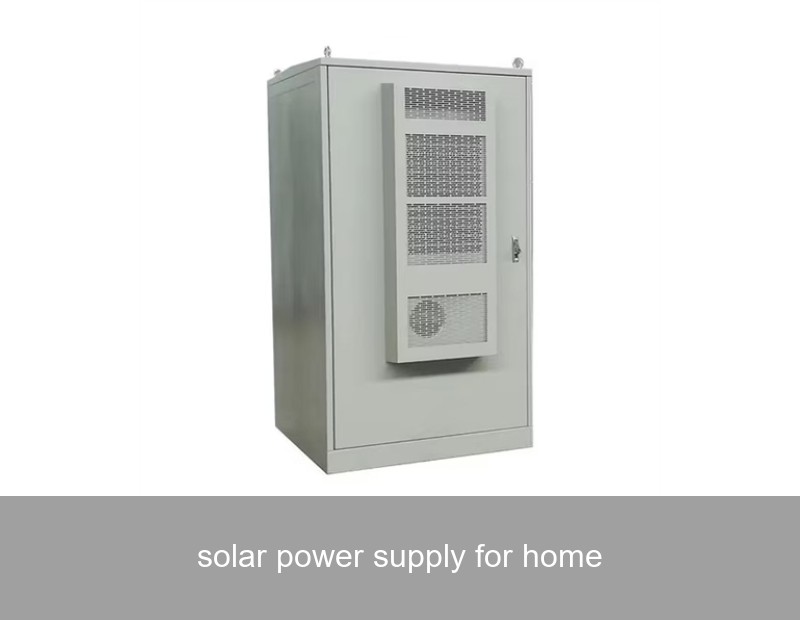
Imagine a quiet afternoon, the sun is shining, and your home is humming along. The lights are on, the refrigerator is cooling, and you're charging your devices. Now, imagine that all this power is coming directly from your roof, with no monthly bill from the utility company and a significantly lighter carbon footprint. This isn't a distant future fantasy; it's the reality for a growing number of homeowners across the U.S. and Europe who have invested in a comprehensive solar power supply for home. But here's the secret many are just discovering: the true magic doesn't start with the solar panels—it starts with what happens to the energy they create.
The Home Energy Revolution: More Than Just Panels
For years, "going solar" meant installing photovoltaic (PV) panels and sending excess energy back to the grid, often through net metering programs. This was a great first step. However, the energy landscape is shifting. Grid instability, rising electricity costs, and a deeper desire for self-reliance are driving homeowners to seek more robust solutions. A modern home solar power supply is now understood as an integrated system: a combination of generation (solar panels), storage (battery systems), and intelligent management software.
Image: A modern home equipped with solar panels. Credit: Unsplash
The Storage Imperative: Why Solar Alone Isn't Enough
Let's talk about a common phenomenon. Your solar panels are most productive in the middle of the day when you're likely at work. Your energy consumption, however, peaks in the early morning and evening. Without storage, you're exporting power cheaply in the afternoon only to buy it back at a higher rate at night. This mismatch is the core challenge.
The data is compelling. According to the U.S. Department of Energy, pairing solar with storage can increase a homeowner's consumption of self-generated electricity from 30-50% to over 80%. In Europe, with volatile gas prices and a strong push for decarbonization, the economic case is even stronger. A battery transforms your solar array from a partial solution into a 24/7 power supply for your home.
Key Components of a Modern Home Solar Power Supply
Understanding the system parts demystifies the process:
- Solar Panels (PV Modules): Capture sunlight and convert it to direct current (DC) electricity.
- Inverter(s): The brain of the power conversion. It transforms DC electricity from panels and batteries into usable alternating current (AC) for your home. Modern systems often use a combination of a central inverter and smaller, module-level power electronics (MLPEs) for optimal performance.
- Battery Storage System (BESS): The heart of energy independence. It stores excess solar energy for use when the sun isn't shining. Key metrics are usable capacity (kWh), power rating (kW), and depth of discharge (DoD).
- Energy Management System (EMS): The nervous system. This intelligent software decides when to charge the battery, power the home, or export to the grid, maximizing economics and reliability.
| Feature | Solar-Only System | Solar + Storage System |
|---|---|---|
| Energy Self-Consumption | 30-50% | 80%+ |
| Backup During Outages | No (Grid-tied systems shut off) | Yes, seamless transition |
| Bill Savings Potential | Moderate, depends on net metering | High, avoids peak-time rates |
| Grid Independence | Low | High |
A Real-World Case: The Smith Family's Journey in California
Let's ground this with a real example. The Smith family in Sacramento, California, installed a 8 kW solar array in 2020. While their summer bills were low, they still faced high charges during winter and early evening peaks. In 2023, they added a 13.5 kWh lithium iron phosphate (LFP) battery system to their existing setup.
The results, tracked over one year:
- Energy Bill Reduction: Increased from 60% to 92% annual savings.
- Self-Consumption Rate: Rose from 41% to 89%.
- ROI Impact: The payback period for the combined system is projected to be under 7 years, enhanced by California's SGIP (Self-Generation Incentive Program) and federal tax credits.
- Peace of Mind: The system has provided backup during two public safety power shutoffs (PSPS), totaling 14 hours, with no disruption to their home office or refrigeration.
This case highlights that a complete solar power supply for home isn't just about saving money—it's about resilience. As noted by the National Renewable Energy Laboratory (NREL), solar-plus-storage is a critical tool for community resilience in the face of increasing grid disturbances.
Choosing the Right System: What to Look For
Not all systems are created equal. When evaluating a home solar power supply, ask these questions:
- Battery Chemistry & Safety: Is it stable LFP chemistry, known for long life and safety, or older NMC?
- System Intelligence: Can it learn your usage patterns and automatically optimize for cost or carbon goals?
- Scalability: Can you easily add more battery capacity later if your needs change (e.g., buying an EV)?
- Integration: Is it a seamless, pre-engineered solution, or a "franken-system" of disparate components?

Image: A modern home battery storage system. Credit: Unsplash
The Highjoule Solution: Intelligent Energy Independence
This is where Highjoule's expertise comes into play. Since 2005, we've been at the forefront of advanced energy storage, designing systems that think. For the residential market, our Highjoule HomePower series isn't just a battery; it's an integrated energy ecosystem.
Our solution directly addresses the core needs of a modern solar power supply for home:
- High-Safety LFP Batteries: Our HomePower units utilize Lithium Iron Phosphate chemistry, offering a longer cycle life, superior thermal stability, and zero risk of thermal runaway for ultimate peace of mind.
- AI-Powered Energy OS: The brain of the system. Our software doesn't just react—it predicts. By analyzing weather forecasts, your historical consumption, and real-time utility rate structures (like time-of-use plans), it makes intelligent decisions to maximize your savings and comfort.
- Modular & Scalable Design: Start with a 10 kWh unit and seamlessly stack additional modules as your energy needs grow. This future-proofs your investment.
- Whole-Home Backup Ready: With high power output ratings, the HomePower system can seamlessly take over during a grid outage, powering essential circuits or even your entire home, depending on your configuration.
For homeowners, this translates to a system that works tirelessly in the background to deliver the highest possible return on investment, not just in financial terms, but in reliability and environmental impact.
The Future of Home Energy is Integrated
The conversation is moving beyond "how many panels do I need?" to "how can my home become an intelligent, self-sufficient energy hub?" The next wave includes integrating electric vehicle charging, smart appliances, and even vehicle-to-home (V2H) technology, where your EV battery can power your house. A robust, intelligent solar and storage power supply for your home is the essential foundation for this future.
So, as you consider taking control of your energy, ask yourself: Is your goal merely to offset some of your grid consumption, or is it to build a resilient, efficient, and truly independent home energy system that can meet the challenges and opportunities of the next two decades?
 Inquiry
 Online Chat