


Understanding the True Cost of Solar Panels in Mauritius: A Smart Investment Guide
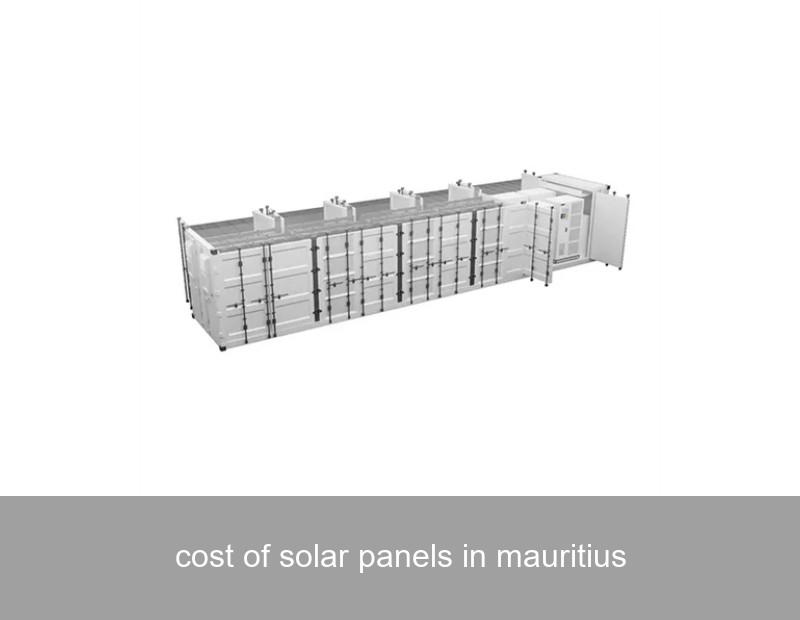
Thinking about going solar in Mauritius? You're not alone. The island's abundant sunshine makes it a prime candidate for solar energy, promising independence from fossil fuels and protection from fluctuating utility prices. But when you start researching the "cost of solar panels in Mauritius," you'll find a range of figures that can be confusing. Is it just about the price per watt on the panel, or is there more to the story? As a global leader in energy storage solutions, Highjoule understands that the real value of solar lies not just in generation, but in intelligent, reliable consumption. Let's break down the true cost and long-term value of a solar power system for your Mauritian home or business.
Table of Contents
- Breaking Down the Solar Panel Cost Components in Mauritius
- Beyond Panels: The Critical Role of Energy Storage
- Mauritius Case Study: A Hotel's Journey to Energy Independence
- Calculating Long-Term Value vs. Upfront Cost
- The Highjoule Solution: Smart, Integrated Energy Management
- Your Solar Investment: What's the Right Next Step?
Breaking Down the Solar Panel Cost Components in Mauritius
The initial quote for a solar system involves several key elements. It's crucial to look at this holistically, as choosing the cheapest panels might lead to higher costs down the line.
- Solar Panels (Photovoltaic Modules): Costs vary by efficiency and brand. High-efficiency panels cost more but generate more power in limited roof space, a key consideration for many properties.
- Inverters: This device converts the DC electricity from your panels to usable AC power. A reliable, efficient inverter is non-negotiable for system performance and longevity.
- Mounting Hardware & Installation: This includes racks, wiring, and professional labor. Quality installation ensures your system withstands tropical weather, including cyclones.
- Permits and Grid Connection Fees: Working with the Central Electricity Board (CEB) requires specific approvals for grid-tied systems.
- The Most Overlooked Component: The Battery Energy Storage System (BESS). This is where the real transformation happens.
Beyond Panels: The Critical Role of Energy Storage
Imagine your solar panels working hard all day while you're out. Without a battery, excess energy is fed back to the grid, often at a lower rate than you buy it for at night. This is the fundamental gap in a solar-only setup. A Battery Energy Storage System (BESS) captures that excess daytime energy for use in the evening, during peak tariff hours, or during a power outage. When evaluating the cost of solar panels in Mauritius, integrating storage from the start is the smartest financial and practical decision. It maximizes self-consumption, provides backup power, and shields you from future energy price hikes.

A complete solar-plus-storage system maximizes energy independence for Mauritian homes. (Image source: Pexels)
Mauritius Case Study: A Hotel's Journey to Energy Independence
Let's look at real data. A 120-room beachfront hotel on the east coast of Mauritius was facing an annual electricity bill of over MUR 18 million (approx. USD 400,000), with costs spiking during evening peak hours for air conditioning and lighting. They installed a 500 kWp solar array coupled with a 1 MWh lithium-ion battery storage system.
| Metric | Before Installation | After Installation (First Year) |
|---|---|---|
| Grid Electricity Consumption | 100% | 40% |
| Peak Demand from Grid | Uncontrolled | Reduced by 65% |
| Annual Energy Cost Savings | N/A | MUR 7.2 Million (USD 160k) |
| ROI Period | N/A | Estimated 5-6 years |
The system powers daytime operations with solar, charges the batteries, and then discharges stored energy during the expensive 6 PM to 10 PM peak period. The hotel also gained critical backup power, ensuring guest comfort during any grid instability. This case shows that the upfront cost of solar panels in Mauritius, when combined with storage, is an investment with a clear and calculable return.
Calculating Long-Term Value vs. Upfront Cost
Focusing solely on the lowest price per panel can be a costly mistake. Value is measured over 20+ years. Key considerations include:
- Durability in Tropical Climate: Equipment must resist high humidity, salt air, and strong UV radiation. Premium components have better corrosion resistance and longer warranties.
- System Efficiency: Higher efficiency panels and inverters generate more kilowatt-hours over the system's life, directly impacting payback time.
- Battery Cycle Life & Warranty: A cheap battery that needs replacing in 5 years destroys your financial model. Look for batteries with a high cycle life (e.g., 6000+ cycles) and a strong warranty that guarantees capacity retention over time.
- Smart Energy Management: Can your system intelligently decide when to charge from solar, when to discharge, and when to take a small amount from the grid to preserve battery life? This software intelligence is what maximizes savings.
The Highjoule Solution: Smart, Integrated Energy Management
This is where Highjoule's expertise becomes pivotal. Since 2005, we've moved beyond just supplying hardware to delivering complete, intelligent energy ecosystems. For homeowners and businesses in Mauritius considering solar, our approach redefines the cost-benefit analysis.
Highjoule's HES (Highjoule Energy Stack) platform integrates high-performance lithium iron phosphate (LiFePO4) battery storage with advanced hybrid inverters and AI-driven energy management software. Our systems are specifically engineered for resilience in diverse climates. For the Mauritian market, this means:
- Maximized Self-Consumption: Our software learns your energy patterns and automatically optimizes when to store and when to use solar energy, slashing your grid dependence.
- Peak Shaving: Automatically reduces power drawn from the grid during expensive peak tariff periods, a major cost saver for CEB customers.
- Grid Services & Future-Proofing: Our commercial-scale systems can be configured to provide grid stability services, potentially opening future revenue streams.
- Uninterrupted Power Supply (UPS): Seamless transition to backup power in less than 20 milliseconds during a grid outage—critical for businesses and essential home appliances.
When you partner with a certified Highjoule installer in Mauritius, you're not just buying panels and a battery; you're investing in a guaranteed energy outcome: lower bills, reliable power, and a sustainable future. We provide the technology that makes the initial investment in the cost of solar panels in Mauritius a truly wise long-term decision.

Industrial-scale battery storage, like Highjoule's solutions, enables businesses to manage energy costs effectively. (Image source: Unsplash)
Your Solar Investment: What's the Right Next Step?
The journey to solar in Mauritius starts with the right questions. Instead of "What is the cheapest system?" ask:
- What is my true energy consumption pattern, including my peak evening load?
- What level of backup power is essential for my home or business operations?
- Does the proposed solution include intelligent software to adapt to changing tariffs and my usage?
- Is the provider offering a complete, integrated system with a single point of warranty responsibility?
We encourage you to consult with a qualified energy advisor who can analyze your last 12 months of CEB bills and provide a simulation for a solar-plus-storage system. What would your energy bill look like if you could avoid 80% of the peak tariff charges starting next month?
 Inquiry
 Online Chat