


Understanding Solar Panel Prices in Sweden: A Smart Buyer's Guide for 2024
If you're a homeowner in Sweden considering the switch to renewable energy, one of the first questions on your mind is likely, "What do solar panels cost?" The price of a solar panel system in Sweden isn't a single number; it's a puzzle where the pieces—equipment quality, system size, installation, and long-term value—all fit together. With Sweden's ambitious climate goals and the increasing desire for energy independence, making an informed decision is more crucial than ever. This guide will demystify solar panel prices in Sweden and show you how to think beyond the initial quote to maximize your investment for decades to come.
Table of Contents
- The Real Breakdown of Solar Panel System Costs
- Key Factors Influencing Your Solar Investment in Sweden
- A Real-World Case: The Johansson Family in Västerås
- Thinking Beyond Panels: The Critical Role of Energy Storage
- The Highjoule Advantage: Integrated Intelligence for Swedish Homes
- Making the Right Choice for Your Home
The Real Breakdown of Solar Panel System Costs
Let's move beyond the simple "price per panel." A residential solar photovoltaic (PV) system is a complete package. In 2024, the total installed cost for a typical Swedish home system (aiming for 8-10 kWp to offset a significant portion of household consumption) generally ranges between 80,000 SEK and 150,000 SEK before any subsidies. This variation isn't random; it's based on what's inside the package.
- Solar Panels (Modules): Typically 20-30% of the cost. You'll encounter different tiers: standard efficiency polycrystalline panels, higher-efficiency monocrystalline panels (better for limited roof space), and premium models with superior performance in low-light conditions—common in Swedish winters.
- Inverter(s): The "brain" of your system, converting DC solar power to AC for your home. This accounts for 10-15% of the cost. Options include string inverters, power optimizers, or microinverters, each with pros and cons for handling shade or future expansion.
- Mounting System & Hardware: The unsung hero (5-10% of cost). In Sweden, this must be engineered for harsh weather, heavy snow loads, and corrosion resistance. A cheap racking system is a long-term liability.
- Installation & Labor: A significant portion (25-35%). This covers design, permitting, grid connection paperwork, the physical installation, and commissioning. Expertise here ensures safety, performance, and compliance with local regulations like Elsäkerhetsverket standards.
- Additional Components: This is where the modern system shines. Cabling, monitoring systems, and crucially, energy storage batteries are now often considered part of the initial plan.
According to data from the International Energy Agency (IEA), the global average cost of solar PV has fallen by over 80% in the last decade, a trend reflected in the Swedish market. However, the focus is shifting from cheapest upfront cost to highest lifetime value.
Key Factors Influencing Your Solar Investment in Sweden
Why does your neighbor's quote differ from yours? Several Sweden-specific factors are at play.
| Factor | Impact on Price & Performance |
|---|---|
| System Size (kWp) | Larger systems have a higher total cost but a lower cost per kWp. Your optimal size depends on your annual electricity consumption (found on your bill) and your roof's usable area. |
| Panel Efficiency & Brand | High-efficiency panels (e.g., 21%+) produce more power per square meter, ideal for smaller roofs. They come at a premium but can offer better long-term returns. |
| Roof Characteristics | A simple, south-facing tile roof is less expensive to equip than a complex metal roof with multiple angles or skylights. Shading from trees or chimneys may require more advanced (and costly) componentry. |
| Grid Connection & Permits | Most Swedish municipalities have streamlined the process, but costs can vary. Your installer should handle this, but it's factored into the labor cost. |
| Energy Storage (Battery) | Adding a battery system increases the initial investment significantly but maximizes self-consumption. It allows you to store excess daytime production for use during expensive evening peaks, a key to unlocking true energy independence. |
A Real-World Case: The Johansson Family in Västerås
Let's look at a real example from 2023. The Johansson family lives in a detached house in Västerås with an annual electricity consumption of 15,000 kWh. They received three quotes for a solar PV system.
Their Goal: Maximize self-consumption and reduce reliance on the grid, not just achieve the lowest sticker price.
The Chosen Solution: A 9.8 kWp system using premium monocrystalline panels, paired with a hybrid inverter and a 10 kWh lithium-iron-phosphate (LiFePO4) battery. Total installed cost: 135,000 SEK.
The Outcome (First Year Data):
- System Production: 8,900 kWh (slightly below optimal due to a cloudier-than-average summer, but well within projections).
- Self-Consumption Rate: Increased from 35% (panels only) to 85% with the battery. The family stores midday surplus to power their home through the evening and night.
- Grid Electricity Purchased: Reduced by approximately 70%.
- Estimated Payback Period: With current electricity prices and considering the smart use of stored power during peak tariff hours, the family projects a full return on investment in under 9 years. The battery and panels have warranties of 10+ and 25 years, respectively.
This case highlights a critical shift: the most valuable metric is no longer just the cost per installed kW, but the levelized cost of energy consumed (LCOE) at the socket. Storage transforms solar from a daytime supplement into a 24/7 power source.

Image: A modern solar installation on a Swedish home. Source: Unsplash (Representative image)
Thinking Beyond Panels: The Critical Role of Energy Storage
Here's the pivotal insight for Swedish homeowners: solar panels alone have a limitation. They produce the most when you might be at work, and not at all at night when demand is high. In Sweden, with its dramatic seasonal variation in sunlight, this mismatch is pronounced. Without storage, you export excess summer energy at a lower price and import expensive power in the dark winter months.
A modern Battery Energy Storage System (BESS) solves this. It allows you to:
- Maximize Self-Consumption: Use your own solar energy day and night, increasing the value of every kilowatt-hour your panels produce.
- Provide Backup Power: Keep essential circuits running during a grid outage—a feature gaining importance.
- Participate in Grid Services: In the future, agile systems may allow you to sell grid services, creating an additional revenue stream.
The technology matters. Lithium-ion batteries, particularly the safer and longer-lasting LiFePO4 chemistry, are the industry standard. When evaluating storage, look at usable capacity (kWh), power rating (kW), depth of discharge, round-trip efficiency, and warranty cycles. This is where partnering with a specialist, not just a panel installer, becomes key.
The Highjoule Advantage: Integrated Intelligence for Swedish Homes
This is where Highjoule's expertise transforms a simple solar installation into a resilient home energy system. As a global leader in advanced energy storage since 2005, we don't just supply batteries; we provide intelligent, integrated systems designed for climates and needs like Sweden's.
For the residential market, our Highjoule HomePower Stack is a modular LiFePO4 battery system built for Nordic conditions. Its compact, indoor/outdoor design integrates seamlessly with leading solar inverters. What sets it apart is the Highjoule Energy Operating System (EOS)—a smart software layer that learns your consumption patterns, weather forecasts, and electricity tariff schedules.
In practice, for a Swedish home, the Highjoule EOS might:
- Prioritize charging the battery from solar excess during the day.
- Discharge strategically during the high-price evening peak (e.g., 17:00-20:00), avoiding costly grid power.
- Conserve a "reserve" for potential outages or the next morning's peak.
- Optimize for seasonal changes, understanding that winter production is limited.
By focusing on the entire system's intelligence, Highjoule ensures your investment in solar panels in Sweden delivers the highest possible financial and practical return, making the price of the panels part of a much more valuable whole.

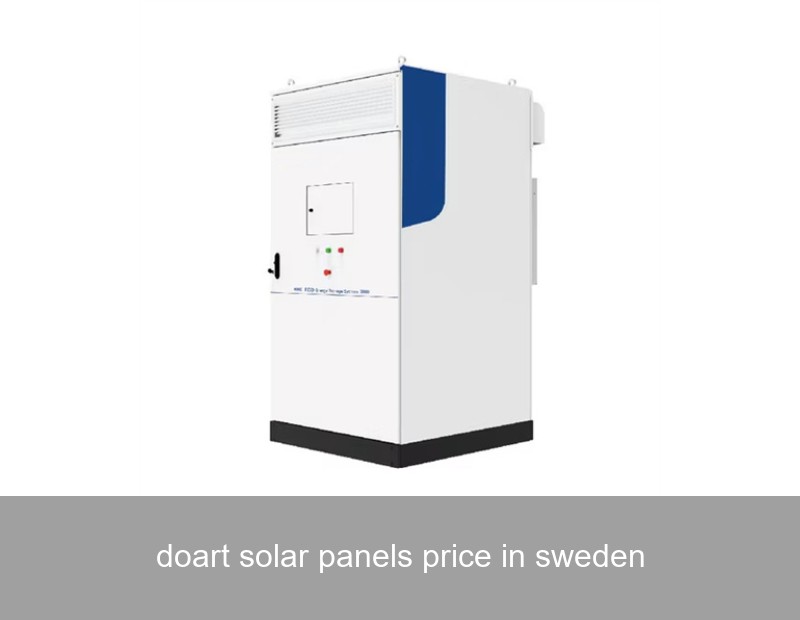
Image: A modern home battery energy storage system. Source: Unsplash (Representative image)
Making the Right Choice for Your Home
So, how should you approach the question of solar panel prices in Sweden? Start by requesting a detailed, site-specific analysis from qualified installers. Look for partners who discuss your annual consumption profile, not just your roof size. Ask them to model scenarios with and without energy storage to see the impact on your self-consumption and long-term savings.
Demand transparency on equipment brands, inverter technology, and the proposed system's performance in low-light and winter conditions. Consult independent sources like the Swedish Energy Agency (Energimyndigheten) for information on current subsidies and regulations.
Remember, you are not just buying panels. You are investing in a private power plant. The goal is to minimize your lifetime cost of electricity while maximizing comfort and resilience.
 Inquiry
 Online Chat