


Finding the Right CSP Solar System for Sale: Your Guide to Sustainable Power
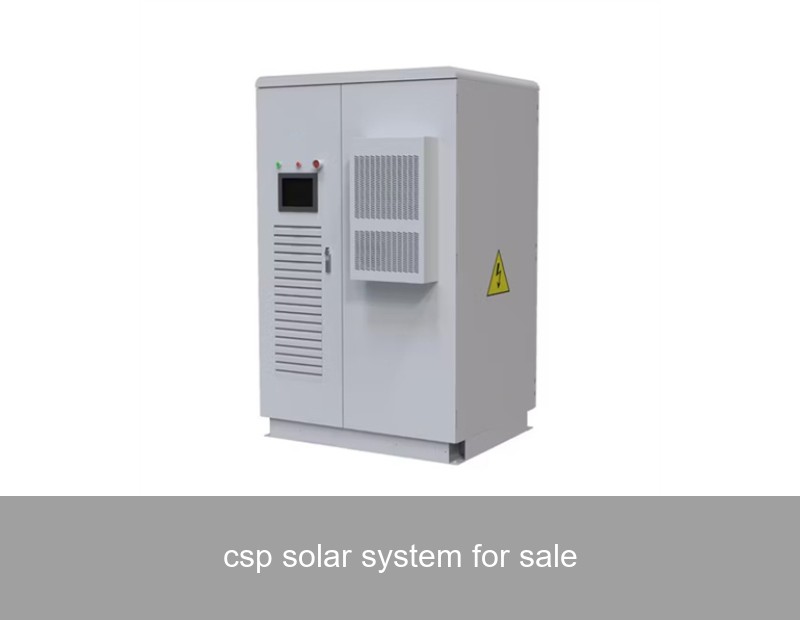
As the world intensifies its focus on clean energy, a powerful technology is capturing the attention of project developers, utilities, and large-scale energy users: Concentrated Solar Power (CSP). Unlike traditional photovoltaic (PV) panels, a CSP solar system uses mirrors to concentrate the sun's rays, generating intense heat to produce steam and drive turbines for electricity generation. The key differentiator? Built-in thermal energy storage. This article will guide you through the essentials of evaluating a CSP solar system for sale, its advantages, and how integrating it with advanced battery storage creates the ultimate resilient power solution.
Table of Contents
- What is a CSP Solar System and How Does It Work?
- CSP vs. PV: Why Thermal Storage is a Game-Changer
- Market Trends: The Data Driving CSP Adoption
- Real-World Case Study: CSP in the US Southwest
- The Hybrid Future: CSP Meets Advanced Battery Storage
- Key Considerations When Choosing a CSP System for Sale
- Highjoule's Role in Enhancing CSP Projects
What is a CSP Solar System and How Does It Work?
Let's break down the technology. A Concentrated Solar Power (CSP) system isn't about directly converting sunlight to electricity. Instead, it's a sophisticated thermal power plant fueled by the sun. Thousands of mirrors, called heliostats, track the sun and focus its energy onto a central receiver or through parabolic troughs. This concentrated sunlight heats a transfer fluid—often molten salt—to extreme temperatures, sometimes exceeding 500°C. This thermal energy can then be used immediately to create steam for a turbine or, crucially, stored in massive insulated tanks for use hours later.
The process involves four main components: the solar field (mirrors), the receiver, the thermal storage system, and the power block (turbine and generator). This inherent ability to store energy as heat is CSP's superpower, allowing it to deliver power on demand, even after sunset.
CSP vs. PV: Why Thermal Storage is a Game-Changer
You might wonder, "With solar PV prices so low, why consider CSP?" The answer lies in dispatchability. While PV generates electricity only when the sun shines, CSP with thermal storage acts like a traditional power plant that you can turn on when needed. This makes it invaluable for grid stability and meeting evening peak demand.
| Feature | Concentrated Solar Power (CSP) with Storage | Utility-Scale Solar PV with Batteries |
|---|---|---|
| Primary Output | Heat (converted to electricity) | Direct Electricity (DC) |
| Energy Storage Medium | Thermal (Molten Salt) | Electrochemical (Battery) |
| Storage Duration | Long-duration (6-15+ hours) | Short to mid-duration (2-6 hours typically) |
| Dispatchability | High - can generate on demand | Moderate - limited by battery capacity |
| Best For | Baseload/Peak power, Grid inertia | Daytime load shifting, Peak shaving |
Think of it this way: CSP is your long-duration, bulk energy supplier, while modern battery energy storage systems (BESS) are perfect for rapid response and frequency regulation. They are not competitors but powerful allies.
Market Trends: The Data Driving CSP Adoption
The global push for 24/7 renewable energy is revitalizing the CSP market. According to the International Energy Agency (IEA), CSP capacity is set to grow significantly, driven by its storage capability. In sun-rich regions like the southwestern United States, Spain, Chile, and the Middle East & North Africa (MENA), CSP is increasingly seen as a critical tool for decarbonizing the grid and providing reliable power. Governments are supporting this through policies that value capacity and dispatchability, not just generation.

Image Source: Unsplash - A modern CSP plant showcasing the solar field and central receiver.
Real-World Case Study: CSP in the US Southwest
Let's look at a concrete example. The Crescent Dunes Solar Energy Plant in Nevada, USA, was one of the first utility-scale CSP plants with integrated molten salt storage. With a capacity of 110 MW and 10 hours of full-load storage, it was designed to power 75,000 homes during peak evening hours. The plant demonstrated that CSP could reliably deliver power after dark, fulfilling utility contracts for evening peak demand.
While the project faced initial operational challenges—highlighting the importance of robust engineering and operational expertise—it provided invaluable data for the industry. It proved the technical feasibility of large-scale thermal storage and paved the way for next-generation plants with improved efficiency and lower costs. This case underscores that when evaluating a CSP solar system for sale, proven technology, operational support, and reliable partners are as critical as the price tag.
The Hybrid Future: CSP Meets Advanced Battery Storage
The most resilient and economical power plants of the future will likely be hybrids. Imagine a facility where a CSP plant provides long-duration, stable power and heat, while a complementary battery storage system handles instantaneous grid services, frequency regulation, and covers short-term cloud transients. This combination maximizes asset utilization and revenue streams.
This is where a company like Highjoule excels. Since 2005, Highjoule has been at the forefront of advanced battery energy storage systems (BESS). For a developer integrating a CSP solar system, adding Highjoule's smart BESS creates a truly dispatchable renewable powerhouse. Our GridMaster Pro and IndustrialStack battery systems can be seamlessly integrated to manage the rapid fluctuations that a thermal plant might not address as quickly, ensuring grid code compliance and optimizing power delivery.
Key Considerations When Choosing a CSP System for Sale
If you're exploring CSP projects, here are vital factors to assess:
- Technology Type: Parabolic Trough, Solar Power Tower, Linear Fresnel, or Dish Stirling? Each has different efficiency, land use, and cost profiles.
- Storage Capacity: How many hours of full-load storage does the system offer? This directly correlates with dispatchability and value.
- Location & DNI: CSP requires high Direct Normal Irradiance (DNI). Sites in the US Southwest, Chile, Spain, or MENA are ideal.
- EPC and O&M Partners: Experience matters. Choose engineering and operational partners with a proven track record in thermal solar plants.
- Hybrid Readiness: Is the plant design and control system ready to integrate with complementary technologies like battery storage?
Highjoule's Role in Enhancing CSP Projects
At Highjoule, we don't manufacture CSP mirrors or turbines. Our expertise lies in making renewable energy assets smarter, more reliable, and more valuable through cutting-edge storage and software. For a client who has invested in or is considering a CSP solar system for sale, our services provide critical enhancements:
- Integrated Storage Solutions: Our containerized, utility-scale BESS can be co-located with a CSP plant to provide fast-frequency response and black-start capabilities, improving the overall plant's grid performance and revenue potential.
- AI-Powered Energy Management System (EMS): Our Neuron OS platform can optimize the dispatch of both the thermal storage and the battery storage, deciding the most economical moment to sell power to the grid based on real-time market prices and grid demands.
- Microgrid Controller: For industrial or remote microgrid applications combining CSP, PV, and batteries, Highjoule's controller ensures stable, 24/7 renewable power, reducing dependency on fossil fuel backups.

Image Source: Unsplash - Technician monitoring advanced battery storage systems, similar to Highjoule's BESS solutions.
By partnering with Highjoule, CSP project owners gain a technology partner focused on maximizing the return and reliability of their entire energy asset portfolio.
Looking Ahead: The Path to 24/7 Renewable Power
The journey to a fully decarbonized grid requires tools that provide not just energy, but reliability. CSP with thermal storage is a proven, scalable solution for long-duration renewable dispatch. When synergistically combined with high-performance battery storage from a leader like Highjoule, it creates a formidable solution for the energy challenges of today and tomorrow.
As you evaluate your next major renewable energy investment, consider the strategic advantage of a hybrid approach. What combination of technologies—CSP, PV, and advanced batteries—will deliver the lowest levelized cost of energy (LCOE) and the highest reliability for your specific site and market needs?
We invite you to contact Highjoule's team of experts to discuss how our intelligent storage solutions can future-proof and optimize your large-scale solar investments, whether you're developing a new CSP plant or looking to augment an existing one.
 Inquiry
 Online Chat