


How Much Energy Does a Solar Panel Produce? The Key to Unlocking Your Energy Independence
If you're considering solar panels for your home or business, one question is undoubtedly at the top of your list: how much energy does a solar panel actually produce? It's a simple question with a powerful answer that goes far beyond a single number. Understanding solar panel output is the first step in transforming sunlight into predictable savings, energy security, and a tangible contribution to a sustainable future. In this guide, we'll demystify the factors that determine your solar energy harvest and explore how pairing it with intelligent storage, like solutions from Highjoule, creates a truly resilient and efficient power system.
Table of Contents
The Basics: From Sunlight to Kilowatt-Hours
Let's start with the fundamentals. A standard residential solar panel, often called a module, is typically rated by its DC power output under ideal laboratory conditions, measured in watts (W). Today, most panels range from 350W to 450W. But the energy it produces for you is measured in kilowatt-hours (kWh)—the unit you see on your electricity bill.
So, how do we get from watts to kilowatt-hours? Here's a simplified formula:
Daily Energy (kWh) = Panel Wattage (kW) × Peak Sun Hours × System Efficiency
"Peak sun hours" is a crucial concept. It doesn't just mean daylight hours. It refers to the number of hours per day when sunlight intensity averages 1,000 watts per square meter. This number varies dramatically by location.
| Region | Average Daily Peak Sun Hours |
|---|---|
| Southern California, USA | 5.5 - 6.5 |
| Florida, USA | 4.5 - 5.5 |
| Southern Germany | 3.0 - 3.8 |
| UK | 2.5 - 3.5 |
For example, a single 400W panel in Southern California (with 6 peak sun hours) might produce about 2.4 kWh per day (0.4 kW × 6 hours). Over a year, that's roughly 876 kWh. A typical home system with 20 such panels would then produce around 17,520 kWh annually—often enough to cover a significant portion of a household's needs.
Key Factors That Determine Your Solar Output
That simple calculation is just the starting point. In the real world, several interconnected factors influence the final energy yield of your solar array.
- Panel Efficiency and Technology: Not all 400W panels are equal. Monocrystalline silicon panels are generally more efficient (often 19-22%) than polycrystalline, meaning they convert a higher percentage of sunlight into electricity in the same space. Emerging technologies like bifacial panels, which capture light on both sides, can boost yield further.
- Geographic Location and Climate: As the table shows, your location is the primary dictator of solar potential. A sunnier region like Spain will naturally outperform Northern Europe. However, it's a myth that solar doesn't work in cloudy climates. Modern panels effectively convert diffuse sunlight, and cooler temperatures can even improve panel efficiency, as noted by resources like the U.S. Department of Energy.
- Roof Orientation and Tilt: In the Northern Hemisphere, south-facing roofs capture the most sunlight. The optimal tilt angle is usually equal to your latitude. East or west-facing installations will see a 10-20% reduction in output, which can sometimes be offset with more panels.
- Shading and Environmental Factors: Even partial shading from a chimney, tree, or vent pipe can disproportionately reduce a panel string's output due to how cells are connected. Regular cleaning (to remove dust, pollen, or snow) is also essential for maintaining peak performance.

Image Source: Unsplash. Proper installation, orientation, and an unshaded location are critical for maximizing solar panel output.
A Real-World Case Study: Solar Output in Action
Let's move from theory to practice. Consider a medium-sized commercial bakery in Munich, Germany. The business has a 2,000 square meter south-east facing roof with minimal shading. They installed a 100 kWp (kilowatt-peak) solar photovoltaic system in 2022.
- Location Data: Munich averages about 3.2 peak sun hours per day.
- Expected Annual Yield: 100 kWp * 3.2 hours * 365 days * 0.85 (performance ratio accounting for losses) = ~99,280 kWh/year.
- Real-World Result: In its first full year, the system produced 101,500 kWh. This energy covered approximately 40% of the bakery's daytime operational load, significantly reducing grid dependence and energy costs. The surplus energy generated during weekends was fed back into the grid.
This case highlights a common scenario: solar production and energy consumption are often out of sync. The bakery produces most power around midday, but has high energy demand starting early in the morning for ovens and continuing after sunset. This mismatch is the single biggest challenge in maximizing the value of solar energy—a challenge that solar panels alone cannot solve.
Beyond the Panel: Maximizing Your Solar Investment
So, you've calculated your potential solar output. The next, more critical question is: how do you ensure none of that precious, self-generated energy goes to waste? Relying solely on net metering (selling surplus back to the grid) is becoming less economical as feed-in tariffs decline in many regions like Europe and parts of the U.S.
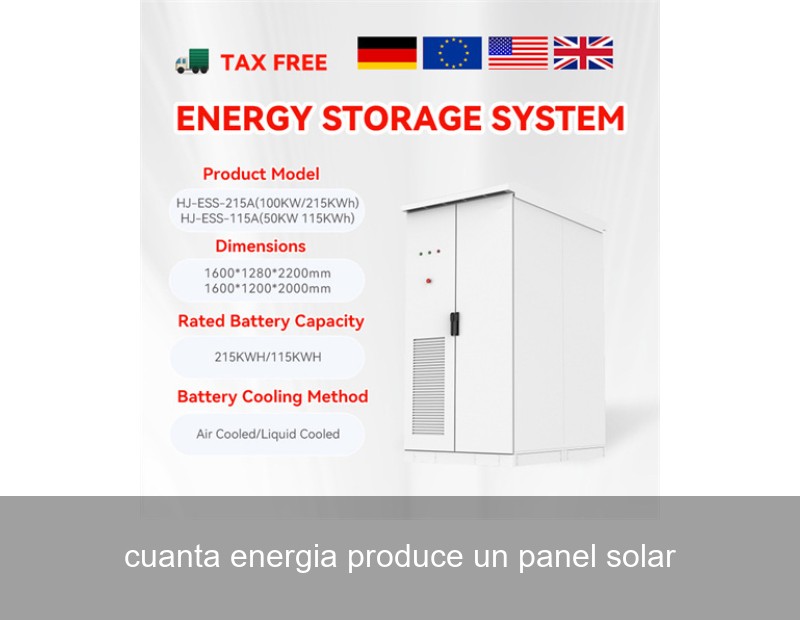
The true key to energy independence and maximizing return on investment is storing your solar energy for use when you need it most. This is where a Battery Energy Storage System (BESS) transforms a solar installation from a partial solution into a comprehensive power strategy.

Image Source: Unsplash. A home battery system stores surplus solar energy for use at night or during outages.
How Highjoule's Smart Storage Completes the Picture
At Highjoule, we've been pioneering advanced energy storage solutions since 2005. We understand that the question "how much energy does a solar panel produce?" ultimately leads to a more profound one: "How can I control and use every kilowatt-hour I produce?"
Our smart storage systems are designed to seamlessly integrate with your solar array, acting as the brain and battery for your personal energy ecosystem.
- Increase Self-Consumption: Our systems automatically store excess solar energy generated during the day instead of exporting it at low rates. You then draw from this reserve during the evening peak when grid electricity is most expensive. This can increase your direct use of solar power from 30-40% to 70% or more.
- Provide Uninterruptible Power: For our commercial and industrial clients, and increasingly for homeowners, power resilience is non-negotiable. Highjoule systems can provide backup power during grid outages, keeping critical loads operational. This is invaluable for businesses with refrigeration needs, data-sensitive operations, or residential users in areas prone to extreme weather.
- Intelligent Energy Management: Our systems go beyond simple storage. With sophisticated software, they can learn your consumption patterns, integrate with time-of-use utility rates, and even participate in grid services (where available), optimizing for both savings and grid stability. You can monitor and control everything via a user-friendly app.
For the Munich bakery, adding a Highjoule ComercialStack BESS would allow them to store their midday solar surplus and use it to power their early morning pre-heat cycle and late afternoon operations. This would further reduce their grid consumption by an estimated 25%, dramatically cutting demand charges and solidifying their energy budget against volatile market prices.
Your Energy Future: What's the Next Step?
Understanding your potential solar output is the exciting first step on a journey toward energy autonomy. The numbers show that solar technology is more than capable of meeting a substantial portion of our energy needs. But the real power is unlocked when you pair generation with intelligent storage.
We invite you to think beyond just the panels. What if you could ensure your home has power during an outage, or your business avoids costly peak demand charges? What specific energy goal is driving your interest in solar—is it reducing your carbon footprint, achieving predictable energy costs, or ensuring operational resilience?
 Inquiry
 Online Chat