


How Much Do Solar Panels Cost? A Complete Guide to Your Investment
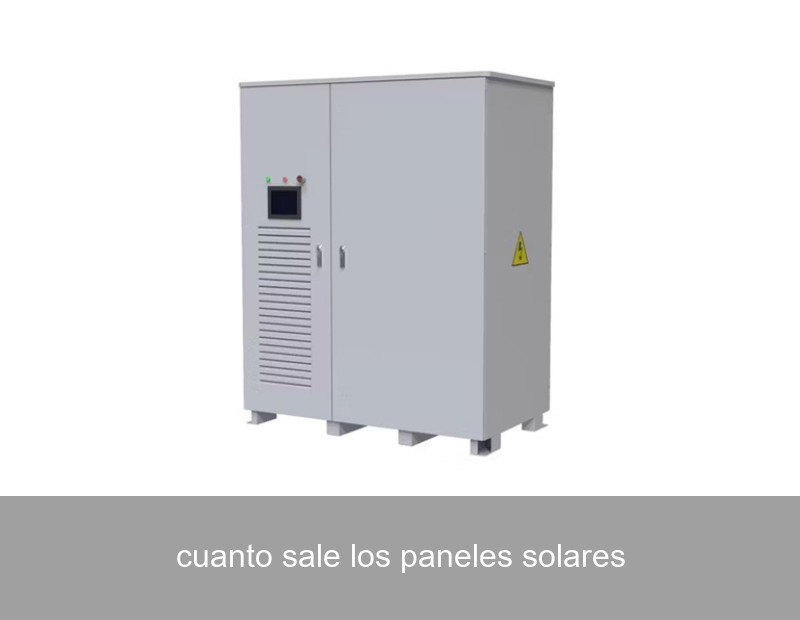
If you're considering harnessing the sun's power, the question "cuanto sale los paneles solares" – or "how much do solar panels cost" – is likely top of mind. It's a smart question, because going solar is a significant investment in your home, business, and our planet's future. The answer, however, isn't a single number. The final price tag is influenced by your location, energy needs, the quality of components, and crucially, the intelligence of the storage system that captures that solar energy for use day and night. This is where understanding the full picture, from panels to performance, becomes key.
Table of Contents
The Real Price Tag: More Than Just Panels
When we talk about solar panel cost, we're really discussing the cost of a complete solar photovoltaic (PV) system. This includes the panels themselves, inverters, mounting hardware, wiring, and increasingly, a battery energy storage system (BESS). According to market data, the average cost for a residential solar system in the U.S. can range from $15,000 to $25,000 before incentives, while in Europe, prices vary significantly by country but often fall within a similar range after conversion.
But here's the critical shift in perspective: the most relevant metric isn't the upfront cost, but the Levelized Cost of Energy (LCOE) – the average net present cost of electricity generation over the system's lifetime. Solar has consistently won on this front, with LCOE for utility-scale solar falling by a staggering 88% between 2010 and 2021 (IRENA). For homeowners and businesses, this translates to lower electricity bills for decades.
Key Factors That Determine Your Solar Panel System Cost
Let's break down the variables that answer "cuanto sale":
- System Size (kW): Your energy consumption dictates the size. A typical U.S. home might need a 6-8 kW system, while a European household might require 4-6 kW due to different usage patterns and efficiencies.
- Equipment Quality: High-efficiency panels (22%+ conversion rate) cost more but produce more power in limited space. Inverter technology (string vs. microinverters) also affects price and performance.
- Installation Complexity: Roof type, angle, and accessibility can influence labor costs. Ground-mounted systems are often more expensive.
- Local Incentives & Regulations: This is huge. The U.S. federal Investment Tax Credit (ITC) currently offers a 30% tax credit. European countries have various feed-in tariffs, tax deductions, or VAT reductions, like in Germany or Italy.
- Energy Storage: Adding a battery adds upfront cost but dramatically increases energy independence and ROI over time.

Image: A professional solar installation in progress. Source: Unsplash
The Game Changer: How Battery Storage Impacts Value
This is where the conversation evolves. Solar panels generate power when the sun shines, but what about evenings, cloudy days, or during grid outages? This mismatch between production and consumption is the next hurdle. Integrating a battery storage system solves this, but it's a key component of the "cuanto sale" equation.
A quality battery system allows you to:
- Maximize Self-Consumption: Store excess daytime solar energy for use at night, reducing grid reliance from ~30% to over 80%.
- Provide Backup Power: Keep essential loads running during outages.
- Participate in Grid Services: In some markets, you can earn money by providing grid stability services.
The battery's chemistry, lifespan (cycle life), power output, and intelligence are paramount. A cheap battery with poor cycle life will degrade quickly, negating the financial benefits of your solar investment.
A Real-World Case: Solar & Storage in Action
Consider a medium-sized commercial bakery in southern Spain, a region with high solar irradiance but also significant time-of-use electricity rates. The bakery installed a 50 kW solar array coupled with a 100 kWh battery storage system.
- Challenge: High energy costs for refrigeration and ovens, especially during peak evening hours.
- Solution: Solar panels cover daytime operations. The battery is charged with excess solar and strategically discharged during the 6-10 pm peak rate period, avoiding the most expensive grid electricity.
- Result: The system reduced their grid electricity purchases by 76%. The payback period for the combined solar + storage system was calculated at just under 7 years, thanks to the massive peak-shaving savings. Without the battery, solar alone would have only addressed 40% of their bill and had a longer payback due to lower self-consumption.
The Highjoule Solution: Intelligent Energy Management for Maximum ROI
As a leader since 2005, Highjoule understands that the true cost of solar is measured in long-term performance and reliability. That's why we don't just sell components; we provide integrated, intelligent power solutions. Our approach ensures that when you invest in solar, you get every kilowatt-hour of value you paid for.
Our HES (Highjoule Energy Stack) platform is the brain behind the brawn. It integrates our high-cycle-life lithium iron phosphate (LiFePO4) battery systems with advanced inverter technology and AI-driven energy management software. For a homeowner or business asking "cuanto sale los paneles solares," our system provides a clear answer: a solution that actively optimizes your energy flow to:
- Extend Battery Life: Our proprietary algorithms manage charge/discharge cycles to maximize lifespan, protecting your investment.
- Adapt to Tariffs: The system automatically learns local utility rate structures and dispatches stored energy when it's most valuable.
- Enable Grid Interaction: For commercial clients, our systems can be configured for peak shaving and demand charge reduction, delivering rapid ROI.

Image: A modern, wall-mounted home battery storage system. Source: Unsplash
Whether for a residential Highjoule Home system, a robust Commercial & Industrial installation, or a community Microgrid, our technology ensures the solar energy you produce is never wasted. This intelligent layer is what transforms a capital expenditure into a strategic asset.
Making the Investment: Steps to Your Solar Journey
So, how do you move from wondering about cost to enjoying savings?
- Audit & Assess: Get a professional energy audit. Understand your consumption patterns. This is the blueprint for your system size.
- Get Qualified Quotes: Seek out installers who model systems with and without storage, using tools like the National Renewable Energy Laboratory's PVWatts® Calculator (NREL PVWatts) for production estimates.
- Analyze Financing: Explore loans, leases, PPAs, and cash purchases. Calculate net cost after all applicable incentives. The U.S. Department of Energy's guide is a helpful resource (DOE).
- Prioritize Total System Intelligence: Choose a partner like Highjoule that offers an integrated, software-managed solution. The quality of the storage and its management software will be the largest determinant of your long-term satisfaction and savings.
Beyond the Initial Quote: The Long-Term View
Think of your solar and storage system as a 25+ year investment. A slightly higher initial investment in superior technology (like Highjoule's LiFePO4 batteries with 6,000+ cycle ratings) often results in a lower lifetime cost and higher total energy independence. It's the difference between buying the cheapest appliance and investing in the most efficient one that pays you back for years.
Given the rapid evolution of energy markets and the increasing frequency of grid instability, what energy challenge is most critical for your home or business to solve in the next five years?
 Inquiry
 Online Chat