


Decoding the Launji Solar Panel Price: A Smart Buyer's Guide to Value
If you're researching a solar installation for your home or business, you've likely encountered a wide range of prices and come across brands like Launji. Searching for "Launji solar panel price" is a great first step, but the figure you find per panel is just the tip of the iceberg. The true cost—and more importantly, the true value—of a solar energy system is determined by a complex interplay of technology, installation, and long-term performance. As energy costs remain volatile and sustainability becomes a priority, understanding this full picture is key to making an investment that pays dividends for decades.
Understanding What Drives the Price of a Launji Solar Panel
Let's start with the component itself. The price of an individual Launji solar panel, or any brand for that matter, is influenced by several core factors:
- Cell Technology: Panels primarily use either monocrystalline or polycrystalline silicon cells. Monocrystalline panels (like most of Launji's offerings) are typically more efficient—converting more sunlight into electricity in a given space—which often commands a higher price point.
- Efficiency Rating: This is a crucial metric. A panel with a 21% efficiency rating will generate more power from the same sunlight than one with 18% efficiency. Higher efficiency usually means a higher cost per panel, but it can reduce the number of panels you need overall.
- Power Output (Wattage): Panels are rated by their wattage (e.g., 400W, 550W). A higher-wattage panel will have a higher price, but again, it may mean purchasing fewer panels for your system's total needs.
- Durability & Warranty: Quality panels are built to withstand decades of weather. A strong performance warranty (e.g., 90% output after 25 years) and product warranty reflect better manufacturing and materials, impacting initial cost.
So, when you see a price, you're not just buying a sheet of glass and silicon; you're investing in a specific level of engineering, efficiency, and long-term reliability.
The Real Cost Breakdown: More Than Just the Panels
Focusing solely on the "Launji solar panel price" can be misleading. The panels themselves typically account for only about 20-25% of a complete residential system's total installed cost. The rest comes from what we in the industry call "balance of system" (BOS) components and soft costs.
| Cost Component | Approximate Share of Total | What It Includes |
|---|---|---|
| Solar Panels | 20-25% | The photovoltaic modules (e.g., Launji panels). |
| Inverter System | 10-15% | Converts DC solar power to usable AC power for your home. |
| Mounting & Racking | 10-12% | The hardware that securely attaches panels to your roof or ground. |
| Energy Storage (Optional) | Varies Widely | Batteries to store excess energy for use at night or during outages. |
| Installation Labor | 15-20% | Professional design, permitting, and installation work. |
| Permits & Fees | 5-8% | Local building permits, interconnection fees, and inspections. |
This breakdown highlights a critical point: the quality of the entire system is as important as the quality of the panels. A premium panel paired with a subpar inverter or sloppy installation will underperform. This is where choosing an experienced, integrated solution provider makes all the difference.
At Highjoule, we approach solar as one part of a holistic energy ecosystem. While we can integrate high-efficiency panels like Launji, our core expertise lies in designing the intelligent system around them—particularly advanced inverters and battery storage—that maximizes every kilowatt-hour generated and turns a simple solar array into a resilient, money-saving power plant for your property.
From Price to Value: The Long-Term Energy Equation
Shifting from upfront cost to lifetime value is the mark of a savvy energy buyer. Think of it this way: you're not buying panels; you're buying 25+ years of discounted, clean electricity. The key metric here is Levelized Cost of Energy (LCOE)—the average net present cost of electricity generation over the system's lifetime.
A slightly higher "Launji solar panel price" can be easily justified if those panels have higher efficiency and better degradation rates. They will produce more electricity year after year, lowering your LCOE. According to the National Renewable Energy Laboratory (NREL), the average LCOE for residential solar has dropped by over 50% in the last decade, making it competitive with retail electricity rates in most U.S. and European markets.
Furthermore, with energy prices in Europe and the U.S. experiencing significant fluctuations, locking in a predictable solar LCOE provides remarkable financial insulation. Your savings compound as utility rates rise.
A Real-World Case: Maximizing ROI with Smart System Design
Let's look at a project we completed for a medium-sized dairy farm in Bavaria, Germany, in 2023. The goal was to reduce crippling operational energy costs and ensure stable power for refrigeration.
- Challenge: High daytime energy consumption with even higher evening peaks. Utility rates were volatile.
- Initial "Panel-Centric" Quote: A competitor proposed a large 120 kW system using standard panels. It would cover daytime use but export excess at low feed-in tariffs, doing little for the costly evening peak.
- Highjoule's Integrated Solution: We designed a smaller, 85 kW system using high-efficiency monocrystalline panels paired with a 240 kWh Highjoule Harmony BESS (Battery Energy Storage System).

Image: A farm utilizing solar panels, similar to the Bavarian case study. (Photo by American Public Power Association on Unsplash)
- Result: The panels charge the batteries during the day. The farm runs on solar, and any excess charges the battery. From 4 PM to 10 PM, during the peak tariff period, the farm runs almost entirely on stored battery energy. The system reduced the farm's grid electricity purchases by 94% and is projected to pay for itself in under 7 years. The client was thrilled that we solved for cost savings, not just panel count.
This case underscores that the ultimate value lies in the system's intelligence, not just the solar modules.
Future-Proofing Your Investment: The Role of Energy Storage
This brings us to the most transformative component in modern solar systems: storage. Adding a battery like the Highjoule Harmony Series fundamentally changes the economics and utility of your solar array.
- Maximize Self-Consumption: Store your cheap solar power for use in the evening, instead of buying expensive grid power.
- Provide Backup Power: Keep critical loads running during grid outages—a growing concern in many regions.
- Participate in Grid Programs: In some markets, you can earn revenue by allowing your utility to use your stored power for grid stability.
When evaluating a "Launji solar panel price," ask yourself: "Is this quote part of a system that includes storage readiness or integration?" A solar-only system is becoming a partial solution. Highjoule's AI-powered energy management system seamlessly orchestrates between solar production, battery storage, home consumption, and the grid, ensuring you extract the maximum financial and practical value from every component.

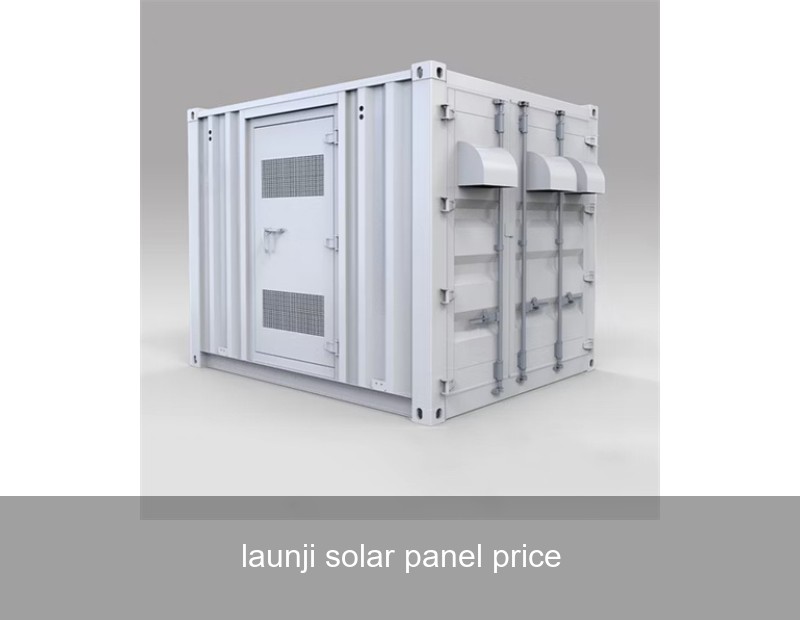
Image: A modern battery energy storage system, core to maximizing solar investment. (Photo by Kindel Media on Pexels)
Making an Informed Decision on Your Solar Investment
So, how should you proceed? When you receive quotes, look beyond the headline "per-panel" cost or the total system price. Scrutinize the proposal for:
- Detailed Production Estimates: Based on your location (use tools like NREL's PVWatts to cross-check).
- System Design Rationale: Why this panel count? Why this inverter? Is storage considered?
- Component Quality: Reputation of all components, not just the panels.
- Installation Warranty & Company Longevity: Who will be there in 15 years if you have an issue?
At Highjoule, with nearly two decades of experience, we provide transparent, holistic proposals. We engineer systems that may have a specific "Launji solar panel price" line item, but we focus the conversation on your total cost of energy ownership, system resilience, and achieving your unique sustainability and independence goals.
Ready to see what your personalized energy independence equation looks like? What's the one energy concern for your home or business that a smarter system could solve today?
 Inquiry
 Online Chat