


TotalEnergies Renewables: Powering a Sustainable Future with Intelligent Storage
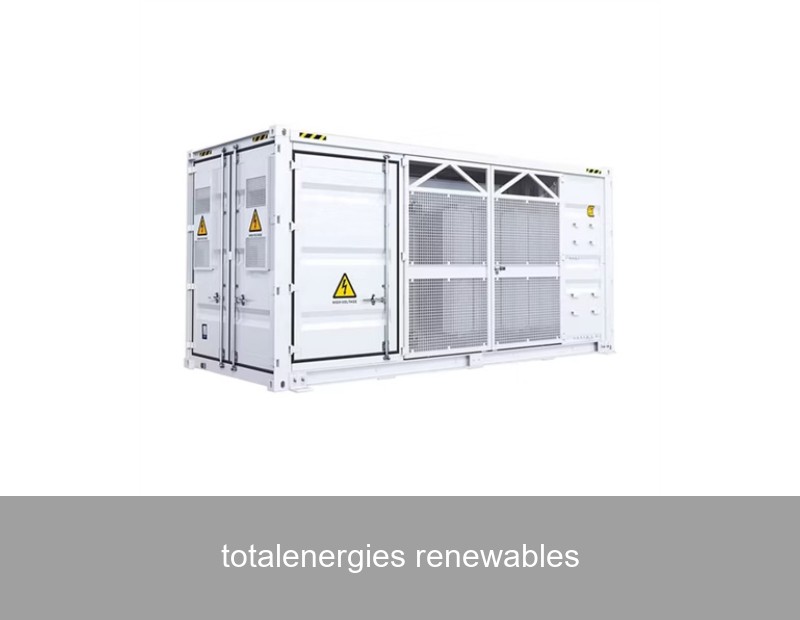
Have you ever wondered what happens when the sun sets on a vast solar farm, or the wind stops turning massive turbines? The transition to renewable energy, led by global players like TotalEnergies Renewables, is one of the most defining trends of our century. Yet, it presents a fascinating challenge: renewable sources are inherently intermittent. The sun doesn't always shine, and the wind doesn't always blow. This is where the true enabler of the energy transition comes into play – advanced energy storage systems. Without them, the promise of a grid powered by clean energy remains just that: a promise. For businesses, communities, and utilities investing in solar and wind, pairing generation with storage isn't just an upgrade; it's becoming a necessity for resilience, cost control, and true energy independence.
Table of Contents
The Storage Imperative: From Intermittency to Reliability
The growth of renewables is staggering. According to the International Energy Agency (IEA), renewable electricity capacity additions jumped nearly 50% in 2023, setting a new record. Companies like TotalEnergies are at the forefront, with ambitions to reach 100 GW of renewable generation capacity by 2030. However, this rapid deployment highlights a critical grid stability issue. Energy demand peaks often in the early evening, while solar production naturally falls. This mismatch can lead to volatility, curtailment (wasting excess clean energy), and reliance on fossil-fuel peaker plants.
This is the core problem that energy storage solves. Think of it as a "time machine" for electrons. It captures surplus energy when production is high and demand is low, then releases it when needed most. The result? A smoother, more predictable, and cleaner energy flow. For a commercial facility with rooftop solar, this means maximizing self-consumption and slashing demand charges from the grid. For a utility-scale solar farm developed by TotalEnergies Renewables, it means being able to deliver power consistently, even after sunset, making their renewable assets more valuable and grid-friendly.

Image Source: Unsplash - A visual representation of utility-scale solar paired with battery storage systems.
The Data Behind the Demand
The numbers speak volumes. The global grid-scale battery storage market is projected to grow exponentially. BloombergNEF's 2023 Energy Storage Market Outlook highlights that annual energy storage deployments are set to hit 1,200 GWh by 2030, a 15-fold increase from 2022. This isn't just about capacity; it's about economic sense. The levelized cost of storage (LCOS) has been plummeting, making projects financially viable without subsidies in many markets. When you combine this with rising grid electricity prices and falling renewable generation costs, the business case for storage becomes compelling.
Beyond the Battery: What Makes a Storage System "Intelligent"?
When most people hear "energy storage," they think of a battery pack. But a battery cell is just the beginning. A safe, efficient, and long-lasting Battery Energy Storage System (BESS) is a sophisticated piece of engineering. It's the difference between buying lithium-ion cells and driving a high-performance, safe electric vehicle.
A modern BESS, like those engineered by Highjoule, comprises several critical layers:
- Core Battery Modules: Using high-quality, UL-certified Li-ion phosphate (LFP) cells for safety and longevity.
- Advanced Power Conversion System (PCS): The brain that manages AC/DC conversion, determining charge and discharge efficiency.
- Thermal Management System: A crucial safety and performance component that maintains optimal operating temperature.
- Energy Management System (EMS): The true intelligence. This software platform uses algorithms and sometimes AI to decide when to charge or discharge based on weather forecasts, energy prices, and consumption patterns.
It's this integrated, intelligent design that allows a storage system to perform multiple revenue-generating or cost-saving functions simultaneously—a concept known as value stacking.
Case Study: Stabilizing a Microgrid for a European Industrial Park
Let's look at a real-world application. A large industrial park in Northern Germany, home to several manufacturing SMEs, decided to achieve carbon neutrality. They installed a 5 MW rooftop solar array across their facilities. However, their local grid connection was weak, limiting how much solar power they could feed in. Furthermore, the intermittent solar output didn't always match their 24/7 production energy needs.
The Solution: The park's operator partnered with Highjoule to design and deploy a 2.5 MWh / 2.5 MW containerized BESS. The system was integrated with the existing solar infrastructure and the park's private microgrid.
The Results (Data from 12-month operation):
| Metric | Performance |
|---|---|
| Solar Self-Consumption Increase | Increased from 35% to over 80% |
| Grid Peak Demand Reduction | Reduced by 40%, cutting capacity fees significantly |
| Grid Import Volatility | Smoothed by 95%, alleviating grid congestion |
| Backup Power | Provided seamless transition during two grid outages |
This project mirrors the challenges and solutions that large-scale renewable developers like TotalEnergies Renewables manage. By providing grid services and stabilizing energy flow, the BESS turned the industrial park from a potential grid burden into a grid asset, maximizing the value of their renewable investment.

Image Source: Unsplash - Representative image of a technician performing maintenance on a containerized battery system.
Highjoule's Role: Delivering Turnkey Storage Solutions
Since 2005, Highjoule has been at the forefront of making advanced energy storage accessible and reliable. We understand that integrating storage with projects driven by TotalEnergies Renewables and other major players requires more than just hardware. It requires deep system integration expertise and a focus on lifecycle value.
Our product suite is designed to meet diverse needs:
- H-Joule Cube (Containerized BESS): Our flagship, pre-engineered solution for commercial, industrial, and utility-scale applications. Scalable from 500 kWh to 20+ MWh, it features our proprietary H-EMS software for optimal control and monitoring.
- H-Joule Wall (Residential & Small Commercial): A sleek, high-capacity wall-mounted system perfect for maximizing rooftop solar self-consumption and providing whole-home backup.
- H-EMS Pro Platform: The cloud-based intelligence hub that can manage fleets of storage systems, enabling participation in grid service markets like frequency regulation or virtual power plants (VPPs).
Our approach is consultative. We work with project developers, EPCs, and facility managers to analyze energy profiles, model financial returns, and deliver a fully commissioned system backed by long-term performance guarantees and remote monitoring. Whether it's for a new solar-plus-storage farm or retrofitting an existing commercial building, Highjoule provides the certainty needed in a dynamic energy landscape.
The Future Landscape of Renewables and Storage
The synergy between giants like TotalEnergies Renewables and specialized technology providers like Highjoule is defining our energy future. We are moving beyond mere megawatts of generation to a model of intelligent, distributed energy assets. The next frontier includes advancements in battery chemistry for longer duration storage, increased software intelligence for autonomous grid trading, and the standardization of "storage-as-a-service" models to lower upfront barriers.
Regulatory frameworks, particularly in Europe and the U.S., are evolving to recognize and reward the grid services that storage provides. The U.S. Inflation Reduction Act (IRA) and various EU Green Deal initiatives are creating powerful investment tax credits and incentives for standalone storage and renewable pairings. This policy momentum, detailed in analyses from sources like the International Renewable Energy Agency (IRENA), is accelerating adoption at an unprecedented pace.
An Open Question for Your Business
As energy prices remain volatile and sustainability targets become more stringent, the question is no longer if energy storage will be part of your strategy, but when and how. Have you evaluated your facility's energy consumption profile to identify the potential savings and resilience that a tailored storage solution could bring? What is the first step your organization needs to take to bridge the gap between your clean energy goals and operational reality?
 Inquiry
 Online Chat