


Understanding the Current Price of Solar Panels in Sweden: A 2024 Guide
If you're a homeowner or business leader in Sweden looking into solar power, your first question is likely, "What is the current price of solar panels in Sweden?" It's a smart starting point, but here's a crucial insight from the industry: focusing solely on the per-panel cost can be misleading. The real value—and the real savings—come from understanding the total system cost, performance, and how it integrates with your energy life. In 2024, the Swedish solar market is maturing, moving beyond cheap commodity panels to sophisticated, high-yield energy solutions designed for Nordic conditions.
The global benchmark for solar module prices has seen a dramatic drop, with International Energy Agency reports indicating a fall of over 80% in the last decade. However, in Sweden, the sticker price you see is influenced by a unique blend of factors: import logistics, local installation expertise, robust mounting systems for snowy loads, and the critical balance between summer abundance and winter scarcity. Let's unpack the true cost landscape.
Breaking Down the Costs: What You're Really Paying For
When you receive a quote for a solar installation in Sweden, it typically bundles several key components. Thinking in terms of SEK per installed kWp (kilowatt peak) is more useful than per panel.
- Solar Panels (Modules): This is the core hardware. Prices vary by technology (monocrystalline is the premium, high-efficiency standard), brand, and warranty. In 2024, you might see panel costs accounting for roughly 25-35% of the total project.
- Inverters: The brain of the system, converting DC solar power to usable AC. Quality here dictates efficiency and longevity. Options include string inverters or microinverters, with the latter offering better performance in shaded conditions.
- Mounting System & Hardware: In Sweden, this isn't an afterthought. It must be engineered for high wind loads, heavy snow, and often complex roof types (like traditional tile). A subpar racking system is a liability.
- Installation & Labor: The cost of skilled, certified electricians and installers. Swedish labor standards are high, ensuring safety and code compliance, which adds value and peace of mind.
- Planning, Permits & Grid Connection: Administrative costs for grid application and ensuring your system meets local regulations.
So, what's the range? For a standard residential system (5-10 kWp), total installed prices in Sweden can range from 10,000 to 18,000 SEK per kWp before any subsidies. This means a 10 kWp system could have a gross cost of 100,000 to 180,000 SEK. The variation depends on the factors above and the system's intelligence level.

Image: A typical residential solar installation in Sweden. Source: Unsplash
Where Highjoule Fits Into the Cost Equation
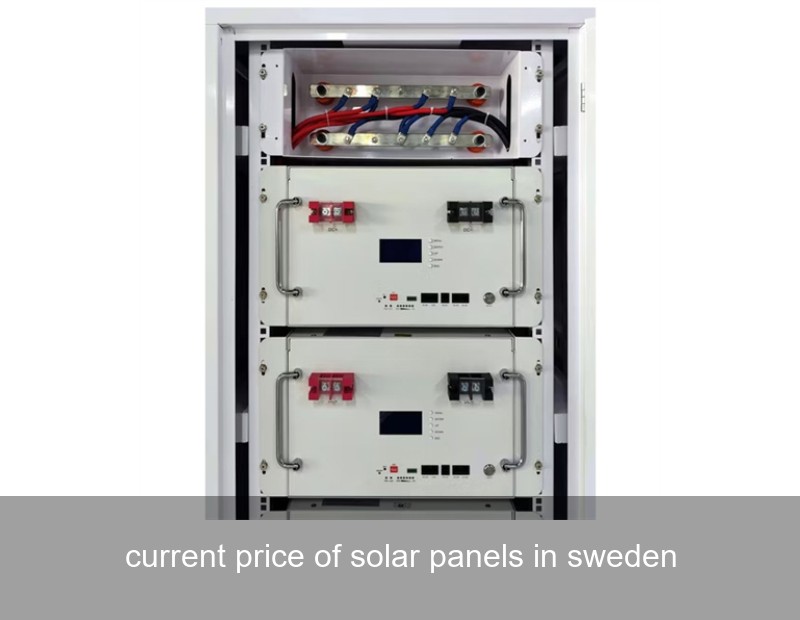
This is where the conversation evolves. At Highjoule, we view solar panels as just one component of a comprehensive energy independence strategy. The true economic return is unlocked when solar generation is paired with intelligent storage. Our Highjoule HES (Home Energy System) integrates high-efficiency panels with our advanced lithium iron phosphate (LiFePO4) battery systems and AI-driven energy management software. While the initial investment may be higher than a panels-only setup, the financial model transforms dramatically. You increase self-consumption from 30-40% to 70-80% or more, storing excess summer daytime energy for use in the evening or during the dark winter months, drastically reducing your reliance on the grid and insulating you from volatile electricity prices.
A Swedish Case Study: From Quote to Kilowatt-hour
Let's look at a real-world example from Västra Götaland. A medium-sized family home with an annual consumption of 15,000 kWh was exploring solar in early 2024.
| Component | Basic "Panels-Only" Quote | Highjoule Integrated System Quote |
|---|---|---|
| System Size | 12 kWp Solar | 10 kWp Solar + 15 kWh HES Battery |
| Estimated Annual Solar Production | 9,600 kWh | 8,200 kWh |
| Estimated Self-Consumption Rate | ~35% (3,360 kWh) | ~85% (6,970 kWh) |
| Grid Electricity Purchased Annually | 11,640 kWh | 8,030 kWh |
| Key Insight | High production, but most excess is sold back to the grid at a lower price than retail. | Lower production, but vastly higher utilization on-site, maximizing value per kWh. |
The client chose the Highjoule integrated system. The crucial data point wasn't just the panel price, but the levelized cost of energy (LCOE) for the system over 25 years. By leveraging intelligent software that predicts weather and consumption patterns, the system optimizes every kilowatt-hour. When combined with the Swedish Energimyndigheten subsidy for battery storage (known as the "solcellsersättning" for storage), the payback period became highly competitive, and the home's energy resilience soared.
Future Trends: Where Are Solar Panel Prices Heading?
Industry analysts from sources like BloombergNEF suggest that panel prices may continue a gradual, slow decline due to manufacturing scale and new technologies like TOPCon and heterojunction cells, which offer higher efficiency. However, in Sweden, the downward pressure on the installed system price may be balanced by rising labor costs and increased demand for premium, durable components suited for the climate.
The more significant trend is the rapidly falling cost of battery storage. This is what makes companies like Highjoule pivotal. As storage becomes more economical, the rationale for a DC-coupled system (where solar charges the battery directly, with higher efficiency) becomes undeniable. We are moving towards a market where the standard offer won't be "solar panels at X price," but "an energy independence package with a predictable monthly energy cost."
Maximizing Your Solar Investment: The Smart System Approach
So, how should you approach your decision? Don't just shop for the lowest current price of solar panels in Sweden. Instead, evaluate:
- Total System Performance: Look at system-level warranties and guaranteed annual production figures.
- Technology Stack: Does the inverter allow for easy battery addition later? Is the software platform open and intelligent?
- Partner Credibility: Choose a provider with a proven track record in system design, not just installation. They should analyze your consumption profile and simulate annual production and savings.

Image: An integrated home energy system with battery storage and monitoring. Source: Unsplash
Highjoule's approach for the European and North American markets is built on this holistic view. Our commercial and industrial solutions, like the Highjoule CIB (Commercial Integrated Battery) platform, take this further, offering peak shaving, backup power, and participation in grid services. The initial hardware cost is part of a larger operational expenditure saving and risk mitigation strategy.
Given that the Swedish grid is increasingly interconnected with volatile European markets, how much value would you place on having a predictable, self-controlled energy cost for the next 20 years, rather than just a low initial panel price?
 Inquiry
 Online Chat