


Navigating the Future: What a Cyan Energy Supplier Means for Your Power Needs
You've likely heard the term "green energy" for years. But as our climate goals become more urgent and our energy grids more complex, a new, more precise term is gaining traction: cyan energy supplier. This isn't just a rebranding of green; it represents a fundamental shift in how we think about sustainable power. It’s about moving beyond simply generating renewable electricity to intelligently managing and storing it, ensuring reliability every hour of the day. For businesses and homeowners in Europe and the US, understanding this evolution is key to achieving true energy independence and making a tangible impact on decarbonization goals.
Table of Contents
What Exactly is a Cyan Energy Supplier?
Think of the color spectrum. Green represents the pure generation of renewable energy—like solar panels on a roof or a wind farm on the horizon. Cyan, a blend of green and blue, symbolizes the combination of renewable generation with smart, stabilizing technology—primarily, advanced energy storage. A cyan energy supplier, therefore, doesn't just provide clean kilowatt-hours; they provide a reliable, consistent, and intelligent flow of clean power by integrating storage solutions directly into their service offering.
This model solves a critical customer pain point: the mismatch between when renewable energy is produced (sunny afternoons) and when it's most needed (evening peaks). By leveraging battery energy storage systems (BESS), a cyan supplier can store excess green energy and dispatch it on demand, transforming intermittent sources into a firm, dispatchable resource.
The Modern Grid Challenge: Intermittency Meets Demand
The rapid growth of solar and wind is fantastic, but it introduces volatility. Grid operators in California (CAISO) and Germany have seen this firsthand, managing periods of negative pricing during surplus generation and scrambling during "duck curve" ramps in the evening.
- Phenomenon: The "Duck Curve" deepens, requiring extremely fast-ramping power plants, often fossil-fueled, to balance the grid.
- Data: In 2023, renewable sources met over 50% of Germany's public net electricity demand at times, yet grid stability concerns persist*. Similarly, California curtailed over 2.4 million MWh of solar and wind energy in 2022 because supply outstripped demand when storage was insufficient*.
- Insight: This curtailment is wasted clean energy and lost revenue. The solution isn't more solar panels alone; it's the ability to capture and time-shift that energy.
The Core of Cyan: Advanced Energy Storage Systems
This is where the magic happens. Battery storage is the enabling technology for the cyan model. Modern lithium-ion battery systems, like those developed by industry leaders, are highly efficient, scalable, and smart.
Key functions of a BESS in a cyan supply model include:
- Energy Time-Shifting: Store cheap, midday solar for expensive evening peak use.
- Frequency Regulation: Provide grid-stabilizing services in milliseconds.
- Backup Power: Ensuring continuity for critical operations during outages.
- Capacity Firming: Making a variable renewable power plant behave like a traditional, predictable one.
Highjoule's Role in Empowering Cyan Supply
At Highjoule, we've been at the forefront of this transition since 2005. We don't generate electricity; we empower suppliers and end-users to become true cyan energy providers. Our intelligent storage systems are the physical backbone that makes the cyan business model possible.
For energy suppliers looking to offer cyan tariffs, our GridMax Commercial BESS provides a turnkey solution. Its integrated energy management software (EMS) allows suppliers to remotely aggregate and optimize fleets of customer-sited batteries, creating a virtual power plant (VPP). This VPP can then sell services back to the grid or guarantee a 24/7 clean energy block to commercial clients.
For industrial and large commercial users, our Industrial Energy Platform enables direct participation in the cyan economy. It allows a factory to maximize its on-site solar self-consumption, reduce demand charges, and generate revenue by providing grid services—all managed autonomously by our AI-driven platform. This turns a cost center (energy) into a strategic, profitable asset.

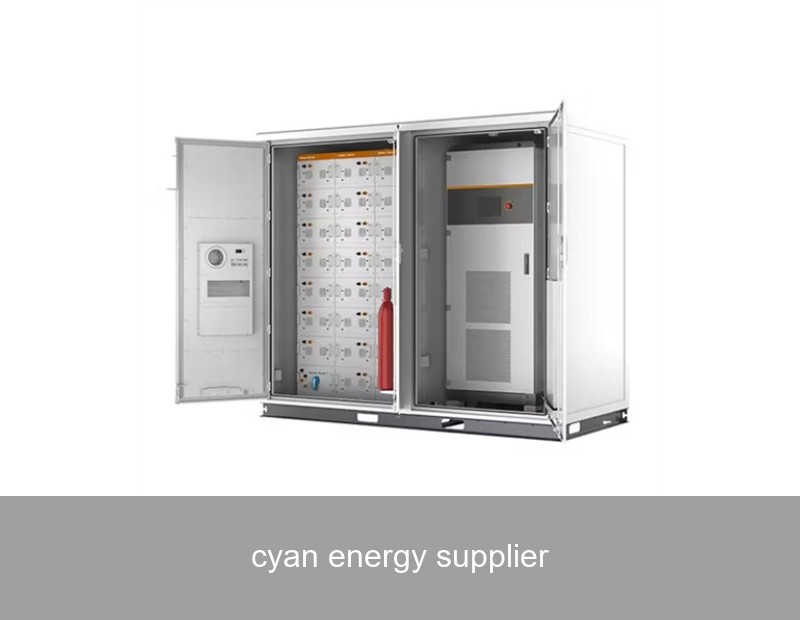
A Highjoule containerized BESS unit, seamlessly integrating with solar generation to create a cyan energy site.
Case Study: A German Industrial Park's Journey to Cyan
Let's look at a real-world example from Bavaria, Germany. A mid-sized industrial park with 5 MW of rooftop solar faced a classic problem: they exported most of their solar yield at low prices on weekends and purchased expensive grid power during weekday mornings and evenings.
| Metric | Before Highjoule BESS | After Highjoule BESS (12 Months) |
|---|---|---|
| Solar Self-Consumption | 35% | 89% |
| Grid Energy Cost | €320,000/year | €185,000/year |
| Grid Services Revenue | €0 | €45,000/year |
| CO2 Footprint | ~550 tons/year | ~90 tons/year |
The Solution: The park partnered with a local energy advisor who installed a 2.5 MWh Highjoule Industrial Energy Platform. The system was programmed for three primary goals: maximize self-consumption, participate in the primary control reserve market, and provide peak shaving.
The Outcome: Within a year, the park transformed from a passive green energy producer to an active cyan energy hub. They drastically cut costs, created a new revenue stream, and significantly deepened their decarbonization impact. Their energy supplier now treats them as a grid partner, not just a consumer.
The Future of Energy is Cyan
The trends are clear. Policy in both the EU (via the Green Deal) and the US (via the Inflation Reduction Act) is heavily incentivizing storage deployment. Consumers and businesses are demanding cleaner and more reliable power, especially amid increasing climate-related grid disruptions.
The cyan model, powered by sophisticated partners like Highjoule, represents the next logical step in our energy evolution. It's a win-win-win: for the grid (added stability), for the supplier (a differentiated, valuable product), and for the end-user (lower costs, greater resilience, and a real sustainability story).

The intelligent, interconnected grid of the future will rely on distributed cyan energy nodes for stability.
 Inquiry
 Online Chat