


DBS Energy Storage Cabinet: The Cornerstone of Modern Power Resilience
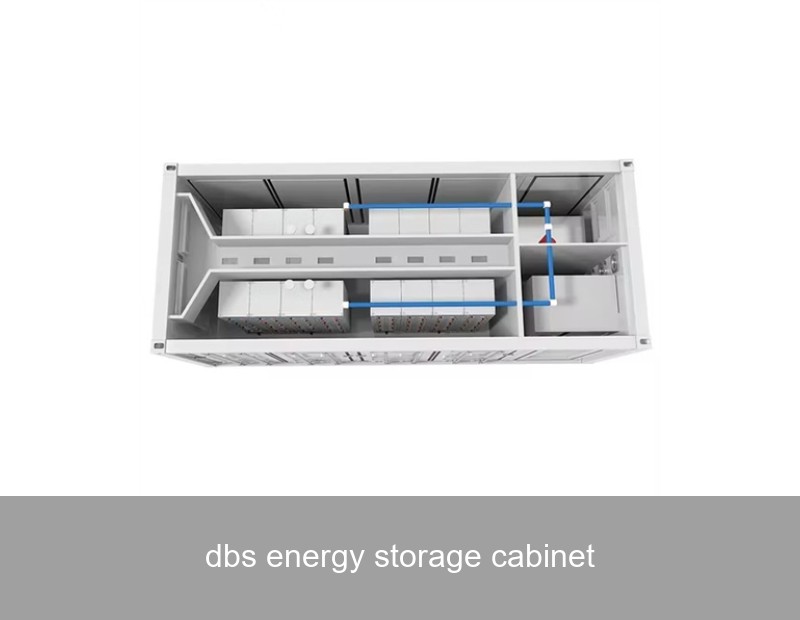
In today's energy landscape, the conversation has decisively shifted. It's no longer just about how much power we can generate, but how intelligently we can store and manage it. For facility managers, business owners, and energy engineers, this translates to a critical need for reliable, on-demand power. This is where the DBS (Distributed Battery System) Energy Storage Cabinet emerges as a transformative solution. Far more than just a battery in a box, it's a sophisticated, integrated power hub designed to provide stability, savings, and sustainability. As grid demands fluctuate and renewable sources like solar become ubiquitous, having a dedicated, high-performance storage system is the key to energy independence and operational continuity.
Table of Contents
- What is a DBS Energy Storage Cabinet?
- The Modern Grid Challenge: More Than Just Outages
- How a DBS Cabinet Works: The Anatomy of Resilience
- A Real-World Case: Stabilizing a German Manufacturing Plant
- The Highjoule Approach: Engineered for Performance and Simplicity
- Key Benefits of a Modern DBS Energy Storage System
- The Future of Distributed Storage
What is a DBS Energy Storage Cabinet?
Let's demystify the term. A DBS Energy Storage Cabinet is a pre-engineered, all-in-one unit that houses lithium-ion battery modules, a battery management system (BMS), thermal management, power conversion systems (PCS), and safety mechanisms within a single, robust enclosure. Think of it as a "power bank" for your commercial or industrial facility, but one that's smart, scalable, and built for rigorous daily use. Unlike massive, centralized storage warehouses, DBS cabinets are modular. You can start with a single unit and add more as your energy needs grow, making them a flexible and future-proof investment. Their primary roles are to store energy (often from solar panels), provide backup power, and deliver grid services like peak shaving to reduce costly demand charges.
The Modern Grid Challenge: More Than Just Outages
The phenomenon is clear: our electrical grids, especially in Europe and the U.S., are under unprecedented strain. The rapid adoption of intermittent renewables, increasing electrification of transport and heat, and more frequent extreme weather events are creating volatility.
Consider the data: In the U.S., the average frequency and duration of power outages have been increasing steadily over the past decade. Meanwhile, in Europe, the push for decarbonization is accelerating grid modernization efforts, but this transition period creates instability. For a business, a momentary voltage dip (a "sag") can crash servers, halt production lines, and spoil inventory. These brief disturbances are far more common than full blackouts and can be just as costly.
This is the core problem businesses face: an unreliable power supply leads to direct financial loss, operational disruption, and data vulnerability. The old solution—diesel generators—is noisy, polluting, and only activates after the power is already out. The modern solution needs to be instantaneous, clean, and proactive.
How a DBS Cabinet Works: The Anatomy of Resilience
A high-quality DBS cabinet operates on a seamless, automated logic. Here’s a step-by-step breakdown:
- Energy Intake: The cabinet's power conversion system (PCS) accepts incoming AC grid power or DC power from onsite solar arrays, converting it to the precise DC voltage needed to charge the lithium-ion battery modules.
- Intelligent Management: The Brain of the system, the Battery Management System (BMS), constantly monitors every cell for voltage, temperature, and state of charge. It ensures optimal performance and safety, balancing cells and preventing overcharge or deep discharge.
- Strategic Storage: Energy is stored in the battery modules. Advanced chemistry, like Lithium Iron Phosphate (LFP), is preferred for its safety, long cycle life, and stability—making it ideal for daily charge/discharge cycles.
- Conditioned Environment: An integrated thermal management system (liquid or air cooling) maintains the batteries at their ideal operating temperature, maximizing lifespan and efficiency year-round.
- Precise Discharge: When needed—whether due to a grid outage, a high-price peak period, or a command from a smart energy management system—the PCS instantly converts the stored DC energy back to clean AC power and feeds it to your critical loads.

Image Source: Unsplash (Representative image of industrial energy storage)
A Real-World Case: Stabilizing a German Manufacturing Plant
Let's move from theory to practice. A mid-sized automotive parts manufacturer in Bavaria, Germany, faced a dual challenge: skyrocketing energy costs due to peak demand charges and frequent micro-dips in grid voltage that disrupted their sensitive robotic welding arms. Each disruption caused a 15-minute production halt and required quality checks.
The Solution: The company installed a bank of three DBS energy storage cabinets alongside their existing rooftop solar array. The system was configured for two primary functions: peak shaving and voltage support.
| Metric | Before Installation | After Installation (12-month period) |
|---|---|---|
| Peak Demand Charges | €48,000 annually | Reduced by 68% (Savings: ~€32,640) |
| Production Halts from Sags | 18 recorded incidents | 2 incidents (system provided seamless bridging power) |
| Solar Self-Consumption | 35% | Increased to 85% |
| CO2 Footprint | Baseline | Reduced by 42 tonnes annually |
This case, documented in a Fraunhofer ISE study on storage applications, illustrates the multifaceted ROI of a DBS system. It's not just backup; it's a daily financial and operational asset that paid for itself in under five years.
The Highjoule Approach: Engineered for Performance and Simplicity
At Highjoule, with nearly two decades of expertise since 2005, we've refined the DBS cabinet into a cornerstone of our intelligent energy platforms. Our H-Cube Commercial Series embodies this philosophy.
What sets the H-Cube apart is its all-in-one, plug-and-play design. We integrate top-tier LFP battery cells with our proprietary Adaptive BMS and a high-efficiency, bi-directional hybrid inverter into a single, UL/Certified cabinet. This eliminates the complexity of sourcing and assembling disparate components. For our clients across Europe and North America, this means a faster, more reliable installation with a single point of responsibility.
Our systems are built for the real world. They feature N+1 redundancy in critical cooling and power conversion components, ensuring maximum uptime. Furthermore, they come standard with Highjoule EnergyOS, a cloud-based monitoring and control platform. Through a simple dashboard, facility managers can set strategies for peak shaving, schedule solar storage, and monitor system health from anywhere, turning energy from a fixed cost into a manageable asset.

Image Source: Unsplash (Representative image of a commercial battery installation)
Key Benefits of a Modern DBS Energy Storage System
- Financial ROI: Dramatically reduce peak demand charges, arbitrage time-of-use electricity rates, and increase self-consumption of solar energy.
- Uninterrupted Operations: Provide seamless backup power for critical loads, protecting against revenue loss and data corruption.
- Grid Support & Revenue: In some markets, aggregated storage systems can participate in grid service programs (like Frequency Regulation), creating a new revenue stream.
- Sustainability Leadership: Maximize the use of renewable energy, reduce reliance on fossil-fuel peaker plants, and lower your carbon footprint.
- Future-Proofing: Modular design allows for easy capacity expansion as your business grows.
The Future of Distributed Storage
The trajectory is clear. As noted by the International Energy Agency (IEA), distributed battery storage is one of the fastest-growing energy technologies, essential for integrating high shares of solar and wind. The DBS cabinet is evolving from an optional asset to a standard component of a resilient and efficient facility's infrastructure.
The question for business leaders is no longer if storage will be needed, but when and how to integrate it strategically. With solutions like Highjoule's H-Cube, the path is simpler, smarter, and more accessible than ever.
Is your facility's energy strategy prepared to handle the next price spike, grid disturbance, or sustainability mandate? What would the financial impact of just one preventable power-quality event be on your bottom line this quarter?
 Inquiry
 Online Chat