


Hybrid Solar Charge Battery: The Intelligent Heart of Modern Energy Independence
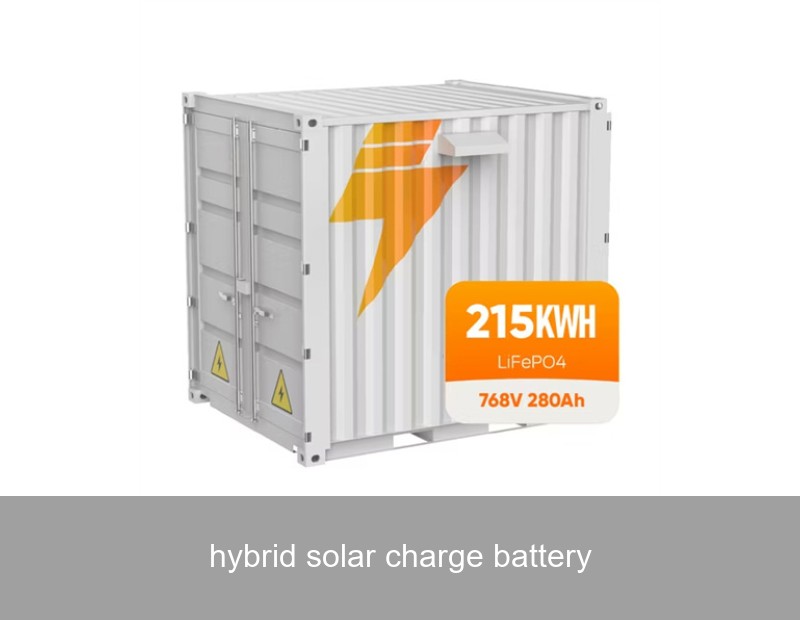
Imagine your solar panels working diligently under the sun, but the moment a cloud passes or evening falls, your home or business is forced to draw expensive, often carbon-intensive power from the grid. This common frustration highlights a critical gap in basic solar setups. The solution? A hybrid solar charge battery. This isn't just a battery; it's an intelligent energy manager that seamlessly integrates solar generation, battery storage, and grid power to create a resilient, efficient, and cost-effective energy ecosystem. For homeowners and businesses in Europe and the US seeking true energy autonomy, understanding this technology is the first step toward a sustainable and secure power supply.
Table of Contents
- What is a Hybrid Solar Charge Battery?
- The Pain Point: Intermittency and Rising Costs
- How a Hybrid System Works: More Than Just Storage
- A Real-World Case Study: Resilience in California
- Key Benefits of a Hybrid Solar + Battery System
- Choosing the Right Hybrid System: Key Considerations
- Highjoule's Role: Delivering Intelligent Hybrid Solutions
What Exactly is a Hybrid Solar Charge Battery?
Let's clear up a frequent point of confusion. A hybrid solar charge battery refers to the core component within a hybrid energy storage system. This system combines a compatible inverter-charger, lithium-ion battery bank, and sophisticated energy management software. Unlike a simple battery backup, a hybrid system performs a dynamic, three-way dance: it charges from solar panels, stores energy in the battery, and can intelligently import or export electricity to the grid based on your settings and real-time conditions. It's the brain that decides the most economical and efficient power flow for your property at any given second.
The Pain Point: Solar Intermittency and Soaring Energy Bills
The phenomenon is clear: solar power is inherently variable. Data from the U.S. Department of Energy underscores that without storage, a typical home solar system may only supply 20-40% of a household's total electricity needs directly when the sun shines. The rest must come from the grid, often during peak evening hours when rates are highest. In Europe, with volatile gas prices and ambitious carbon reduction targets, this dependency creates both financial and strategic vulnerability.
This is where the logical progression from problem to solution begins. The data points to a need for storage, and the market has responded with advanced battery technology. But simply adding a battery isn't enough. The true innovation lies in the hybrid approach—the integrated intelligence that optimizes every kilowatt-hour.
How a Hybrid Solar Charge Battery System Works
Think of your hybrid system as an intelligent energy conductor. Here’s a typical daily cycle:
- Daytime (Sunny): Solar panels power your home first. Any excess energy charges the hybrid battery. If the battery is full, surplus energy can be sold back to the grid (where net metering is available).
- Evening (Peak Demand): As the sun sets and grid prices spike, the system automatically switches to draw power from your charged battery, shielding you from high tariffs.
- Nighttime: The system uses stored battery energy until it reaches a preset minimum level, then draws minimal power from the grid.
- Grid Outage: In the event of a blackout, the hybrid inverter instantly disconnects from the grid (islanding) and continues to power critical loads from solar and battery, often in less than a heartbeat.

Image Source: Unsplash (Representative image of a clean energy storage installation)
A Real-World Case Study: Resilience in California, USA
Consider the experience of a mid-sized winery in Napa Valley, California—a region prone to Public Safety Power Shutoffs (PSPS) to prevent wildfires. Their challenge was twofold: protect sensitive fermentation processes from costly grid outages and reduce staggering demand charges from their utility.
By installing a 150 kW solar array coupled with a hybrid solar charge battery system featuring 400 kWh of storage, they achieved remarkable results within the first year:
- Energy Cost Reduction: Reduced their electricity bill by 68% through peak shaving and self-consumption.
- Outage Protection: Successfully rode through 12 grid outages, with the longest lasting 36 hours, without interrupting operations.
- Sustainability: Increased their renewable energy self-consumption from ~35% to over 90%.
This case illustrates the tangible value of hybrid technology: it's not an expense but a strategic asset delivering ROI through savings and business continuity.
Key Benefits of Investing in a Hybrid Solar Charge Battery
| Benefit | Explanation | Impact |
|---|---|---|
| Maximized Self-Consumption | Use more of the solar energy you produce instead of exporting it at lower rates. | Directly lowers your energy bills and improves system ROI. |
| Peak Load Shaving | The battery supplies power during expensive peak grid demand periods. | Avoids high "demand charges" for commercial users and time-of-use rates for homes. |
| Uninterrupted Power Supply (UPS) | Provides near-instantaneous backup power during grid failures. | Ensures safety, comfort, and business operational resilience. |
| Grid Support & Stability | Advanced systems can provide grid services like frequency regulation. | Contributes to community grid stability and can generate revenue streams. |
| Future-Proofing | Modular design allows for easy expansion of battery capacity. | Your system can adapt to growing energy needs or the addition of an EV charger. |
Choosing the Right Hybrid System: Key Considerations
Not all hybrid systems are created equal. When evaluating options, ask these critical questions:
- Inverter Efficiency: Look for a high round-trip efficiency (above 94%) to minimize energy losses during charge/discharge cycles.
- Battery Chemistry & Lifespan: Lithium Iron Phosphate (LFP) is now the industry standard for safety, cycle life (often 6,000+ cycles), and stability. Ensure the warranty reflects a high throughput and duration (e.g., 10 years).
- Software Intelligence: The "brain" is key. Can you set custom modes (e.g., maximize savings, maximize backup)? Does it integrate with smart home systems or allow for remote monitoring and control?
- Scalability: Can you easily add more battery modules later without replacing the entire inverter?
- Compliance & Standards: In the US, look for UL 9540 certification. In Europe, ensure CE marking and compliance with local grid connection codes (VDE-AR-N 4105 in Germany, G98/G99 in the UK, etc.).
Highjoule: Engineering Intelligent Hybrid Solutions for Global Markets
At Highjoule, with nearly two decades of experience since 2005, we've moved beyond simply providing components. We engineer integrated, intelligent energy ecosystems. Our HPS Series Hybrid Power Systems are designed specifically for the European and North American markets, addressing their unique grid codes and economic drivers.
What sets a Highjoule hybrid solution apart is its predictive energy management. Our AdaptiveOS software doesn't just react; it learns your consumption patterns and forecasts weather and electricity prices (where available) to pre-schedule charging and discharging for optimal economics. For instance, it can decide to hold a reserve for an upcoming peak rate period or a forecasted storm, giving you both savings and peace of mind.
Our systems are built with modular, field-proven LFP battery packs and high-efficiency hybrid inverters, all contained within a sleek, user-friendly interface. Whether for a residential homeowner in Texas seeking backup power, a commercial facility in Germany aiming for "Energiewende" (energy transition) goals, or an off-grid microgrid project, Highjoule provides the technical expertise and reliable hardware to make energy independence a practical reality.

Image Source: Unsplash (Representative image of energy storage system monitoring)
The Path Forward
The integration of renewables into our energy fabric, as highlighted by agencies like the International Energy Agency (IEA), is fundamentally dependent on storage. The hybrid solar charge battery is the enabling technology at the consumer and prosumer level. It transforms a passive solar installation into an active, grid-interactive asset.
As you contemplate taking control of your energy future, what specific challenge—be it unpredictable bills, reliability concerns, or sustainability goals—is most pressing for your home or business, and how could an intelligent energy management system be designed to solve it?
 Inquiry
 Online Chat