


What is a DC Energy Storage Cabinet Battery and Why is it the Heart of Modern Power Systems?
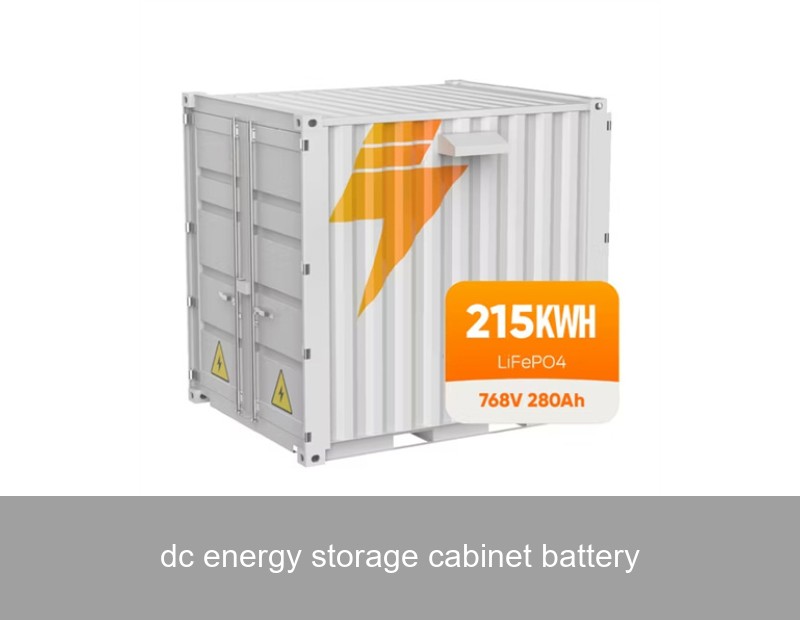
You've likely heard the buzz about solar panels, wind turbines, and the transition to clean energy. But there's a silent, powerful workhorse making this entire revolution possible: the DC energy storage cabinet battery. This isn't just a big battery; it's a sophisticated, integrated system that stores direct current (DC) electricity from sources like solar panels, holds it with high efficiency, and delivers it precisely when needed. For businesses, utilities, and communities across Europe and the U.S., these cabinets are solving a critical puzzle: how to harness the sun's power after it sets or use wind energy when the air is still. Let's dive into how this technology works, the tangible benefits it delivers, and why it's becoming indispensable for a resilient and sustainable energy future.
Table of Contents
- The Phenomenon: Intermittency Meets Demand
- The Data: Efficiency and Economics of DC-Coupled Systems
- Case Study: A German Manufacturing Plant's Success
- Key Insights: Choosing the Right DC Energy Storage Cabinet
- Highjoule's Advanced DC Energy Storage Solutions
- The Future Horizon: What's Next for Energy Storage?
The Phenomenon: Intermittency Meets Demand
Renewable energy sources are fantastic—until they aren't producing. This mismatch between generation (which happens when the sun shines or wind blows) and consumption (which happens around the clock) is the fundamental challenge of the energy transition. Grids become strained, and the risk of blackouts or reliance on fossil-fuel peaker plants increases.
This is where the DC energy storage cabinet battery enters the scene. Think of it as a "energy bank." Solar panels generate DC electricity. In a traditional AC-coupled system, this DC power is immediately converted to alternating current (AC) for the building or grid, and any excess is converted back to DC for storage—a process that loses energy each time. A DC-coupled system, with a DC energy storage cabinet at its core, is smarter. It stores the solar DC power directly with minimal conversion, preserving more of the precious generated energy. It's a more elegant, efficient, and cost-effective solution for managing on-site generation.
The Data: Efficiency and Economics of DC-Coupled Systems
The numbers speak volumes. AC-coupled storage systems typically have a round-trip efficiency (the percentage of energy put in that you can get back out) of around 85-90%. DC-coupled systems, by reducing the number of conversion steps, can achieve round-trip efficiencies of 94-98%. That might seem like a small percentage, but over the lifecycle of a system, it translates to thousands of kilowatt-hours of additional usable energy.
| System Type | Typical Round-Trip Efficiency | Key Advantage |
|---|---|---|
| AC-Coupled Storage | 85% - 90% | Easier retrofit for existing solar systems |
| DC-Coupled Storage (using DC Cabinet) | 94% - 98% | Higher overall efficiency, better for new installations |
Furthermore, a report by the National Renewable Energy Laboratory (NREL) highlights that DC-coupled architectures can reduce balance-of-system costs by up to 20%, making solar-plus-storage projects more financially viable. For a commercial operation, this efficiency gain directly cuts energy costs and improves the return on investment.

Image: A modern industrial site integrating solar generation with on-site energy storage. Source: Unsplash
Case Study: A German Manufacturing Plant's Success
Let's look at a real-world example from Bavaria, Germany. A mid-sized automotive parts manufacturer faced two problems: volatile energy prices and a corporate mandate to reduce carbon emissions. Their 500 kW rooftop solar array generated ample power during the day, but their highest energy consumption, and highest grid tariffs, occurred in the early evening during shift changes.
Their solution was the installation of a DC energy storage cabinet battery system, directly integrated with their solar inverters. The system specifications were:
- Storage Capacity: 750 kWh
- Power Output: 250 kW
- Architecture: DC-coupled, lithium iron phosphate (LFP) batteries.
The results after one year of operation were compelling:
- Self-Consumption of Solar: Increased from 35% to over 80%.
- Grid Peak Demand Charges: Reduced by 40%.
- Annual Energy Cost Savings: €68,000.
- Payback Period: Estimated at under 7 years, well within the system's 15+ year lifespan.
This case perfectly illustrates the triple win: financial savings, enhanced grid independence, and significant progress toward sustainability goals. The DC cabinet's high efficiency was crucial in maximizing the value of every solar kilowatt-hour produced.
Key Insights: Choosing the Right DC Energy Storage Cabinet
Not all cabinets are created equal. When evaluating a DC energy storage cabinet battery system, here are the critical factors to consider:
1. Battery Chemistry and Safety
Lithium Iron Phosphate (LFP) has become the dominant chemistry for stationary storage due to its long cycle life, thermal stability, and safety—it's far less prone to thermal runaway than older NMC chemistries. Look for cabinets with robust, multi-layered Battery Management Systems (BMS) and built-in safety features.
2. Scalability and Modularity
Your energy needs will evolve. A quality system allows you to start with a needed capacity and add more cabinet "blocks" later without major re-engineering. This modularity protects your initial investment.
3. Thermal Management
Batteries perform best and last longest within a specific temperature range. An integrated, intelligent liquid or air cooling system within the cabinet is essential, especially in climates with temperature extremes common in parts of the U.S. and Europe.
4. Grid Services and Software Intelligence
The hardware is only half the story. The software that controls charge/discharge cycles is the brain. Advanced systems can participate in grid services (where available), like frequency regulation, or optimize for time-of-use rates automatically, unlocking additional revenue streams.

Image: A technician performing maintenance on a modular energy storage cabinet system. Source: Unsplash
Highjoule's Advanced DC Energy Storage Solutions
At Highjoule, we've been at the forefront of this technology since 2005. Our DC energy storage cabinet battery solutions are engineered to meet the rigorous demands of commercial, industrial, and microgrid applications. Our flagship product line, the H-Series DC Cube, embodies our commitment to intelligence, efficiency, and sustainability.
The H-Series DC Cube is a fully integrated, containerized solution that simplifies deployment. Here’s what sets it apart:
- Ultra-High Efficiency: Our patented DC coupling design and advanced power conversion achieve a round-trip efficiency of up to 97.5%, ensuring maximum yield from your renewable assets.
- Unmatched Safety: Built with LFP cells and featuring our proprietary Sentinel BMS with 24/7 cloud-based monitoring, it includes fire suppression and isolation systems for complete peace of mind.
- Plug-and-Play Scalability: Each cabinet is a self-contained unit. Start with a single 250 kWh cabinet and scale up to multi-megawatt installations seamlessly, thanks to our standardized architecture.
- Intelligent Energy Management: Powered by our JouleMind AI platform, the system doesn't just store energy—it optimizes it. The platform can forecast energy production and consumption, manage peak demand, and even integrate with wholesale energy markets (in applicable regions) to autonomously maximize your financial return.
Our services extend beyond hardware. Highjoule provides comprehensive project lifecycle support—from initial consultancy and system design to installation, grid connection assistance, and long-term performance monitoring and maintenance. We partner with our clients to build resilient, cost-effective, and future-proof energy infrastructure.
The Future Horizon: What's Next for Energy Storage?
The evolution of the DC energy storage cabinet battery is far from over. We are moving towards even more intelligent, grid-interactive systems. The next frontier involves virtual power plants (VPPs), where thousands of distributed storage systems, like those in factories or neighborhoods, are aggregated to act as a single, large power plant that can support the grid during times of stress. Furthermore, advancements in battery chemistry, such as semi-solid state batteries, promise even higher energy densities and safety profiles in the coming years.
The integration of storage is also becoming more holistic. As noted by the International Renewable Energy Agency (IRENA), storage is a key enabler for sector coupling—linking power, transport, and heating to create a fully decarbonized energy ecosystem. The DC cabinet will be the critical node in this network.
So, as you consider your organization's energy strategy, the question isn't just about generating clean power, but about how effectively you can capture and use it. Is your current energy setup merely consuming power, or is it intelligently managing and optimizing every electron to build resilience and drive down costs?
 Inquiry
 Online Chat