


Finding the Right DCDU in Telecom for Sale: A Guide to Reliable Power Distribution
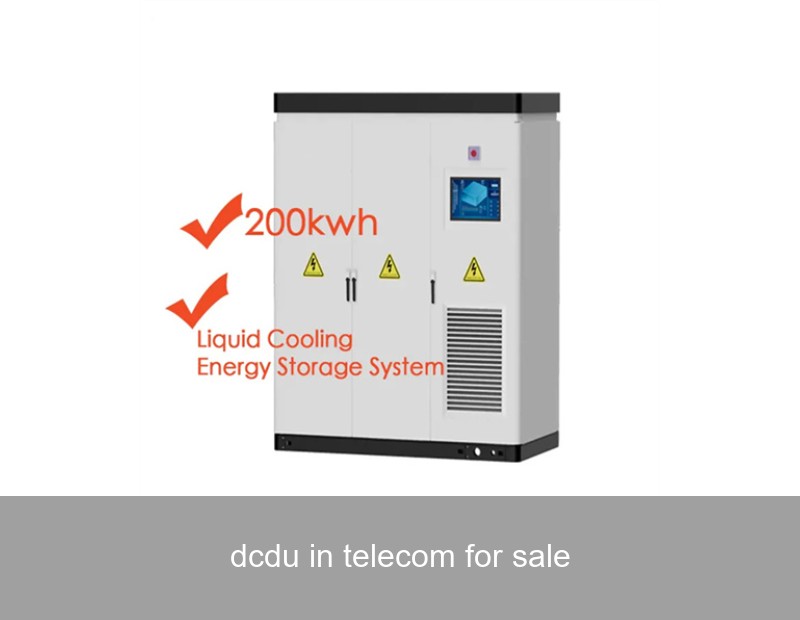
If you're managing telecom infrastructure, you know that network uptime is everything. Behind every bar of signal strength on a user's phone lies a complex ecosystem of power management, where a single point of failure can disrupt service for thousands. At the heart of this reliable power delivery, especially in DC-powered sites, is a crucial component: the DC Distribution Unit (DCDU). Whether you're upgrading legacy equipment, expanding 5G rollout, or fortifying a microgrid-powered remote site, selecting the right DCDU in telecom for sale is a critical decision. This article will demystify DCDUs, explore why they are more important than ever, and guide you on what to look for in a modern solution that ensures efficiency, monitoring, and seamless integration with renewable energy sources.
What is a DCDU in Telecom?
A DC Distribution Unit (DCDU) is essentially the "power strip" of a telecommunications site, but far more sophisticated. It sits between the primary DC power source—like a battery bank, rectifier, or a hybrid system incorporating solar—and the critical network loads, such as baseband units (BBUs), remote radio heads (RRHs), and transmission equipment. Its primary function is to safely distribute, protect, and manage DC power (typically -48V DC in telecom) to multiple devices through fused or circuit-breaker protected branches.

Image: A simplified diagram of a telecom DC power system, highlighting the distribution role of the DCDU. Source: Power Magazine
The Silent Challenge: Power Stability in Modern Telecom
The telecom power landscape is undergoing a silent revolution. The phenomenon is clear: network densification for 5G and fiber backhaul is dramatically increasing power density per site. A single macro site with massive MIMO antennas can see power demands soar. Furthermore, the push for sustainability is driving the integration of onsite renewables like solar PV, creating hybrid AC/DC environments.
Let's look at the data. A study by the U.S. Department of Energy highlighted that information and communication technology (ICT) energy use is a growing concern, with network infrastructure being a significant contributor. In Europe, the European Commission's Digital Decade targets demand both high-performance connectivity and improved energy efficiency. This creates a dual challenge: ensuring absolute power reliability for zero downtime while managing energy costs and carbon footprint. A poorly designed or outdated DCDU becomes a liability in this scenario—a hidden bottleneck that can lead to inefficient power routing, difficult fault isolation, and limited visibility into actual energy consumption per load.
The Critical Role of DCDUs in Telecom Infrastructure
Think of the DCDU as the first line of defense and the central nervous system for your site's power. Its roles are multifaceted:
- Protected Distribution: It segments power into individually fused/circuited outputs, isolating faults to prevent a single device failure from taking down the entire site.
- Monitoring and Intelligence: Modern DCDUs go beyond passive distribution. They provide vital data on current draw per circuit, total site consumption, and voltage levels, which is essential for proactive maintenance and capacity planning.
- Integration Hub: In advanced setups, the DCDU becomes the nexus for integrating multiple power sources—grid, battery storage, and solar—ensuring smooth power flow and prioritization.
Choosing a DCDU in telecom for sale based on price alone can be a costly mistake. The right unit should be a strategic asset in your network's energy management strategy.
Key Considerations When Choosing a DCDU for Sale
When evaluating DCDUs, consider this checklist to ensure you get a future-proof solution:
| Feature | Why It Matters |
|---|---|
| Scalability & Modularity | Can you easily add more fused outputs or monitoring capabilities as your site grows? A modular design protects your investment. |
| Advanced Monitoring & Communication | Look for units with integrated current sensors per circuit and communication ports (e.g., RS485, SNMP, IoT-ready) for remote, real-time monitoring. |
| High Efficiency & Low Heat Dissipation | Minimizing power loss as heat within the cabinet improves overall system efficiency and reduces cooling needs. |
| Robust Safety & Compliance | Must meet relevant regional safety and telecommunications standards (e.g., UL, CE, ETSI). |
| Hybrid Power Ready | Designed to work seamlessly with external battery management systems (BMS) and renewable energy controllers. |
The Highjoule Advantage: Intelligent DCDU Solutions for Modern Networks
At Highjoule, with nearly two decades of expertise in advanced energy storage and power conversion, we view the DCDU not as a commodity, but as an intelligent node in a smarter power network. Our Intelli-Distribute Series of DCDUs are engineered for the demands of today's and tomorrow's telecom sites.
Our solutions directly address the challenges outlined above. They feature per-circuit metering with < 1% accuracy, allowing operators to pinpoint exactly which piece of equipment is consuming what power—a game-changer for energy budgeting and anomaly detection. Built with a modular backplane, our DCDUs allow you to start with what you need and expand capacity without replacing the entire unit. Crucially, they are designed from the ground up to integrate with Highjoule's containerized battery energy storage systems (BESS) and microgrid controllers. This means a telecom site powered by Highjoule can intelligently blend grid power, on-site solar, and stored battery energy, with the DCDU ensuring this clean, stable power is perfectly delivered to sensitive radio and computing equipment.

Image: A containerized BESS unit being installed, showcasing a scalable power solution for telecom sites. Source: Solar Power World
Case Study: Enhancing Grid Stability and Backup in a German Mobile Network
Let's look at a real-world application. A major mobile network operator in Germany faced a dual challenge: providing uninterrupted service during short grid fluctuations and increasing the share of renewable energy at their cell sites. They partnered with Highjoule to deploy an integrated solution at a key macro site in Bavaria.
The system included a Highjoule 100 kWh lithium-ion BESS, a solar PV canopy, and our Intelli-Distribute DCDU as the central power routing and monitoring hub. During a grid disturbance, the system provided seamless backup power for critical loads for over 4 hours. More impressively, the DCDU's granular monitoring allowed the operator to implement a "power capping" strategy for non-essential loads during peak grid demand times, reducing their grid dependency by 22% during high-tariff periods. The site's overall carbon emissions were reduced by an estimated 18 tonnes annually. This case demonstrates that the right DCDU in telecom for sale isn't just about protection; it's an enabler for energy resilience and operational savings.
Future-Proofing Networks: DCDUs and the Energy Transition
As telecom operators evolve into de facto energy managers for their vast networks, the intelligence embedded in the power distribution layer becomes paramount. The next generation of DCDUs will likely play a role in virtual power plants (VPPs), where aggregated battery storage at cell sites can provide grid services. The ability of a DCDU to precisely measure and control power flow is foundational for such applications.
Choosing a partner like Highjoule means you're not just buying a component; you're investing in a platform. Our DCDUs are part of a broader ecosystem of smart energy products designed to make telecom infrastructure more sustainable, resilient, and cost-effective. We provide end-to-end support, from system design and commissioning to remote monitoring via our energy management platform.
Is your current power distribution setup ready to handle the increased load from 5G densification and capable of integrating smoothly with on-site solar or battery storage? What hidden inefficiencies might a modern, intelligent DCDU reveal at your most critical sites?
 Inquiry
 Online Chat