


Finding the Right Supplier of Solar Intech for Your Energy Transition
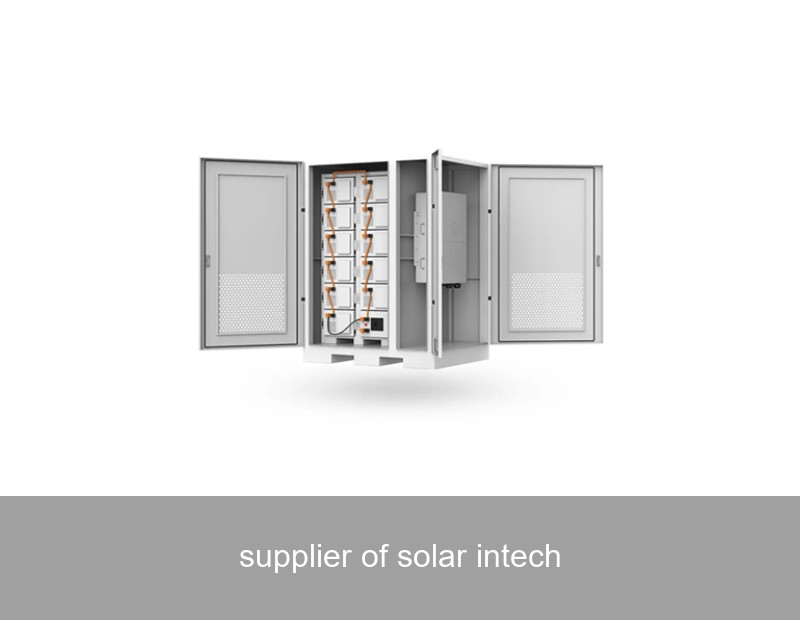
As businesses and communities across Europe and the U.S. accelerate their shift to renewable energy, a critical question emerges: who can provide not just solar panels, but the integrated technological intelligence to make the entire system work seamlessly? This is where the role of a true supplier of solar intech becomes paramount. It's no longer just about hardware; it's about delivering smart, interconnected systems that manage generation, storage, and consumption efficiently. Highjoule, a global leader in advanced energy storage since 2005, has evolved precisely into this role—providing the brains and the backbone for modern solar-powered facilities.
Table of Contents
- The Phenomenon: From Simple Solar to Intelligent Systems
- The Data: Why Integration is the Key to ROI
- Case Study: A European Industrial Park's Transformation
- The Highjoule Approach: Core Components of Solar Intech
- Choosing Your Supplier of Solar Intech: A Practical Checklist
- The Future Horizon: What's Next for Integrated Solar?
The Phenomenon: From Simple Solar to Intelligent Systems
You've likely seen the pattern. A company installs a sizable solar array, expecting dramatic energy savings, only to find they're still drawing heavily from the grid during peak hours or even wasting excess solar generation. The phenomenon is clear: solar generation alone is not enough. The sun doesn't shine on demand, and energy needs rarely align perfectly with production. This mismatch creates a pressing need for integration technology—sophisticated hardware and software that bridges the gap between production and consumption.

This is the shift from being a solar component vendor to becoming a comprehensive supplier of solar intech. It involves delivering a cohesive ecosystem where batteries, inverters, energy management software, and grid interfaces communicate in real-time to optimize every kilowatt-hour.
The Data: Why Integration is the Key to ROI
Let's talk numbers. According to the International Renewable Energy Agency (IRENA), the global average levelized cost of electricity from solar PV fell by 89% between 2010 and 2022. Yet, the financial return on a solar investment is heavily influenced by utilization rates. Without storage and smart management, typical commercial solar self-consumption rates can be as low as 30-50%. That means up to half of the energy you produce might be exported to the grid at low rates, rather than used to offset high-cost grid power.
Integrating a battery energy storage system (BESS) can push self-consumption to over 80%, dramatically improving payback periods. Furthermore, advanced solar intech enables participation in demand response programs and grid services, creating new revenue streams. The U.S. Department of Energy's Solar Futures Study highlights that grid flexibility through storage and smart controls is essential for high solar penetration. The data makes a compelling case: the intelligence behind the panels is as valuable as the panels themselves.
Case Study: A European Industrial Park's Transformation
Consider the real-world example of "Mittelpunkthafen Industrial Park" in Germany. Facing rising energy costs and ambitious sustainability targets, the park's management needed a solution that went beyond a standard solar installation.
- Challenge: High peak demand charges, intermittent solar production, and no control over energy flow between multiple tenant businesses.
- Solution: They partnered with Highjoule as their supplier of solar intech. The project included a 2.1 MWp solar canopy system coupled with a 4.8 MWh Highjoule HDP Series containerized battery storage system, all managed by Highjoule's Neuron Energy Management Platform (NEMP).
- Technology in Action: The NEMP intelligently dispatches stored solar energy during peak price periods, orchestrates power flow to different facilities based on real-time need, and provides a unified dashboard for the park's managers.
- Results (18-month post-installation):
Metric Outcome Grid Energy Cost Reduction 42% Peak Demand Charges Reduced 58% Solar Self-Consumption Rate Increased from 41% to 89% CO2 Emissions Reduction Approx. 1,200 tonnes annually
This case underscores the transformative impact of choosing a partner that provides integrated intelligence, not just individual components.
The Highjoule Approach: Core Components of Solar Intech
So, what does a true integrated technology suite look like? At Highjoule, our solution as a leading supplier of solar intech is built on three interconnected pillars:
1. The High-Density Storage Platform (HDP Series)
Our containerized and rack-mounted BESS solutions are the physical heart of the system. Designed for safety, longevity, and ease of scaling, they feature industry-leading lithium-iron-phosphate (LFP) chemistry and advanced thermal management. They are the reliable reservoir for your captured sunlight.

2. The Smart Hybrid Inverter (SHI Series)
This is the critical nexus where DC from solar panels and batteries meets AC for your facility and the grid. Highjoule's inverters are bi-directional and multi-mode, enabling seamless switching between grid-tied, off-grid, and backup power operations. They are the translators and traffic controllers of your energy ecosystem.
3. The Neuron Energy Management Platform (NEMP)
This cloud-based AI software is the "brain." It performs real-time analytics, forecasting energy production and consumption, and automatically optimizing dispatch for maximum economic benefit. It provides you with unparalleled visibility and control, turning raw data into actionable insights and automated savings.
Together, these components form a synergistic solar intech stack that delivers resilience, efficiency, and financial returns that discrete components simply cannot match.
Choosing Your Supplier of Solar Intech: A Practical Checklist
When evaluating potential partners for your integrated solar and storage project, look beyond brochures. Ask these critical questions:
- Do you offer a single, interoperable system or a patchwork of third-party parts? (Highjoule designs and manufactures its core stack for guaranteed compatibility)
- What is the depth of your energy management software? Can it handle peak shaving, tariff optimization, and future grid service markets?
- Can you provide a detailed, scenario-based financial model showing ROI under different usage and market conditions?
- What is your long-term service and performance guarantee structure? A true partner stands by the system's performance for decades.
- Do you have documented case studies in my sector (commercial, industrial, microgrid) and region?
The Future Horizon: What's Next for Integrated Solar?
The journey of solar intech is accelerating. We're moving towards virtual power plants (VPPs), where thousands of distributed systems like yours can be aggregated to act as a single, grid-stabilizing power resource. The integration of electric vehicle charging infrastructure as both a load and a storage asset is another frontier. The supplier of solar intech you choose today must be architecting for these tomorrows, with open APIs, cybersecurity-by-design, and scalable platform thinking.
Highjoule is already deploying systems with this future-proof mindset, ensuring our clients' assets remain valuable and relevant as energy markets evolve.
The transition to renewable energy is inevitable, but its economics and reliability are defined by the quality of integration. As you contemplate your next step, ask yourself this: Is your project merely installing solar hardware, or is it building an intelligent, adaptive energy ecosystem for the next 25 years? What would a system designed to maximize your specific operational and financial energy goals look like?
 Inquiry
 Online Chat