


Mastering Solar Independence: A Comprehensive Guide to the Deye 12kW 3 Phase Hybrid Inverter
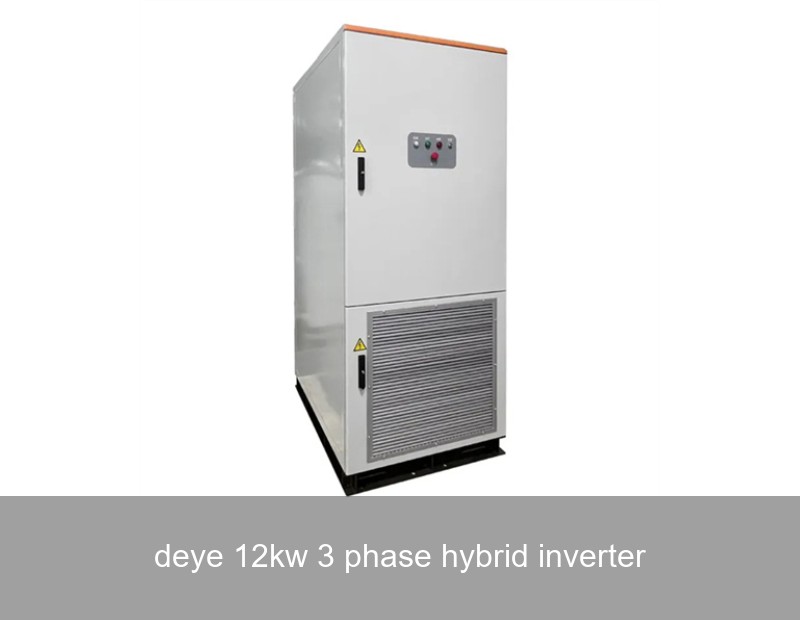
For European and American homeowners and businesses with three-phase power, achieving true energy independence often feels like a complex puzzle. You have the roof space, the ambition to slash energy bills, and a desire for resilience, but the heart of the system—the inverter—needs to be robust, smart, and versatile. Enter the Deye 12kW 3 Phase Hybrid Inverter, a powerhouse component designed to intelligently manage solar generation, battery storage, and grid interaction. This article delves into why this specific inverter is becoming a cornerstone for advanced energy systems and how pairing it with the right components and expertise, like that from Highjoule, unlocks its full potential.
Table of Contents
- What is a Deye 12kW 3 Phase Hybrid Inverter?
- Why This Inverter Matters: The Data Behind the Shift
- Key Features and Technical Advantages
- A Real-World Case Study: A German Bakery's Recipe for Resilience
- Beyond the Box: System Integration and Smart Energy Management
- Highjoule's Role: Delivering Complete, Optimized Solutions
- Is a Deye 12kW 3 Phase System Right for You?
What Exactly is a Deye 12kW 3 Phase Hybrid Inverter?
Let's break it down. A hybrid inverter is the brain of a modern solar-plus-storage system. Unlike a standard solar inverter that only converts solar DC power to AC for immediate use or export, a hybrid model seamlessly integrates a battery bank. The Deye 12kW 3 Phase model is engineered for properties with a three-phase electrical supply—common in larger European homes, farms, and most commercial/industrial sites. Its "12kW" rating refers primarily to its solar input capacity, meaning it can efficiently handle up to 12 kilowatts of solar panel generation, translating to significant power production on sunny days.
Think of it as a sophisticated energy traffic controller. It dynamically directs solar energy to power your appliances, charge your battery, or feed surplus back to the grid. When the sun sets, it draws power from the batteries. During a grid outage (where local regulations permit), it can automatically disconnect and keep critical loads running using solar and battery power—a feature known as UPS (Uninterruptible Power Supply) functionality.
Why This Inverter Matters: The Data Behind the Shift
The move towards systems centered on inverters like the Deye 12kW isn't just a tech trend; it's an economic and resilience imperative. Consider this: According to the International Energy Agency (IEA), global renewable capacity additions jumped by almost 50% in 2023, with solar PV accounting for three-quarters of this growth. However, the intermittent nature of solar creates a challenge for grid stability and self-consumption.
Here's where hybrid inverters change the game. Data from energy analysts show that without storage, a typical household might only use 30-50% of its self-generated solar power on-site. With a hybrid inverter and battery system, self-consumption rates can soar to 70% or higher, dramatically reducing reliance on purchased grid electricity. For businesses and homes on time-of-use tariffs or with demand charges, this shift is not just about savings; it's about cost predictability and control.

Image: A well-integrated solar and storage system is key to maximizing inverter performance. Source: Unsplash
Key Features and Technical Advantages of the Deye 12kW Model
So, what sets the Deye 12kW 3 Phase apart in a crowded market?
- High PV Input Voltage & Dual MPPT Trackers: It supports high-voltage strings of solar panels, reducing wiring costs and complexity. The dual Maximum Power Point Trackers allow you to connect panels on different roof orientations (e.g., east and west) without significant efficiency loss, maximizing overall energy harvest.
- Grid-Tied with Backup Power: It provides essential backup power for designated circuits during grid failures, ensuring your lights, refrigeration, and critical equipment stay on.
- Smart Energy Management: Advanced software allows for programmable operation modes. You can prioritize self-consumption, force battery charging during low-cost off-peak hours, or set export limits to comply with local grid regulations.
- Scalability and Compatibility: The inverter is designed to work with a wide range of high-voltage battery banks, including popular lithium-iron-phosphate (LiFePO4) models, offering flexibility for system expansion.
However, its advanced capabilities also mean that proper design, installation, and configuration are non-negotiable for safety, performance, and compliance. This is where expert partners prove invaluable.
A Real-World Case Study: A German Bakery's Recipe for Resilience
Let's look at a concrete example from Bavaria, Germany. Family-owned "Bäckerei Schmidt" (name changed for privacy) operated a medium-sized bakery with high energy consumption for ovens, refrigeration, and lighting. Their three-phase power connection faced rising energy costs and occasional brief grid disruptions that threatened production.
In early 2023, they installed a system built around a Deye 12kW 3 Phase Hybrid Inverter, coupled with 15kW of solar panels and a 20kWh lithium battery. The goals were to reduce operating costs, ensure uninterrupted production, and leverage Germany's EEG (renewable energy law) provisions.
| Metric | Before Installation | After Installation |
|---|---|---|
| Grid Electricity Purchased | ~42,000 kWh/year | ~15,500 kWh/year |
| Self-Consumption of Solar | N/A (No PV) | 81% |
| Estimated Annual Energy Cost Savings | Baseline | €6,800 |
| Grid Outage Impact | Production Halt | Zero (Critical loads powered for 8+ hours) |
The bakery's manager noted, "The system pays for itself while acting as an insurance policy. The transition during a blackout is seamless—our dough fermentation refrigerators never notice the difference." This case highlights the dual financial and operational resilience benefits a well-implemented Deye system can deliver.
Beyond the Box: System Integration and Smart Energy Management
The inverter, while critical, is just one component. Its performance is amplified by the ecosystem around it. This includes:
- High-Quality, Compatible Batteries: The battery's depth of discharge, cycle life, and communication protocol with the inverter are crucial for longevity and safety.
- Professional System Design: Correctly sizing the solar array and battery bank to match the inverter's capabilities and the site's load profile is a science in itself.
- Monitoring and Control: A good system offers intuitive monitoring apps, allowing users to track energy flows, savings, and system health in real-time from their smartphone.
This holistic approach to energy system integration is precisely where a provider like Highjoule excels. With nearly two decades of experience since 2005, Highjoule doesn't just supply components; we deliver intelligent, efficient, and sustainable power solutions. For commercial, industrial, and residential clients, our team ensures that a Deye inverter is part of a perfectly harmonized system, backed by robust design software, certified installers, and ongoing support.

Image: Professional installation and integration are key for complex inverters. Source: Unsplash
Highjoule's Role: Delivering Complete, Optimized Solutions
At Highjoule, we understand that adopting technology like the Deye 12kW 3 Phase Hybrid Inverter is a significant decision. Our role is to de-risk that decision and maximize your return on investment. For our clients in Europe and the U.S., this means:
- Expert Advisory: We assess your energy profile, goals, and local regulations to determine if this inverter is the optimal centerpiece for your project.
- Complete System Packages: We offer curated systems that pair the Deye inverter with tier-1 solar panels, certified battery storage (compatible with leading brands), and all necessary balance-of-system components.
- Technical Support & Compliance: Our network of trained installers ensures safe, code-compliant installation. We also provide guidance on grid interconnection paperwork and incentive programs, like the EU's smart grid initiatives or the U.S. Investment Tax Credit (ITC).
- Long-Term Partnership: Energy needs evolve. Our systems are designed with scalability in mind, and our monitoring platforms help us provide proactive support.
Is a Deye 12kW 3 Phase System Right for You? An Open Question
The technology is compelling, but the right choice depends on your unique circumstances. Do you have a three-phase electrical service? What is your primary goal: immediate bill savings, backup power, or reducing your carbon footprint? How does your local utility treat grid-fed solar, and are there specific certifications (like UL 1741-SA in the U.S. or VDE-AR-N 4105 in Germany) required for your inverter?
We encourage you to look beyond the inverter's spec sheet and consider the entire solution. What steps will you take to ensure that your investment in a sophisticated hybrid inverter translates into real-world reliability, savings, and peace of mind for the next 15+ years?
 Inquiry
 Online Chat