


Navigating the World of Different Lithium Ion Batteries for Your Energy Storage Needs
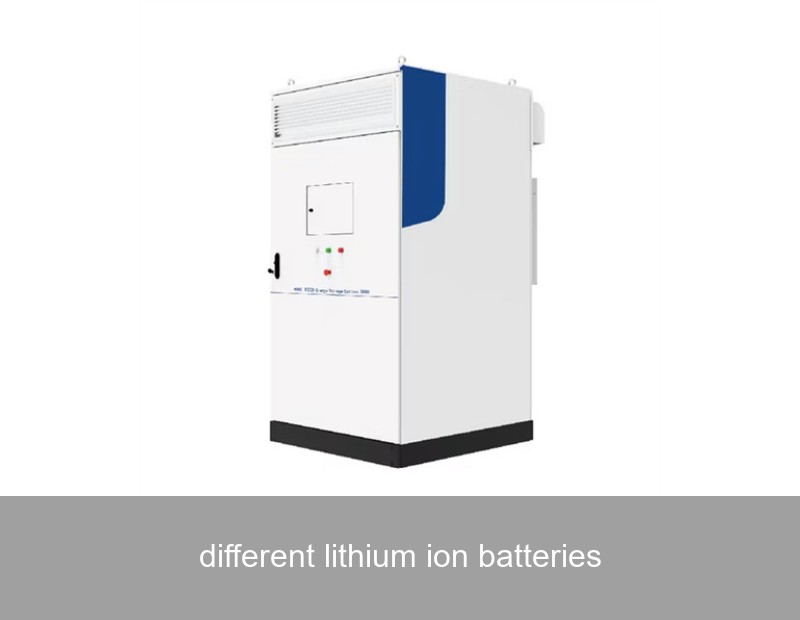
If you're considering solar panels, a home battery, or a large-scale energy storage system, you've likely heard that "lithium-ion" is the gold standard. But here's a crucial insight not everyone shares: not all lithium-ion batteries are created equal. The term "different lithium ion batteries" encompasses a variety of chemistries, each with unique strengths, trade-offs, and ideal applications. Choosing the wrong type can impact everything from your system's lifespan and safety to its cost and performance in extreme temperatures. As a global leader in advanced energy storage, Highjoule understands that the key to a sustainable, reliable power solution lies in matching the right battery chemistry to your specific needs.
Table of Contents
- The Chemistry Behind the Power: It's More Than Just Lithium
- Performance Showdown: Key Metrics for Comparison
- Real-World Impact: A Case Study from California
- The Highjoule Approach: Intelligent Chemistry Selection
- The Future Horizon: What's Next for Lithium Batteries?
The Chemistry Behind the Power: It's More Than Just Lithium
Think of a lithium-ion battery like a sandwich. The bread (anode and cathode) and the filling (electrolyte) can be made from different materials, drastically changing the flavor—or in this case, the performance. The "lithium-ion" name refers to the movement of lithium ions, but the materials hosting those ions define the battery's character.
Common Types of Lithium-Ion Chemistries
- Lithium Iron Phosphate (LFP or LiFePO4): The safety and longevity champion. LFP batteries are renowned for exceptional thermal and chemical stability, leading to a lower risk of thermal runaway. They boast a very long cycle life (often 6,000+ cycles) and perform well in a wide range of temperatures. Their energy density is lower than some alternatives, but for stationary storage where safety and cycle life are paramount, LFP is a top contender.
- Nickel Manganese Cobalt (NMC): The high-energy density leader. NMC batteries pack more energy into a smaller, lighter package. This makes them a historic favorite for electric vehicles and applications where space and weight are constraints. Different ratios of nickel, manganese, and cobalt (e.g., NMC 811, 622) balance energy, power, and cost.
- Nickel Cobalt Aluminum (NCA): Similar to NMC, NCA offers very high energy density and specific power. It's a technology often associated with leading electric vehicle manufacturers but is also used in some large-scale storage projects.
- Lithium Titanate Oxide (LTO): The ultra-durable powerhouse. LTO batteries replace the graphite anode with lithium titanate. This results in breathtakingly fast charging, an incredibly long cycle life (15,000-20,000 cycles), and superb performance in extreme cold. The primary trade-off is significantly lower energy density and higher upfront cost.
| Chemistry | Key Strengths | Typical Applications | Considerations |
|---|---|---|---|
| LFP (LiFePO4) | Safety, Long Life, Thermal Stability | Residential Storage, Commercial ESS, Microgrids | Lower energy density |
| NMC | High Energy Density, Good Power | EVs, Power Tools, Some Grid Storage | Higher cost for cobalt, moderate thermal stability |
| LTO | Extreme Longevity, Fast Charge, Wide Temp Range | Industrial UPS, Electric Buses, Cold Climate Storage | High upfront cost, low energy density |
Performance Showdown: Key Metrics for Comparison
So, how do you decide? It comes down to prioritizing the metrics that matter most for your application. Let's break down the critical factors:
- Cycle Life & Degradation: How many full charge/discharge cycles can the battery endure before its capacity drops to 80% of its original value? LFP and LTO excel here, often outlasting NMC by thousands of cycles. For a daily-cycled home battery, this translates directly to years of additional service.
- Energy vs. Power Density: Need to power your house overnight (energy) or run heavy machinery for short bursts (power)? Energy density (Wh/L or Wh/kg) is about storage capacity. Power density (W/L or W/kg) is about delivery speed. NMC is energy-dense; LTO is power-dense.
- Thermal Stability & Safety: This is non-negotiable. The stability of the cathode material and the electrolyte's flash point are crucial. LFP's strong phosphate bonds make it inherently more stable at high temperatures, a primary reason for its growing dominance in residential and commercial storage markets. Resources like the U.S. Department of Energy's battery FAQs provide valuable context on safety research.
- Cost & Sustainability: Look beyond the sticker price. Total cost of ownership (TCO) includes cycle life, degradation, and maintenance. LFP's longer life often means a lower TCO. Furthermore, LFP chemistry avoids cobalt and nickel, reducing supply chain concerns and environmental impact, aligning with a truly sustainable energy future.

Image Source: Unsplash (Representative image of battery cells)
Real-World Impact: A Case Study from California
Let's move from theory to practice. Consider a commercial bakery in Southern California facing two challenges: unpredictable demand charges from the utility and an unreliable grid prone to public safety power shutoffs (PSPS).
Phenomenon: Monthly electricity bills were spiking due to short periods of peak usage, and any grid outage would spoil inventory.
Data & Solution: The bakery needed a system that could discharge high power for 2-4 hours daily to shave peaks and provide 8+ hours of backup for critical cold storage. An analysis of cycle life, safety (for an occupied food facility), and daily depth-of-discharge pointed towards an LFP-based battery energy storage system (BESS).
Case Study: Highjoule deployed a 250 kW / 550 kWh Highjoule CubeStack Commercial ESS utilizing our proprietary LFP battery modules. The system's intelligent energy management software predicts usage patterns and automatically dispatches power to avoid peak tariffs.
Insights & Results: Within the first year:
- Demand Charge Reduction: Peak power draws from the grid were reduced by 40%, slashing the bakery's monthly bills by an average of 28%.
- Reliability: During two separate PSPS events, the system seamlessly provided backup power to refrigeration and essential lighting for over 10 hours, preventing tens of thousands of dollars in lost inventory.
- Durability: The LFP chemistry's tolerance for deep, daily cycling ensured minimal degradation, protecting the investment's long-term value. This real-world success underscores why understanding the nuances of different lithium ion batteries is critical for financial and operational outcomes.
The Highjoule Approach: Intelligent Chemistry Selection
At Highjoule, we don't believe in a one-size-fits-all battery. Our product philosophy is built on selecting the optimal core chemistry and then enhancing it with our intelligent software layer.
For the vast majority of our residential (Highjoule HomePower) and commercial/industrial (CubeStack) solutions, we utilize advanced LFP chemistry. Why? Because our priority is delivering a system that is safe enough for your home or business, lasts for decades (with warranties to match), and provides stable performance. We then wrap this robust hardware with our Highjoule Neuron OS, a smart energy platform that optimizes every charge and discharge cycle for longevity, cost savings, and grid support.
For specialized microgrid and utility-scale projects, where requirements can vary dramatically, our engineering team conducts a detailed techno-economic analysis. We might blend LFP for long-duration storage with high-power components for frequency regulation, always tailoring the solution to the project's specific duty cycle, climate, and financial model. This expert curation is what sets a Highjoule system apart from a generic battery pack.

Image Source: Unsplash (Representative image of a home with solar and storage)
The Future Horizon: What's Next for Lithium Batteries?
The evolution of different lithium ion batteries is far from over. Research is pushing boundaries on all fronts. Solid-state batteries, which replace the liquid electrolyte with a solid, promise even greater safety and energy density. Innovations in silicon anodes could significantly boost capacity. Sodium-ion batteries are emerging as a potentially lower-cost alternative for stationary storage. Staying informed on these trends is vital; organizations like the National Renewable Energy Lab (NREL) are excellent resources for cutting-edge, unbiased information.
For us at Highjoule, the future is about integration and intelligence. The battery cell is the heart, but the brain—the software that manages it within the broader energy ecosystem—is where true value is unlocked. We are focused on developing systems that don't just store energy but actively communicate with solar arrays, EV chargers, and the grid to create a resilient, efficient, and cost-effective energy asset for our customers.
Given the rapid pace of change and the significant investment involved, the most important question you can ask today is: How will you ensure your energy storage solution is built with the right battery chemistry to meet not just today's needs, but to thrive for the next 20 years?
 Inquiry
 Online Chat