


Understanding the Total Cost of a 100 kW Solar Power Plant (Solarna Elektrana 100 kW Cena)
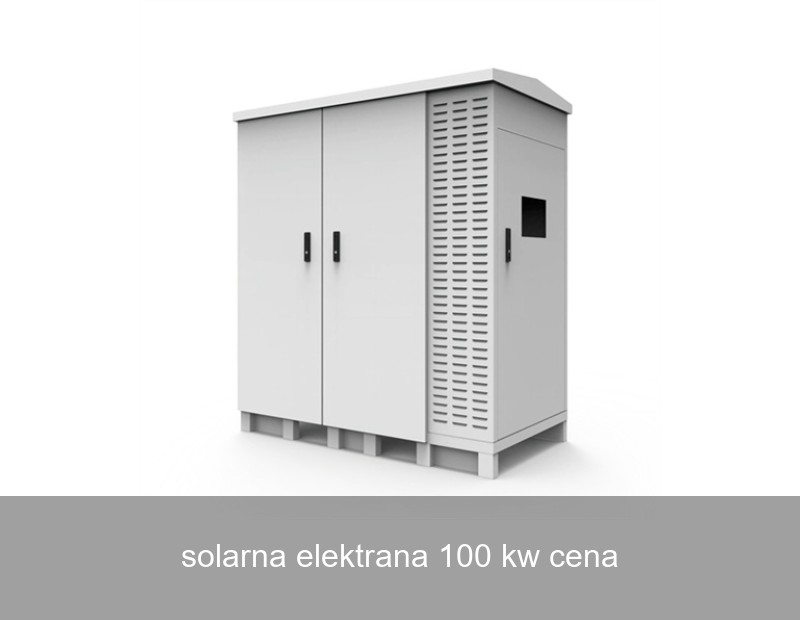
So, you're considering a 100 kW solar power plant. It's a significant and smart investment, whether you're a business owner looking to slash operational costs, a farm seeking energy independence, or managing a sizable residential community. But when you search for "solarna elektrana 100 kw cena," you quickly realize the price tag isn't a single number. The true cost is a blend of hardware, intelligence, and long-term value. Let's demystify what goes into the pricing of a 100 kW solar system and how to think about maximizing your return on this clean energy investment.
Table of Contents
The Real Price Breakdown: More Than Just Panels
Focusing solely on the cost-per-watt of solar modules is like buying a car based only on the engine size. A functional 100 kW system needs a symphony of components working together. Here’s a realistic breakdown of where your investment goes:
- Solar Panels (Photovoltaic Modules): Typically 40-50% of the total cost. Efficiency and durability are key here. Higher-efficiency panels might cost more upfront but generate more power in limited space.
- Inverters: The "brain" of your solar plant, converting DC to AC power. This accounts for 15-20% of the cost. Choosing between string inverters, power optimizers, or microinverters impacts cost, efficiency, and monitoring capabilities.
- Mounting System & Hardware: The skeleton holding everything in place (5-10%). This must be engineered for your specific roof type or ground conditions and local weather loads.
- Electrical Components & Wiring: Safety switches, combiners, and cabling (5-10%). Never an area to cut corners.
- Installation & Labor: Professional design, permitting, and installation (15-25%). Expertise here ensures performance and longevity.
In markets like the United States, the total installed cost for a commercial-scale 100 kW system can range from $1.00 to $1.80 per watt, meaning a rough total between $100,000 and $180,000 before incentives. In the European Union, prices vary by country but often fall within a similar range of €0.90 to €1.60 per watt. However, these figures are just the starting point. The real question is: what do you want your system to do?
The Game Changer: Integrating Energy Storage
This is where the conversation evolves from "solarna elektrana 100 kw cena" to "solarna elektrana 100 kw s skladištenjem energije cena" (price with energy storage). A solar-only system exports surplus energy to the grid, often at a low feed-in tariff. But what happens when the sun sets, or during a grid outage?
Adding a battery energy storage system (BESS) transforms your solar plant from a cost-saver into a resilient energy asset. It allows you to:
- Maximize Self-Consumption: Store daytime surplus and use it in the evening, drastically reducing grid purchases.
- Provide Backup Power: Keep critical operations running during power cuts.
- Participate in Grid Services: In some markets, you can earn revenue by providing frequency regulation or capacity services.
While this adds to the initial investment, the long-term financial benefits and energy security can be substantial. The price then shifts from a simple equipment cost to the value of controlled, reliable, and independent power.
A Concrete Example: Sustainability and Savings at a California Winery
Let's look at a real-world application. A family-owned winery in Sonoma County, California, faced rising energy costs and a desire to operate sustainably. They installed a 112 kW rooftop solar array paired with a 240 kWh battery storage system.
| Metric | Result |
|---|---|
| Annual Energy Production | ~162,000 kWh |
| Energy Cost Reduction | Over 85% |
| Backup Power | Critical refrigeration & operations for 10+ hours during grid outages |
| Incentives Utilized | Federal Investment Tax Credit (ITC), which applies to solar + storage |
The system's ability to preserve refrigeration during frequent Public Safety Power Shutoffs (PSPS) prevented massive product loss. The winery's "cena" was an investment in both planetary and business resilience. You can explore more case studies from the Solar Energy Industries Association (SEIA).

Image: Commercial solar installations on agricultural buildings, like wineries, are a common and effective application for 100 kW-scale systems.
The Highjoule Approach: Intelligence Beyond Installation
At Highjoule, we view a 100 kW solar plant not as a mere collection of parts, but as the core of a smart, integrated energy ecosystem. Since 2005, we've specialized in tailoring solutions for commercial, industrial, and microgrid applications. Our value isn't just in supplying equipment; it's in delivering optimized lifetime performance.
For a project of this scale, we provide:
- Highjoule H-IQ Energy Management System (EMS): This proprietary software is the true nerve center. It doesn't just monitor production; it intelligently dispatches stored energy based on weather forecasts, electricity rates, and your consumption patterns, ensuring every kilowatt-hour is used where it saves the most money.
- Scalable & Modular Battery Storage: Our containerized or rack-mounted battery systems are designed to seamlessly integrate with new or existing solar arrays. We use lithium iron phosphate (LFP) chemistry for its renowned safety, longevity, and stability.
- Full-Spectrum Support: From initial feasibility and financial modeling to grid connection support, professional installation, and 24/7 monitoring, we are a single point of accountability.
When you partner with Highjoule, the "cena" becomes a comprehensive solution for energy independence. You're investing in a system engineered to adapt to changing energy markets and your evolving needs. For deeper insights into battery technologies, resources from the U.S. Department of Energy's Energy Storage Hub are invaluable.

Image: Modern, containerized battery energy storage systems (BESS) like those from Highjoule provide scalable power for commercial sites.
Future-Proofing Your Investment
The energy landscape is dynamic. Electricity prices fluctuate, regulations change, and new technologies emerge. When evaluating the cost of your 100 kW solar power plant, consider its flexibility.
- Scalability: Can you easily add more panels or battery capacity later?
- Software-Upgradable: Can the system's intelligence receive updates to leverage new grid service opportunities?
- Technology Agnostic: Does your provider offer best-in-class components, or are they locked into a single brand?
This forward-thinking approach protects your investment. A system designed with an open architecture, like Highjoule's platforms, ensures you won't be left behind. Understanding broader market trends is also crucial, which is why reports from analysts like BloombergNEF are so widely referenced.
So, What's Your True Energy Goal?
The journey past a simple Google search for "solarna elektrana 100 kw cena" leads to a more meaningful question. Are you aiming for the lowest upfront cost, or the highest long-term value and control? The difference lies in the system's intelligence, its ability to store and manage energy, and the partner you choose to bring it to life.
Is your primary driver to achieve predictable energy costs for the next 25 years, to ensure operational continuity no matter what happens to the grid, or to meet ambitious corporate sustainability targets? Defining this will illuminate the right configuration and the true value of your investment.
 Inquiry
 Online Chat