


Your Domestic Energy Storage Cabinet: The Heart of a Modern, Resilient Home
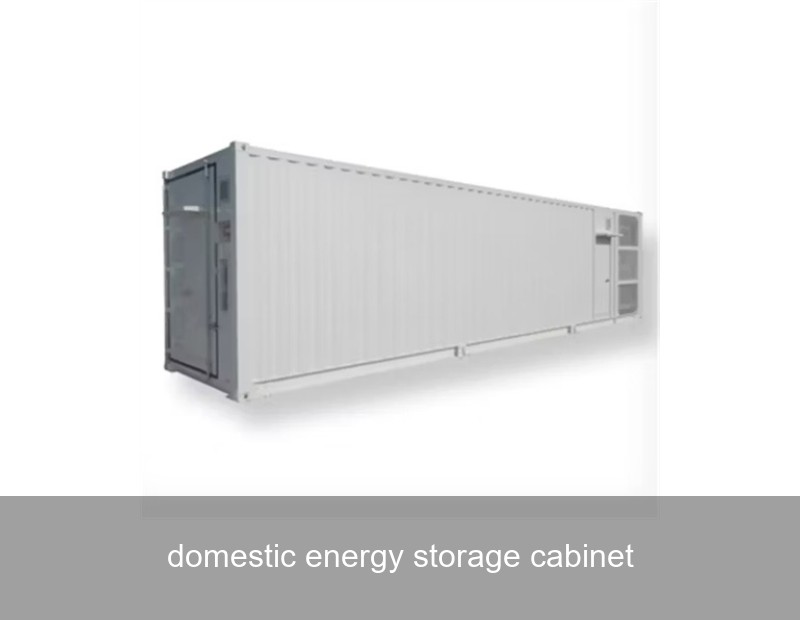
Imagine a device in your home that not only slashes your electricity bills but also keeps the lights on during a storm, maximizes your use of solar power, and even helps stabilize the wider grid. This isn't futuristic fantasy; it's the reality enabled by today's domestic energy storage cabinet. For homeowners in Europe and the US, this technology is rapidly shifting from a niche upgrade to a central component of intelligent energy management. But what exactly is it, and why is it becoming so essential? Let's explore how this powerful cabinet is redefining energy independence for the modern household.
Table of Contents
- The Phenomenon: From Passive Consumer to Proactive Prosumer
- The Data: Why Storage is the Missing Link for Solar Homes
- The Core: What's Inside a Domestic Energy Storage Cabinet?
- The Case Study: Resilience in Practice - A German Homeowner's Story
- The Future & Your Home: Integration and Intelligence
- The Choice: Selecting Your Home's Energy Hub
The Phenomenon: From Passive Consumer to Proactive Prosumer
For decades, our relationship with home energy was simple: we drew power from the grid and paid the monthly bill. The rise of rooftop solar panels began to change that, allowing us to generate our own electricity. However, this created a new challenge: solar production peaks in the middle of the day, while home energy demand often peaks in the early morning and evening. Without a way to capture that surplus sunshine, a significant portion of it gets fed back to the grid, often for minimal compensation.
This mismatch is the fundamental problem a domestic energy storage cabinet solves. Think of it not just as a big battery, but as the intelligent heart of your home's energy system. It stores the excess solar energy you produce, holding it for when you actually need it—at night, during cloudy periods, or when grid prices are at their highest. This transforms you from a passive consumer (or even a "prosumer" with limited control) into a truly empowered manager of your personal energy ecosystem.
The Data: Why Storage is the Missing Link for Solar Homes
The numbers make a compelling case. According to the U.S. Department of Energy, the average American home with solar can achieve 50-70% self-consumption of its solar energy without storage. That means 30-50% of the clean power generated is exported. With a storage system, that self-consumption can jump to 80% or even higher, dramatically increasing the value of your solar investment.
Furthermore, grid instability is a growing concern. Data from the U.S. Energy Information Administration (EIA) shows that the frequency and duration of power outages are increasing in many regions. For homeowners, this isn't just an inconvenience; it can mean spoiled food, unsafe conditions during heatwaves or cold snaps, and disrupted work-from-home operations. A domestic energy storage cabinet with backup functionality provides a seamless, automatic solution, often switching on in milliseconds to keep your essential circuits running.

Image Source: Unsplash - A modern home equipped for energy self-sufficiency.
The Core: What's Inside a Domestic Energy Storage Cabinet?
So, what makes up this pivotal system? A modern, all-in-one domestic energy storage cabinet is a marvel of integration, typically containing:
- Battery Modules: The core energy reservoir, using advanced lithium-ion chemistry (like LFP - Lithium Iron Phosphate) known for safety, long life (often 10+ years), and high cycle count.
- Battery Management System (BMS): The "brain" of the battery, constantly monitoring cell voltage, temperature, and state of charge to ensure optimal performance and safety.
- Hybrid Inverter: The critical "translator." It converts the DC electricity from your solar panels and batteries into AC electricity for your home, and can also manage charging from the grid when beneficial.
- Thermal Management System: A cooling and heating system to keep the battery within its ideal temperature range, ensuring efficiency and longevity in all climates.
- Safety Enclosure & Disconnect Switches: A robust, fire-rated cabinet with integrated safety disconnects for secure installation and maintenance.
Companies like Highjoule have refined this integration. Our Highjoule Volta Series domestic energy storage cabinets are designed with the homeowner in mind. They combine UL9540A certified safe LFP batteries, a high-efficiency hybrid inverter, and intelligent energy management software into a single, sleek unit. The goal is to provide not just storage, but a plug-and-play energy platform that is simple to install, effortless to monitor via a smartphone app, and reliable for the long term.
Key Specifications to Consider
| Feature | What It Means for You |
|---|---|
| Usable Capacity (kWh) | The amount of energy you can actually use. A 10-15 kWh system often covers critical loads for a full night or during an outage. |
| Continuous Power Output (kW) | How much power it can deliver at once. Ensure it can handle the simultaneous start of your fridge, well pump, and other essentials. |
| Depth of Discharge (DoD) | The percentage of the battery you can safely use. A 90% DoD means you get more usable energy from the same physical battery. |
| Round-Trip Efficiency | How much energy is lost in the storage/retrieval process. A 95% efficiency means you get 9.5 kWh back for every 10 kWh you put in. |
The Case Study: Resilience in Practice - A German Homeowner's Story
Let's look at a real-world example from Bavaria, Germany. The Schmidt family installed a 12 kW solar array on their home in 2020. While it reduced their grid imports, they were still exporting over 40% of their production and faced occasional winter grid alerts. In early 2023, they decided to install a domestic energy storage cabinet—specifically, a Highjoule Volta 12 system with 13.5 kWh of usable capacity.
- Self-Consumption Rate: Increased from 58% to 92%.
- Grid Import Reduction: Cut their purchased electricity from the grid by an additional 75% compared to solar alone.
- Financial Impact: Achieved nearly €1,800 in annual energy cost savings, accelerating their system payback period.
- Resilience Tested: During a regional storm that caused a 14-hour grid outage, the system automatically powered their critical loads (lighting, refrigeration, internet, and heating circulation pump) without interruption. The family reported peace of mind as the "most valuable benefit."
This case, mirrored by thousands across Europe and North America, highlights the triple value proposition: economic savings, energy independence, and unwavering resilience.

Image Source: Unsplash - Professional installation of a residential energy storage unit.
The Future & Your Home: Integration and Intelligence
The next evolution of the domestic energy storage cabinet lies in smart grid integration. With capabilities like time-based control, your system can be programmed to charge from the grid when electricity is cheap and abundant (often at night) and discharge during peak, expensive hours—a concept known as "peak shaving." In some areas, utility programs even allow you to contribute small amounts of power back to the grid during times of extreme demand, potentially earning you credits.
This is where Highjoule's EnergyOS platform shines. It doesn't just monitor your system; it learns your consumption patterns, integrates with local utility rate structures, and can automatically optimize your energy flow for maximum savings and grid support. The cabinet becomes an active node in a cleaner, more decentralized energy network.
The Choice: Selecting Your Home's Energy Hub
Choosing the right system is crucial. Look for a provider with proven expertise, robust safety certifications, and a strong track record. Highjoule, with nearly two decades of experience as a global leader in advanced storage systems, brings commercial-grade reliability to the residential sector. Our focus is on delivering intelligent, efficient, and sustainable power solutions that are built to last.
When evaluating a domestic energy storage cabinet, ask your installer: How does the system manage safety? What is the warranty and expected lifespan? How intuitive is the monitoring software? Does it have the capability to integrate with future smart grid programs?
Your home's energy system is a long-term investment. The right cabinet is not just a product; it's a partnership in achieving true energy autonomy. What will your first step be towards taking control of your home's power?
 Inquiry
 Online Chat