


8000 Cycle Lithium Battery: The Key to Truly Sustainable Energy Storage
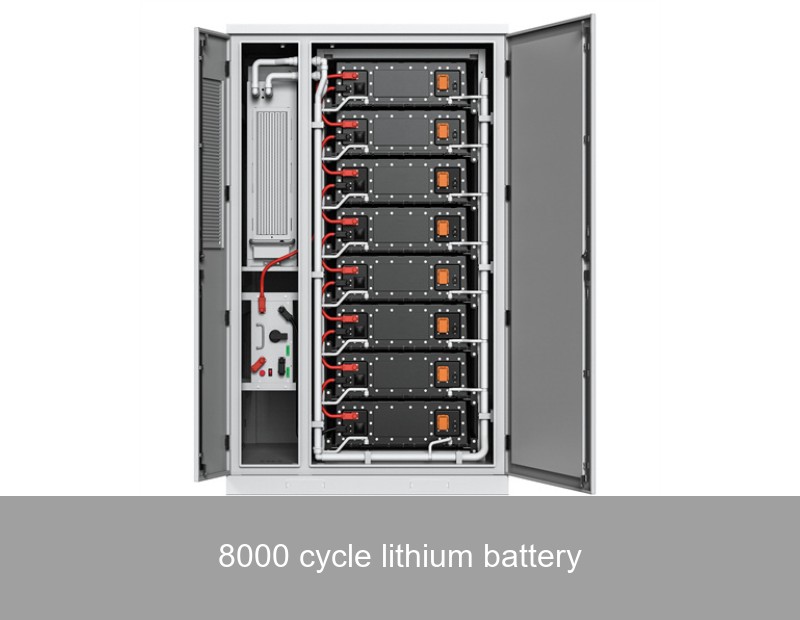
If you're exploring solar batteries or commercial energy storage, you've likely encountered the term "cycle life." But when a spec sheet boasts an 8000 cycle lithium battery, what does that actually mean for your home, business, or community project? Is it just a marketing number, or does it represent a fundamental leap in battery technology? As a product technology expert at Highjoule, I spend my days deciphering these numbers into real-world benefits. Let's demystify the 8000-cycle claim and explore why this metric is becoming the new gold standard for durable, sustainable power.
What is an 8000 Cycle Lithium Battery?
Simply put, a cycle is one complete discharge and recharge of a battery. An 8000-cycle rating indicates the battery is designed to undergo this process 8000 times while retaining a significant portion of its original capacity. Most residential batteries today are rated for 3000-6000 cycles. An 8000-cycle battery pushes the boundary, promising a functional lifespan that can easily exceed 20 years, even with daily use. This isn't about incremental improvement; it's about designing storage systems that outlive the solar panels they're paired with, fundamentally changing the economics of renewable energy.
The Phenomenon: Why Battery Longevity Matters
We've all experienced it: the smartphone that barely holds a charge after two years. This capacity fade is a natural phenomenon in lithium-ion batteries, driven by complex electrochemical reactions. In large-scale energy storage, this degradation translates directly into financial loss and reduced energy security. A system that loses capacity too quickly fails to deliver the promised return on investment and may need premature replacement, undermining the environmental goals of going green.
This is where the pursuit of ultra-high cycle life comes in. It's a direct response to the core challenge of making renewable energy reliably available, 24/7, for decades. The industry is shifting from asking "how much power can it store?" to "how long can it reliably store power?"
The Data: What 8000 Cycles Really Means for You
Let's break down the numbers. Assume you use a battery with an 8000-cycle lifespan in a "daily cycle" application—fully charging from solar each day and discharging each evening.
- Years of Service: 8000 cycles / 365 cycles per year ≈ 21.9 years of daily use.
- End-of-Life Capacity: A quality 8000-cycle battery is typically rated to retain at least 60-70% of its original capacity at that point. It's not suddenly "dead"; it's still providing substantial, usable energy.
- Total Energy Throughput: This is the real magic. If a 10 kWh battery delivers 8 kWh usable per cycle, over its life it delivers: 8000 cycles * 8 kWh = 64,000 kWh of clean energy. That's the true measure of value and sustainability.
| Cycle Life Rating | Estimated Lifespan (Daily Use) | Key Implication |
|---|---|---|
| 3000 cycles | ~8.2 years | May require replacement during system life |
| 6000 cycles | ~16.4 years | Often aligns with panel warranty periods |
| 8000 cycles | ~21.9 years | Designed to outlast other system components |
The Case Study: A Real-World Test in Commercial Storage
Laboratory ratings are one thing; real-world performance is another. Consider the case of a mid-sized fruit-packing cooperative in Navarra, Spain. Facing high daytime energy costs and wanting to maximize their large rooftop solar array, they installed a 250 kWh commercial battery storage system in 2018. Their primary need was daily "peak shaving"—discharging the battery during expensive afternoon rate periods.
The system was specified with lithium iron phosphate (LFP) cells known for long cycle life. After five years of rigorous, twice-daily cycling (charging from solar, discharging for peak shaving), the system had completed over 3,650 cycles. Independent performance analysis showed capacity retention of 94.5%. This trajectory strongly supports the feasibility of reaching 8000+ cycles with minimal degradation, validating the long-term financial model. The cooperative reported a reduction in their grid energy costs by over 40% annually, with the battery system projected to pay for itself well before the midpoint of its lifespan.
Image Source: Unsplash (Representative image of a commercial battery installation)

The Highjoule Difference: Engineering for Extreme Durability
At Highjoule, our mission is to build storage solutions that are assets for generations. Achieving a true 8000-cycle lifespan isn't about selecting a single component; it's about a holistic, system-level engineering philosophy. Our Highjoule HX Series for commercial and industrial applications is designed with this paradigm in mind.
- Cell Selection & Grading: We use premium Lithium Iron Phosphate (LFP) chemistry, inherently known for safety and longevity. Beyond that, we employ rigorous cell grading to ensure perfect consistency within every battery pack, preventing "weak link" cells from accelerating degradation.
- Advanced Thermal Management: Heat is the enemy of cycle life. Our proprietary liquid cooling system maintains the battery cells within a narrow, optimal temperature range (typically 20-30°C) in all climates, whether it's a heatwave in Texas or a cold snap in Germany.
- Intelligent Battery Management System (BMS): Our BMS is the brain. It doesn't just monitor; it actively manages cell-level balancing, prevents stressful states of charge (like constantly staying at 100%), and uses adaptive algorithms to minimize chemical stress, effectively "curating" every cycle for longevity.
- Robust System Integration: From the inverter interface to the structural enclosure, every component is chosen and tested for a 25-year service life, ensuring the battery isn't let down by its supporting hardware.
This integrated approach is why we can confidently offer industry-leading warranties that back the 8000-cycle performance, providing our clients in Europe and North America with unparalleled peace of mind.
Making the Right Choice: Factors Beyond the Cycle Count
While 8000 cycles is a powerful indicator, it should not be the only factor in your decision. Here’s your quick checklist:
- Warranty Terms: Does the warranty guarantee both a cycle count and end-of-life capacity (e.g., 70% at 8000 cycles)? Highjoule's warranty does exactly that.
- Depth of Discharge (DoD): The cycle life is only valid at a specified DoD (e.g., 90%). Using 100% DoD every time will reduce lifespan.
- Round-Trip Efficiency: How much energy is lost in the charge/discharge process? A high-efficiency system (like ours, at over 96%) means more of your solar energy ends up powering your home or business.
- Scalability & Software: Can the system grow with your needs? Does the energy management software allow you to optimize for self-consumption, time-of-use savings, or grid services? Highjoule's platform provides this flexible intelligence.
Image Source: Unsplash (Representative image of a technician monitoring a residential battery system)

For deeper technical insights into lithium-ion battery degradation, authoritative resources like the U.S. Department of Energy and research from NREL provide valuable context.
Your Next Step Towards a Durable Energy Future
The promise of an 8000 cycle lithium battery is more than a long lifespan—it's a commitment to reducing waste, maximizing financial returns, and building a resilient energy foundation. As you evaluate your storage options, ask potential providers: "Can you show me the detailed engineering and warranty that will guarantee my system delivers energy for the next two decades, not just the next few years?"
What specific energy resilience or savings goal would you want an 8000-cycle battery to help you achieve first?
 Inquiry
 Online Chat