


Donut Solid State Battery: The Game-Changer for Renewable Energy Storage?
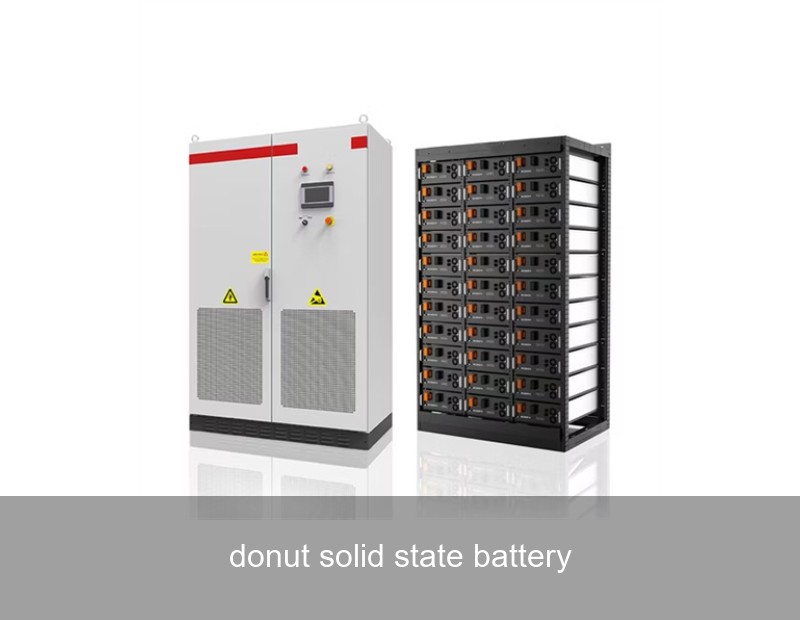
Imagine a world where your home battery system is so compact, safe, and long-lasting that it powers your life for decades with minimal worry. That's the promise of solid-state battery technology. But have you heard about its latest, most intriguing evolution—the donut solid state battery? This isn't a pastry; it's a revolutionary design tackling the core challenges of energy storage. For homeowners and businesses across Europe and the U.S. navigating the energy transition, understanding this innovation is key to unlocking true energy independence. Let's dive into why this unique shape might just be the missing piece in our sustainable energy puzzle.
Table of Contents
The Phenomenon: Why Solid-State Needs a New Shape
Solid-state batteries replace the flammable liquid electrolyte in conventional lithium-ion batteries with a solid material. This brings monumental benefits: higher energy density, no fire risk, and longer lifespan. However, a significant hurdle remains: interface resistance. Where the solid components meet, ions struggle to move efficiently, especially under high currents or cold temperatures. This can limit charging speed and power delivery.
Enter the "donut" or toroidal design. By shaping the battery cell like a ring, engineers create a more efficient internal pathway. Think of it as traffic management: a circular layout can often handle flow better than a grid of straight, intersecting roads. This geometry can improve thermal management—heat distributes more evenly—and reduces internal stress during charge cycles, which is a common cause of degradation.

Image Source: U.S. Department of Energy (Public Domain) - Illustrating solid-state battery architecture.
The Data: Performance Leap Over Lithium-Ion
While commercial donut-shaped cells are still emerging from labs, performance data from prototypes and related solid-state research paints a compelling picture. Let's compare the potential with today's standard lithium-ion batteries used in home storage.
| Performance Metric | Typical Li-ion (NMC) | Projected Solid-State (Donut Design) |
|---|---|---|
| Energy Density | ~200-300 Wh/kg | ~400-500 Wh/kg |
| Cycle Life (to 80% capacity) | 4,000 - 6,000 cycles | 10,000+ cycles |
| Operational Temperature Range | -20°C to 60°C | -40°C to 100°C (est.) |
| Safety Risk | Thermal runaway risk | Inherently non-flammable |
| Fast Charge Capability | 30 mins to 1 hour (for 80%) | Potential for < 15 minutes |
This data, compiled from research published by institutions like the Nature Energy journal, suggests a transformative leap. For a household, this translates to a battery that could last the lifetime of your solar panels, charge your EV incredibly fast from your own solar surplus, and do so with unparalleled safety, even in harsh Scandinavian winters or hot Arizona summers.
The Manufacturing Challenge
The "donut" shape isn't just an engineering whim; it addresses a production challenge. Coating solid layers evenly in a traditional jelly-roll design is difficult. A toroidal design might allow for more precise, layer-by-layer deposition techniques, improving consistency and yield—a critical factor for bringing costs down.
The Case Study: A German Industrial Park's Step Towards the Future
While the perfect donut solid-state battery is still maturing, the industry's move towards advanced, safe storage is already yielding results. Consider a real-world project in a German industrial park in Bavaria. The site, with a 2 MW rooftop solar array, faced a dual challenge: maximizing self-consumption of solar power and ensuring absolute fire safety due to strict local regulations and proximity to sensitive manufacturing equipment.
They partnered with Highjoule to deploy a containerized "EnerHub" energy storage system. While using current-generation lithium-ion cells, the system's core intelligence lies in Highjoule's proprietary Adaptive Cell Balancing (ACB) software and sophisticated liquid cooling. This system meticulously manages each cell cluster's temperature and state-of-charge, mimicking the kind of precise internal management targeted by solid-state designs.
The results after 18 months of operation:
- 98.7% Solar Self-Consumption: Up from an initial 55%, drastically reducing grid dependence.
- 0 Safety Incidents: The predictive thermal management system prevented any cell from operating outside its safe window.
- Projected Cycle Life Increase: Data indicates cell degradation is 40% slower than manufacturer's standard warranty, pushing the system's financial payback period forward by nearly 3 years.
This case exemplifies the market's readiness for the next safety and performance standard—a standard that solid-state and, ultimately, optimized designs like the donut battery, are poised to deliver. Highjoule's approach of integrating cutting-edge software with robust hardware creates a platform ready to embrace new cell chemistries and geometries as they become commercially viable.
The Insight: How Highjoule Integrates Next-Gen Tech for You Today
At Highjoule, we view breakthroughs like the donut solid state battery not as distant dreams, but as the inevitable next step in a continuous evolution. Our role as a global system provider is to bridge that future with practical, reliable solutions today.
Our Residential "HomeGuard" and Commercial "GridMax" series are built on a modular, chemistry-agnostic architecture. What does that mean for you? It means the power conversion systems (PCS), battery management systems (BMS), and thermal control in your Highjoule installation are already designed to be compatible with a range of advanced cell technologies. When solid-state batteries, including novel designs, reach optimal cost and availability, upgrading or integrating them into an existing Highjoule system will be significantly more streamlined.
Furthermore, our focus on system-level intelligence is the true differentiator. A superior cell is only as good as the system managing it. Highjoule's AI-driven energy operating system (EnerOS) doesn't just move energy; it learns your consumption patterns, weather forecasts, and grid tariffs to optimize every kilowatt-hour. It prepares your infrastructure to extract maximum value from future batteries that charge faster, last longer, and have unique operational profiles.

Image Source: Highjoule - Example of the EnerOS intelligent management interface.
For microgrids, this is even more critical. Our containerized solutions provide the stability and dispatchability that renewable-heavy grids need, forming the perfect testbed and eventual host for the high-density, ultra-safe storage that solid-state promises.
The Future on Your Plate
The journey from the lab to your basement or business involves scaling, cost reduction, and rigorous testing. Major automakers and tech giants are investing billions, as reported by sources like Reuters, indicating a strong belief in the technology's trajectory. The donut shape is one of several innovative approaches to solving the final puzzles.
So, the question isn't *if* these batteries will reshape energy storage, but *when* and *how* you can benefit. The most strategic move you can make today is to invest in an intelligent, adaptable storage ecosystem. By choosing a platform like Highjoule's, you're not just buying a battery; you're securing a pathway to continuous innovation, ensuring your energy assets remain at the forefront of performance and safety for decades to come.
Is your current energy storage system a dead-end technology, or is it an open platform ready for the future? What would a battery that outlives your solar panels and eliminates fire risk mean for your long-term energy plans?
 Inquiry
 Online Chat