


Top Solar Companies in the UAE: Powering a Sustainable Future
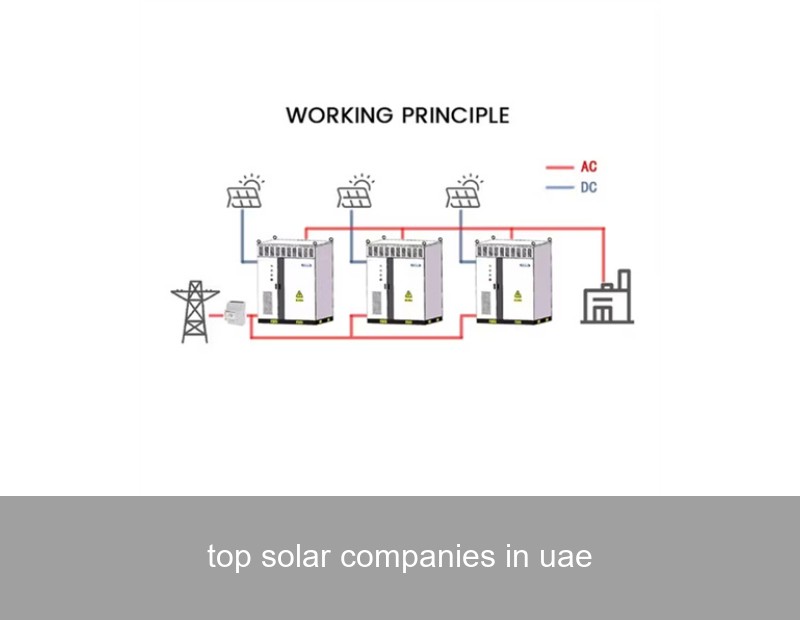
Table of Contents
- The UAE's Solar Surge: More Than Just Sunshine
- What Makes a Top Solar Company in the UAE?
- Beyond Panels: The Critical Role of Advanced Energy Storage
- Case Study: Al Dhafra PV2 – A Glimpse into Megaproject Needs
- Integration is Key: How Highjoule Complements Top Solar Companies
- The Future: Smart Grids, AI, and Your Energy Independence
When you think of the United Arab Emirates, vast deserts and towering skyscrapers come to mind. But look closer, and you'll see a new landscape emerging: one of shimmering solar panels, stretching as far as the eye can see. The UAE is undergoing a remarkable energy transformation, boldly pivoting from hydrocarbon wealth to a leadership position in renewable energy. This shift has created a dynamic ecosystem of engineering excellence, giving rise to a competitive field of top solar companies in the UAE. But in a market known for "biggest" and "first," what truly differentiates the leaders? And more importantly, what does the next phase of this green revolution require?
The UAE's Solar Surge: More Than Just Sunshine
It's no secret the region has abundant sun, with over 350 sunny days per year providing a world-class solar resource. But the real driver is visionary national policy. The UAE Energy Strategy 2050 aims to increase the share of clean energy in the total energy mix to 50%. Projects like the Mohammed bin Rashid Al Maktoum Solar Park in Dubai, targeting a colossal 5,000 MW upon completion, are testaments to this ambition. This isn't just about generating clean power; it's about economic diversification, energy security, and sustainable urban development for future generations.
For businesses and homeowners, this national shift translates to tangible opportunity. Electricity costs, grid stability, and carbon footprints are no longer abstract concerns but key operational factors. This is where partnering with the right experts becomes critical.
What Makes a Top Solar Company in the UAE?
Identifying the top solar companies in the UAE goes beyond who can install the most panels. The leaders are distinguished by a holistic approach:
- End-to-End Expertise: From initial site assessment and financial modeling to engineering, procurement, construction (EPC), and long-term operation & maintenance (O&M).
- Technology Agnosticism: The ability to recommend and source the most efficient PV modules, inverters, and mounting systems for a specific project's needs, whether it's a desert mega-plant or a commercial rooftop.
- Grid Compliance and Integration: Deep understanding of local utility regulations (like DEWA, ADDC, SEWA) and the technical requirements for safe grid interconnection.
- Proven Track Record: A portfolio of successfully commissioned projects, often with published performance data, showcasing reliability in the harsh Gulf climate.
However, as the market matures, a new, critical differentiator is emerging: mastery of energy storage integration.
Beyond Panels: The Critical Role of Advanced Energy Storage
Here's a simple truth: the sun doesn't shine at night. Solar generation is intermittent, creating a mismatch between production and demand. For utilities, this can cause grid instability. For a business, it means you might still be drawing expensive power from the grid during peak evening hours, even with a large solar array.
This is the pivotal challenge and opportunity. The next generation of solar leadership isn't just about generation—it's about intelligent management. This is where advanced Battery Energy Storage Systems (BESS) become non-negotiable. A top-tier solar solution today is inherently a hybrid solution.
| Solo Solar PV System | Integrated Solar + Storage System |
|---|---|
| Reduces daytime grid consumption | Maximizes self-consumption, day and night |
| Subject to grid export limits/regulations | Provides backup power during grid outages |
| Limited impact on peak demand charges | Enables peak shaving, significantly cutting demand charges |
| Excess energy often exported at lower rates | Stores excess energy for later, higher-value use |
Case Study: Al Dhafra PV2 – A Glimpse into Megaproject Needs
Let's look at real-world scale. The Al Dhafra Solar PV project in Abu Dhabi, inaugurated in 2023, is one of the world's largest single-site solar plants, with a capacity of 2 gigawatts (GW). It's expected to power nearly 200,000 homes and reduce carbon emissions by over 2.4 million metric tons annually. While the public data celebrates the scale, the engineering insights are even more telling.
Projects of this magnitude, managed by consortia of leading international and local solar companies in the UAE, face immense technical challenges: managing massive power fluctuations, ensuring grid stability, and maximizing the value of every megawatt-hour produced. The future expansion of such projects, and their financial model, increasingly depends on integrating utility-scale storage to time-shift energy and provide essential grid services. This is the blueprint for the future: solar and storage as a single, optimized asset.

Integration is Key: How Highjoule Complements Top Solar Companies
This is where Highjoule's expertise becomes a strategic advantage for developers, EPCs, and end-users. As a global leader in advanced储能 systems since 2005, we don't manufacture solar panels. Instead, we empower the top solar companies in the UAE and their clients to build more resilient, efficient, and valuable energy assets.
Highjoule provides the intelligent backbone—the Battery Energy Storage Systems (BESS) and the energy management software that turn a solar installation into a 24/7 power plant. Our solutions are designed for the demanding UAE environment:
- High-Temperature Resilience: Our battery cabinets feature advanced thermal management systems to ensure performance and longevity even in extreme desert heat.
- Grid-Forming Inverter Technology: This allows our systems to not just follow the grid but to support it, enabling smoother integration of renewable sources and even providing backup power in island mode—a crucial feature for microgrids or critical facilities.
- AI-Powered Energy Management System (EMS): Our software is the brain of the operation. It predicts solar generation and load patterns, automatically deciding when to store, when to discharge, and how to optimize for maximum self-consumption or financial return.
For a commercial factory with high evening energy use, a Highjoule system paired with their solar array can slash peak demand charges. For a remote community microgrid, it provides stable, clean power after sunset. For a utility-scale solar developer, it's a tool for grid compliance and revenue stacking.
The Future: Smart Grids, AI, and Your Energy Independence
The trajectory is clear. The future energy landscape in the UAE will be decentralized, digital, and dynamic. We are moving towards smart grids where every large building or community can act as a proactive "prosumer"—both producing and intelligently managing energy.
The top solar companies in the UAE are already preparing for this. They are building partnerships with technology specialists like Highjoule to offer complete, future-proof solutions. The question is no longer just "how many panels can I fit on my roof?" but "how can I build an intelligent, independent energy system that protects me from price volatility, ensures operational resilience, and meets my sustainability goals?"
So, as you evaluate your options for solar energy, ask your potential provider this crucial follow-up: "How do you integrate advanced energy storage and smart management to ensure my system delivers maximum value, not just maximum kilowatts, for the next 20 years?"
 Inquiry
 Online Chat