


Harnessing the Elements: The Ultimate Guide to a Dual Power Generation Solar Windmill System
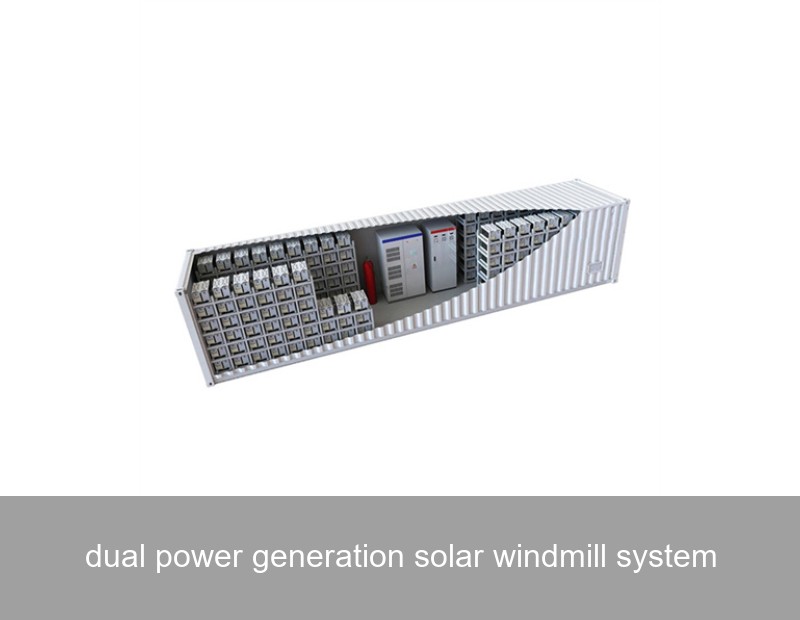
Imagine your energy supply not being reliant on a single, unpredictable source. On a calm day, your solar panels shine. On a cloudy, windy day, your turbine takes over. This isn't just a dream; it's the practical reality of a dual power generation solar windmill system. For homeowners, businesses, and communities across Europe and the US seeking true energy independence, combining solar and wind power is emerging as the most resilient strategy. This guide will delve into why this hybrid approach is more than the sum of its parts and how modern technology makes it a viable, powerful solution.
Table of Contents
- The Phenomenon: The Intermittency Challenge
- The Data: Complementary Generation Profiles
- The Case Study: A Scottish Eco-Lodge's Success
- The Insight: System Design and Intelligence is Key
- Highjoule's Role: Integrating the Hybrid Puzzle
- Getting Started with Your Hybrid System
The Phenomenon: The Intermittency Challenge of Single-Source Renewables
Let's face it: the sun doesn't always shine, and the wind doesn't always blow. This is the fundamental challenge of renewable energy—intermittency. Relying solely on solar panels means energy production plummets on short winter days or during prolonged cloudy periods. A standalone wind turbine might sit idle for days during seasonal calms. This variability can lead to frustrating gaps in power supply or force you to draw expensive electricity from the grid, undermining your sustainability and savings goals.
A dual power generation solar windmill system directly addresses this weakness. By harnessing two weather-dependent but often complementary sources, you create a more consistent and reliable energy flow. It's about building a diversified energy portfolio for your property.
The Data: How Solar and Wind Power Complement Each Other
The theory is compelling, but the data confirms it. Solar and wind generation patterns often follow opposite cycles. In many temperate climates, like those across much of Europe and the northern US:
- Solar peaks during midday and in the summer months.
- Wind often peaks in the evening, at night, and during the autumn/winter seasons.
This natural complementarity smooths out the generation curve. A study by the National Renewable Energy Laboratory (NREL) highlights that hybrid systems can significantly reduce the times when zero power is generated—sometimes by over 50% compared to single-source systems. The result? A higher capacity factor and a more stable year-round energy yield.

Image: A visual representation of complementary energy sources. Source: Unsplash
The Case Study: The Ardnamurchan Eco-Lodge, Scotland
Let's look at a real-world example. The Ardnamurchan Eco-Lodge on Scotland's west coast faced a critical challenge: operating a remote, off-grid hospitality business with unreliable diesel generators. Their goal was 95%+ renewable energy coverage.
Their Solution: They installed a dual power generation solar windmill system comprising:
- A 20kW rooftop and ground-mounted solar array.
- Two 6kW vertical-axis wind turbines (chosen for lower noise and better performance in turbulent winds).
- A robust 40kWh lithium-ion battery storage system.
- An advanced energy management system (EMS) to orchestrate it all.
The Results (Data from their first full year):
| Metric | Outcome |
|---|---|
| Diesel Generator Use | Reduced by 94% |
| Total Energy from Renewables | 98% |
| System Reliability (uptime) | 99.8% |
| Payback Period | Estimated 7 years (aided by government grants) |
The lodge manager noted, "The wind picks up exactly when the solar drops off in the late afternoon, just as guests are returning and energy demand spikes. The system simply works in harmony with nature." This case underscores that with proper design, a hybrid system can achieve near-total energy autonomy even in challenging climates.
The Insight: It's More Than Just Panels and a Turbine
The key insight from successful installations is that a dual power generation solar windmill system is not merely two generation technologies bolted together. The true magic—and complexity—lies in the integration. An inefficient or poorly sized system can lead to component conflict, wasted energy, and accelerated wear.
Three critical components determine success:
- Intelligent Energy Management System (EMS): The "brain" that decides whether to send power to the batteries, the property, or the grid, and when to draw from which source.
- Correct Sizing & Technology Choice: Not every site needs a massive turbine. A detailed site assessment for solar irradiance and wind speed is crucial. Vertical vs. horizontal axis turbines? Monocrystalline vs. bifacial panels? These choices matter.
- Robust Battery Storage: The essential "buffer" that stores excess energy from either source for use during low-generation periods. Its capacity and chemistry are vital.
How Highjoule Enables Advanced Hybrid Systems
This is where Highjoule's expertise becomes pivotal. Since 2005, we've specialized in not just providing components, but in delivering intelligent, integrated power solutions. For clients considering a hybrid system, we offer a holistic approach:
- Highjoule HPS (Hybrid Power System) Controller: Our proprietary EMS is designed for multi-source input. It seamlessly manages energy flow between solar arrays, wind turbines, battery banks, and the grid with millisecond-level precision, maximizing self-consumption and protecting equipment.
- Highjoule Modular Battery Systems: Our scalable lithium iron phosphate (LiFePO4) battery cabinets, like the H-Cube Series, offer safe, long-cycle-life storage that can be easily expanded as your energy needs grow. They are the perfect complement to variable solar and wind generation.
- End-to-End Project Design & Support: Our team conducts thorough feasibility studies, handles complex system design, and provides ongoing monitoring and support. We ensure your solar and wind components work in concert, not competition.

Image: Advanced control systems are crucial for hybrid energy management. Source: Unsplash
Getting Started with Your Dual Power Generation System
Embarking on a hybrid project is exciting. Here’s a practical pathway:
- Professional Site Assessment: This is non-negotiable. You need precise data on annual solar exposure and wind patterns at the exact installation height. Tools like Global Wind Atlas can provide preliminary insights, but on-site measurements are best.
- Define Your Goals: Is it 100% off-grid independence, backup resilience, or maximizing ROI through grid feed-in tariffs? Your goal dictates the system size and storage capacity.
- Choose an Integrated Solution Provider: Look for partners, like Highjoule, with proven experience in hybrid systems, not just individual vendors of solar or wind gear. Integration is the service you're really buying.
- Plan for Storage: Size your battery bank not just for nightly use, but for potential "dull calm" periods where both sources are low.
- Understand Regulations & Incentives: In the US, the Investment Tax Credit (ITC) now applies to standalone storage too. In the EU, various national grants support hybrid renewable projects. These can dramatically improve economics.
Your Energy Future: A Symphony of Sources
The journey toward energy independence is evolving from relying on a single star or gust to conducting an orchestra of available resources. A well-designed dual power generation solar windmill system represents a sophisticated, resilient, and ultimately more effective step on that journey. It acknowledges the variability of nature and uses smart technology to create a steady, clean power supply.
What specific challenge—be it grid instability, rising energy costs, or a sustainability target—is driving you to explore how solar and wind could work together for your home, business, or community project?
 Inquiry
 Online Chat