


Adding a Battery to My Solar System: The Ultimate Guide to Energy Independence
So, you have solar panels on your roof. You're generating clean energy, reducing your carbon footprint, and enjoying lower electricity bills. But have you ever watched the sun set and wondered, "Where is all that excess energy I produced today going?" If you're considering adding a battery to my solar system, you're on the cusp of a transformative upgrade. It's the move that shifts you from being a partial energy participant to the master of your own power destiny. Let's explore why this is becoming a non-negotiable for savvy homeowners and businesses across Europe and the US.
Table of Contents
- The Phenomenon: Wasted Sunlight and Grid Dependency
- The Data: Why Battery Storage Makes Financial & Practical Sense
- A Real-World Case Study: The Smith Family in California
- Key Considerations When Adding a Battery
- The Highjoule Solution: Intelligent, Integrated Energy Storage
- Your Energy Future: Questions to Ponder
The Phenomenon: Wasted Sunlight and Grid Dependency
Here's the fundamental issue with a standard solar-only setup: production and consumption are misaligned. Your panels are most productive in the middle of the day, which is often when your home is empty. Conversely, you need power most in the early morning and evening when the sun is low or down. Without a battery, that midday surplus is typically sent back to the grid, often for a modest feed-in tariff or credit. Then, a few hours later, you're buying expensive electricity back from the utility. You're essentially using the grid as a "battery," but one with poor efficiency and unfavorable economics.
This dependency leaves you vulnerable. Power outages, increasing grid instability, and volatile energy prices can disrupt your home or business at any moment. Adding a battery to your solar system directly addresses this by capturing your personal energy production for use on your own schedule.

Image Source: Unsplash - Illustrating the sunset, a key moment when solar production ends but home energy demand peaks.
The Data: Why Battery Storage Makes Financial & Practical Sense
The logic for adding storage is backed by compelling numbers. Let's break it down:
- Self-Consumption Boost: A typical household without a battery uses only 30-50% of its solar energy directly. With a battery, this can soar to 70% or even 90%, dramatically reducing grid purchases.
- Time-of-Use (TOU) Arbitrage: In regions like California or parts of Europe with TOU rates, the price difference between peak and off-peak electricity can be 300% or more. A battery lets you avoid buying at peak rates.
- Return on Investment (ROI): While upfront costs exist, combining solar with storage can shorten the payback period of your overall system. Incentives like the US Investment Tax Credit (ITC) or various European grants (like the UK's SEG or Germany's KfW programs) now often apply to standalone storage or solar-plus-storage systems, improving economics.
- Backup Power Value: The value of resilience is increasingly quantifiable. For homes with medical equipment, home offices, or in areas prone to outages, a battery backup can be priceless.
A study by the National Renewable Energy Laboratory (NREL) consistently highlights that the combined value streams of solar-plus-storage—including energy bill savings, grid services, and resilience—create a strong economic case.
A Real-World Case Study: The Smith Family in California
Let's look at a concrete example. The Smith family in Sacramento, California, had a 7kW solar system installed in 2018. Despite this, their bills during summer evenings (peak TOU rates of over $0.45/kWh) were still high. In 2022, they decided on adding a battery to their solar system.
- System Addition: They installed a 13.5 kWh Highjoule HES-2 residential battery system alongside their existing solar.
- Results After One Year:
- Grid electricity purchases reduced by an additional 82%.
- Annual electricity bill savings increased from $1,200 (solar only) to over $2,100 (solar + battery).
- Experienced 3 grid outages totaling 14 hours; their home power remained uninterrupted.
- Financials: With the federal ITC, their calculated payback period for the battery addition is under 7 years. "It's not just about the savings," says John Smith. "The peace of mind during fire season, when utilities enact safety shutoffs, is what truly sold us."
Key Considerations When Adding a Battery
Not all battery systems are created equal. Here are the critical factors to evaluate:
| Consideration | Question to Ask | Why It Matters |
|---|---|---|
| Capacity & Power | How much energy can it store (kWh) and how much can it output at once (kW)? | Determines how long it can run your essential loads during an outage and if it can handle high-demand appliances. |
| AC- vs. DC-Coupled | Is the battery integrated on the DC side (from solar panels) or AC side (from your home's wiring)? | DC-coupled systems are generally more efficient for new solar installations, while AC-coupled is often better for retrofitting to existing solar. |
| Depth of Discharge (DoD) | What percentage of the battery's total capacity can be safely used? | A higher usable DoD (e.g., 90%) means you get more value from the physical battery you paid for. |
| Integration & Intelligence | Can the system's software learn my usage patterns and optimize for savings or resilience automatically? | Smart energy management is where true optimization happens, adapting to weather, tariff changes, and your habits. |
The Highjoule Solution: Intelligent, Integrated Energy Storage
This is where Highjoule's expertise, honed since 2005, becomes pivotal. We don't just sell battery units; we provide intelligent, integrated power solutions designed for the real-world challenges highlighted above. For homeowners considering adding a battery to their solar system, our HES-2 Residential Energy Storage System is engineered as the perfect retrofit or new-install companion.
What sets the Highjoule HES-2 apart?
- Retrofit-Ready & Future-Proof: Its AC-coupled design makes it seamlessly compatible with almost any existing solar installation, without needing to modify your current solar inverter. It's also modular, allowing you to expand capacity as your needs grow.
- Highjoule Smart Energy OS: The brain of the system. This proprietary software doesn't just store and release energy. It forecasts weather and your consumption, analyzes utility rate plans in real-time, and automatically chooses the most economical strategy—maximizing self-consumption, performing TOU arbitrage, or preparing for a storm.
- Uncompromising Safety & Longevity: Built with lithium iron phosphate (LFP) chemistry, known for its thermal stability and long cycle life, the HES-2 is backed by a robust 10-year warranty. It's designed to be a reliable asset for the long haul.
- Whole-Home or Essential Loads Backup: Configured by your installer, the system can keep your lights, fridge, and critical circuits on for hours or even days during a blackout, transitioning so smoothly you might not even notice the grid went down.

Image Source: Unsplash - Example of a modern, wall-mounted home battery storage system.
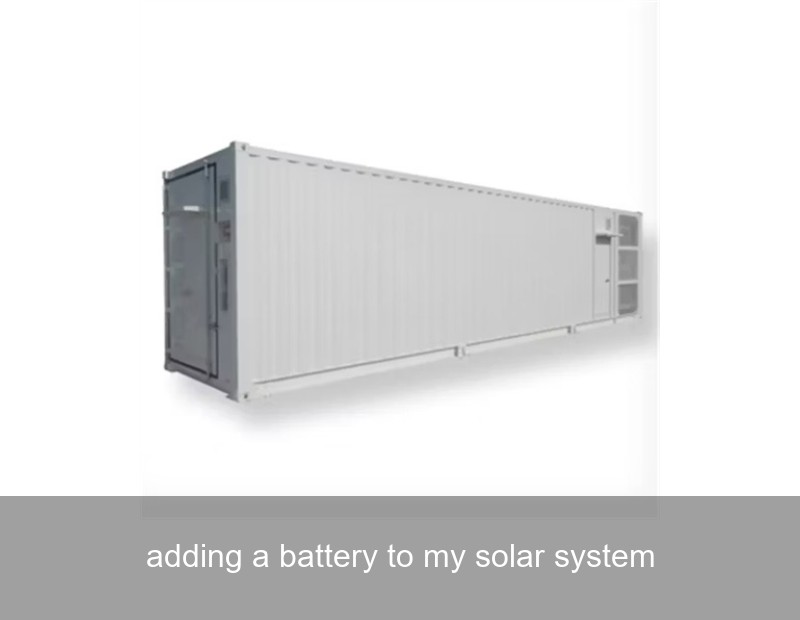
For commercial and industrial clients, Highjoule's C&I ESS series delivers scalable, containerized solutions that manage demand charges, provide uninterrupted power for operations, and enable participation in grid service programs, turning energy storage into a revenue stream.
Your Energy Future: Questions to Ponder
The journey to true energy independence is clearer than ever. You've seen the phenomenon, the data, and a real-life success story. The technology is proven, the economics are solidifying, and the value of resilience is immeasurable. As you contemplate adding a battery to your solar system, ask yourself: What is the true cost of my current grid dependency during the next outage or price spike? And what opportunities open up when I can control my clean energy on my own terms?
Is your home or business ready to capture every ray of sunshine it produces?
 Inquiry
 Online Chat