


Unpacking the Dyness Power Brick 14.3 kWh Lithium Battery: A Modern Energy Storage Solution
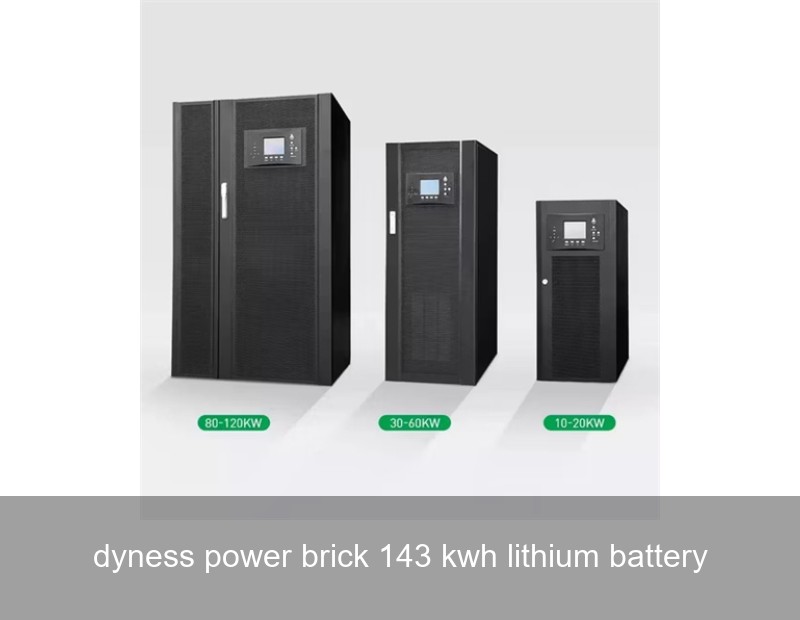
Have you ever watched the sun set and wondered, "Where did all that free energy go?" For many homeowners and businesses across Europe and the U.S., this isn't just a philosophical question—it's a practical one. The rise of solar panels has been phenomenal, but it created a new challenge: the sun doesn't shine on demand. This is where advanced energy storage, like the Dyness Power Brick 14.3 kWh lithium battery, steps into the spotlight. It's more than just a battery; it's the cornerstone of a modern, resilient, and independent energy system. Let's explore what makes this specific unit a compelling choice and how integrating such technology is reshaping our relationship with power.
Table of Contents
The Phenomenon: Why We Need Smarter Storage
Our grids are undergoing a massive transformation. We're moving from a one-way, centralized model to a dynamic, two-way network flooded with variable renewable energy. This shift, while positive, brings volatility. In California and parts of Southern Europe, "duck curves"—where solar overproduction midday plummets as demand peaks at dusk—are a real grid management headache. For the end-user, this manifests as high time-of-use rates, unreliable power during extreme weather, and the frustration of wasting self-generated solar energy.
This is the precise problem lithium-ion battery storage aims to solve. By storing excess solar generation for use later, you smooth out these curves, both for your own wallet and for the grid's stability. The Dyness Power Brick 14.3 kWh represents a mature, modular answer to this challenge, designed to be the reliable heart of a home or small business energy system.
The Specs: Inside the Dyness Power Brick 14.3 kWh
Let's break down what this unit offers. The name itself is descriptive: a "Power Brick" implies a solid, foundational building block. With a usable capacity of 14.3 kWh, it's sized to make a significant dent in a typical household's energy independence. But specifications tell the real story.
| Feature | Specification | Benefit to You |
|---|---|---|
| Usable Capacity | 14.3 kWh | Powers essential loads for 12-24+ hours during an outage. |
| Battery Chemistry | Lithium Iron Phosphate (LFP) | Superior safety, longer lifespan (6000+ cycles), excellent thermal stability. |
| Modular Design | Expandable via parallel connection | Start with one, add more as your needs or budget grow. |
| Depth of Discharge (DoD) | 100% | You can use the full 14.3 kWh without damaging the battery. |
| Communication | CAN, RS485 | Ensures seamless compatibility with a wide range of hybrid inverters. |
The choice of LFP chemistry is a critical differentiator. Unlike older NMC chemistries, LFP batteries are inherently less prone to thermal runaway, making them a safer choice for residential installations—a top priority for experts like us at Highjoule. Furthermore, their long cycle life directly translates to a lower cost per kilowatt-hour over the system's lifetime.

Image Source: Unsplash (Representative image of a modern LFP battery installation)
The Data: What the Numbers Mean for You
Raw specs need context. Let's translate that 14.3 kWh into daily life. According to the U.S. Energy Information Administration, the average American home consumes about 29 kWh per day. A single Dyness Power Brick could therefore offset nearly 50% of that daily load when paired with solar.
- Backup Power: It can keep your refrigerator (1-2 kWh/day), lights (1-3 kWh/day), Wi-Fi, and critical circuits running through a night and well into the next day during a grid outage.
- Financial Savings: In regions with time-of-use (TOU) billing, like many in California and Italy, you can avoid drawing power during expensive peak hours (e.g., 4 PM - 9 PM). A fully charged battery can cover most, if not all, of your evening consumption.
- Solar Self-Consumption: You can increase the portion of your own solar energy you use directly from ~30-50% to over 80%, maximizing your investment in panels.
The Case Study: Real-World Performance in Bavaria, Germany
Data sheets are one thing; real-world performance is another. Consider the Müller household (name changed for privacy) in Bavaria, Germany—a region with decent solar irradiation but long, cloudy winters. In 2022, they installed a 10 kWp solar array paired with a Dyness Power Brick 14.3 kWh and a compatible hybrid inverter.
The Goal: Achieve energy autarky (self-sufficiency) of 75% year-round and ensure backup power during frequent winter grid fluctuations.
The Results (12-month period):
- Grid Independence: Achieved 78% self-consumption rate, up from an estimated 35% without storage.
- Financial ROI: Reduced their annual grid electricity purchase from 4,200 kWh to just 920 kWh, saving over €1,200 annually at Germany's high electricity rates.
- Backup Performance: The system seamlessly provided backup power during five grid outages totaling 14 hours, with the battery never dropping below 40% state of charge.
This case underscores a vital insight: the battery's value isn't just in backup; it's in daily financial optimization and maximizing renewable assets. However, the Müllers' success wasn't just about the battery hardware. It relied on a perfectly integrated system—panels, inverter, battery, and intelligent energy management software.
Beyond the Brick: The Importance of a Complete Ecosystem
This is a crucial point often overlooked. A battery like the Dyness Power Brick is a superb component, but it's not a standalone solution. Its performance, safety, and longevity are profoundly influenced by the system it's integrated into. This is where the expertise of a provider like Highjoule becomes indispensable.
At Highjoule, we don't just supply components; we engineer complete, intelligent energy solutions. For a residential setup featuring a battery like the Dyness unit, we would typically provide:
- System Design & Integration: Ensuring the battery is perfectly matched with a high-efficiency hybrid inverter (like our Highjoule H-IQ Series), which manages AC/DC conversion, charging/discharging cycles, and grid interaction.
- Advanced Energy Management System (EMS): Our proprietary software is the "brain." It learns your consumption patterns, weather forecasts, and tariff schedules to autonomously decide when to charge from solar or grid, when to discharge, and when to export—maximizing savings and comfort.
- Professional Installation & Commissioning: Certified technicians ensure every connection is safe, code-compliant, and optimized for performance.
- Monitoring & Support: Remote monitoring via a user-friendly app and proactive support complete the package, giving you peace of mind for the system's 10+ year lifespan.
Think of it this way: the Dyness Power Brick 14.3 kWh is a powerful, reliable engine. Highjoule provides the chassis, transmission, drivetrain, and intelligent driver-assist system to make it a high-performance vehicle for your energy journey.

Image Source: Unsplash (Representative image of home energy system monitoring)
Your Energy Future: What's the Next Step?
The journey towards energy resilience is no longer a niche concept; it's a mainstream smart home and business upgrade. Technologies like the Dyness Power Brick make it technically accessible and economically sensible. But the landscape of products, tariffs, and incentives can be complex to navigate alone.
So, we leave you with this question to ponder: When you look at your next electricity bill or read about grid strain in the news, what specific energy goal feels most urgent for you—is it eliminating peak-time charges, guaranteeing power for your home office, or simply making your green investment in solar work harder? Defining that goal is the perfect first step. From there, exploring how a robust storage solution, integrated into a seamless intelligent system, can achieve it becomes a clear and empowering path forward.
 Inquiry
 Online Chat