


The E Scooter Lithium Ion Battery: Powering Your Ride and Our Energy Future
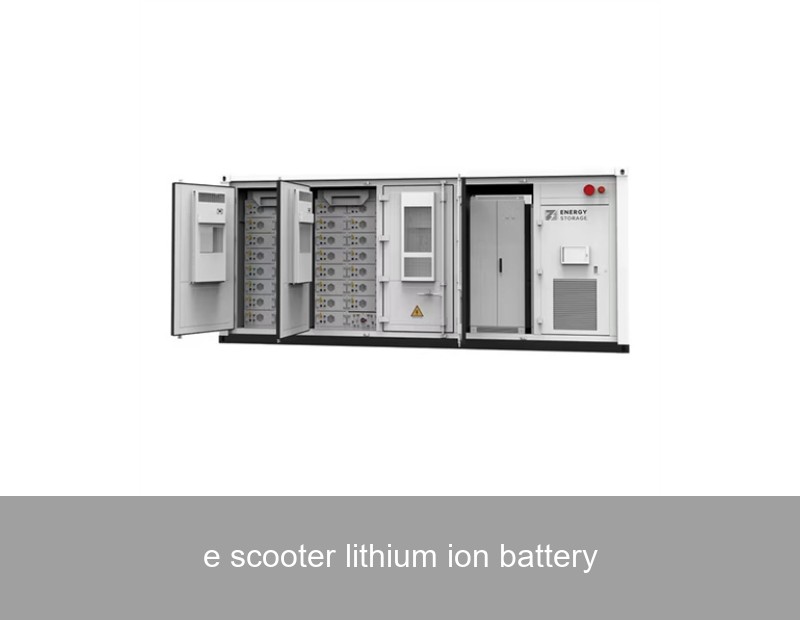
You see them zipping through city streets, parked neatly on sidewalks, and offering a quick, fun way to beat traffic. Electric scooters, or e-scooters, have become a ubiquitous symbol of modern urban mobility. But have you ever stopped to think about what's at the heart of this quiet revolution? It's the e scooter lithium ion battery. This compact powerhouse is more than just a component; it's a fascinating piece of technology with implications that stretch far beyond your last-mile commute. In this article, we'll dive deep into the world of these batteries, explore their challenges and potential, and see how the very principles that power your scooter are shaping a more resilient energy grid.
Table of Contents
- The Core of the Ride: Understanding Your E-Scooter Battery
- The Phenomenon & The Challenge: From Scooter to Grid
- The Data & Reality: Performance, Lifecycle, and Waste
- Case Study: Second Life for Scooter Batteries in Berlin
- Expert Insight: Stability, Management, and the Bigger Picture
- Beyond Mobility: How Highjoule Leverages Similar Tech for Stationary Storage
- Looking Ahead: An Open Question for Our Urban Future

Image Source: Unsplash (Representative image of e-scooter technology)
The Core of the Ride: Understanding Your E-Scooter Battery
Most shared and private e-scooters are powered by lithium-ion (Li-ion) battery packs. Why? Because they offer an excellent balance of energy density (lots of power in a small package), relatively low self-discharge, and no memory effect. Typically, these are Lithium Nickel Manganese Cobalt Oxide (NMC) or Lithium Iron Phosphate (LFP) cells packed into a modular battery pack. NMC is common for its high energy density, giving you longer range, while LFP is prized for its exceptional safety and longevity. This isn't just scooter tech—it's the same fundamental chemistry evolving in electric vehicles and, crucially, in large-scale energy storage systems.
The Phenomenon & The Challenge: From Scooter to Grid
The phenomenon is clear: micro-mobility is booming. Cities are denser, and the demand for flexible, clean transport is soaring. But this boom presents a two-fold challenge. First, at the scooter level: users experience range anxiety, long charge times, and concerns about battery lifespan. Second, and on a larger scale, the massive influx of these batteries creates a logistical puzzle. How do operators manage charging? They often use gas-guzzling vans to collect depleted scooters, ironically increasing emissions. What happens when the battery's scooter life ends after 2-3 years? This creates a looming waste management and resource recovery issue. The challenge, therefore, shifts from simply *using* the battery to *managing its entire lifecycle efficiently*.
The Data & Reality: Performance, Lifecycle, and Waste
Let's talk numbers. A typical e-scooter battery has a capacity between 0.3 to 0.7 kWh. It might deliver a range of 15-40 miles on a single charge and endure 500 to 1000 full charge cycles before its capacity degrades to about 80% of its original state—a point often considered the end of its *first life* for demanding vehicle use. With millions of scooters deployed globally, the potential waste is significant. The U.S. Environmental Protection Agency highlights the importance of proper end-of-life management for Li-ion batteries to recover valuable materials like cobalt, lithium, and nickel. The data underscores a critical insight: these batteries are too valuable to simply discard.
| Battery Metric | Typical Specification | Implication |
|---|---|---|
| Chemistry | NMC or LFP | NMC for range, LFP for safety & cycle life. |
| Capacity | 0.3 - 0.7 kWh | Determines scooter range per charge. |
| Cycle Life (to 80% capacity) | 500 - 1000 cycles | Defines first-life duration (2-3 years of heavy use). |
| End-of-First-Life Capacity | ~80% of original | Still highly useful for less demanding applications. |
Case Study: Second Life for Scooter Batteries in Berlin
A pioneering project in Berlin, Germany, offers a compelling glimpse into a sustainable solution. A local energy startup partnered with a major e-scooter operator to repurpose hundreds of decommissioned battery packs. These packs, no longer suitable for the rigorous demands of daily scooter rentals, were tested, reconditioned, and integrated into a second-life energy storage system at a co-working space. The system, with a total capacity of over 100 kWh, now stores energy from the building's solar panels during the day and releases it during peak evening hours, reducing grid dependence and energy costs. In its first year, the system reportedly shaved 15% off the building's peak grid electricity demand and diverted over 2 tons of battery waste from immediate recycling. This case proves a powerful point: the e scooter lithium ion battery has a valuable role to play long after its wheels stop turning.

Image Source: Unsplash (Representative image of battery repurposing work)
Expert Insight: Stability, Management, and the Bigger Picture
So, what makes a battery good for a second life? The answer lies in Battery Management Systems (BMS) and cell chemistry. A high-quality BMS is the unsung hero. It monitors cell voltage, temperature, and state of charge, ensuring safety and longevity. At Highjoule, we understand this deeply. Our expertise in designing BMS for large-scale commercial storage directly translates to the challenges of managing smaller, aggregated battery packs. The key is stability through intelligent management. Furthermore, the shift towards safer, more durable chemistries like LFP in newer scooters is a welcome trend, as these batteries are inherently more suited for long-duration, stationary storage applications after their mobility life. The U.S. Department of Energy actively researches this reuse potential, noting it can reduce environmental impacts and lower costs for grid storage.
Beyond Mobility: How Highjoule Leverages Similar Tech for Stationary Storage
This is where the story connects to a larger energy narrative. The principles of safety, efficiency, and lifecycle management for an e scooter lithium ion battery are the very same that guide companies like Highjoule. Since 2005, we've been applying advanced lithium-ion technology—including LFP and NMC—on a much larger scale. Our commercial and industrial (C&I) battery energy storage systems (BESS) are essentially sophisticated, industrial-grade cousins of the scooter battery pack. They incorporate robust, multi-layer BMS, thermal management systems, and AI-driven software to optimize energy usage, provide backup power, and integrate renewable sources like solar.
For a business, a Highjoule system acts as a giant, smart battery for the entire building. It can store cheap solar or off-peak grid energy and use it during expensive peak hours—a concept not unlike charging a scooter at night to use during the day, but with a direct, measurable impact on a company's bottom line and carbon footprint. Our solutions for microgrids take this further, creating resilient, self-sustaining energy islands for campuses or communities. By mastering the technology at the core of the e-scooter revolution, we are helping businesses and grids become more efficient, sustainable, and independent.
The Highjoule Advantage: From Cell to System
- Proven LFP & NMC Expertise: We select and configure cell chemistry based on the application's need for safety, cycle life, or energy density.
- Intelligent Energy Management: Our platform can orchestrate storage, solar, and grid power, much like a sophisticated BMS manages individual cells.
- Focus on Sustainability & Lifespan: We design for longevity and end-of-life planning, advocating for and enabling future second-life applications for our own systems.
Looking Ahead: An Open Question for Our Urban Future
We've seen that the humble e scooter lithium ion battery is a microcosm of our broader energy transition. It highlights our need for better energy density, smarter management, and circular lifecycle solutions. As cities continue to electrify transport and deploy more renewables, the lines between mobility and stationary storage will blur. Could future scooter docking stations also act as distributed grid storage nodes, charging from solar canopies and feeding power back when needed? What if every decommissioned vehicle battery was guaranteed a second life supporting the grid? The technology is converging. The question now is, how will we, as a society, choose to design and connect these systems to build a truly resilient and sustainable energy ecosystem?
 Inquiry
 Online Chat