


Energy Storage Cabinet: The On-Grid, Off-Grid, and Hybrid Power Solution for Modern Energy Needs
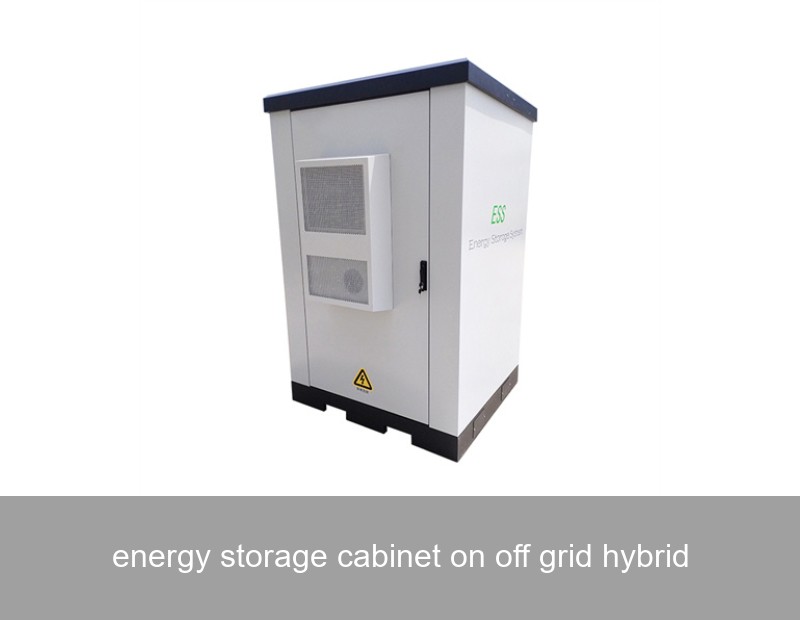
Have you ever wondered how businesses and communities can achieve true energy independence, balancing between the reliability of the grid and the freedom of self-generated power? This is where the modern energy storage cabinet comes into play. More than just a battery box, it's the intelligent core of a flexible power system, seamlessly operating in on-grid, off-grid, and hybrid modes. For facility managers, homeowners, and project developers, understanding this technology is key to unlocking resilience, sustainability, and significant cost savings. Let's explore how these systems work and why they are revolutionizing energy management across Europe and the United States.
Table of Contents
- The Power Triangle: On-Grid, Off-Grid, and Hybrid Explained
- The Cabinet's Heart: More Than Just Batteries
- Data Drives Adoption: The Financial & Grid Imperative
- Case Study: A German Bakery's Recipe for Resilience
- Highjoule's Integrated Solutions: Smart Power, Simplified
- Future-Proofing Your Energy Strategy
The Power Triangle: On-Grid, Off-Grid, and Hybrid Explained
Think of your energy supply as a triangle with three distinct points of operation. The right energy storage cabinet allows you to move between them effortlessly.
- On-Grid Mode: The system is connected to the public utility grid. The storage cabinet acts like a strategic reserve, charging during low-cost or high renewable output periods and discharging during peak tariff hours or to provide grid services. It optimizes economics but cannot power loads during a grid outage.
- Off-Grid Mode: This is complete energy independence. The system operates as an "island," disconnected from the main grid. The storage cabinet, paired with solar or other generation, becomes the sole power source, requiring robust capacity and intelligent management to ensure 24/7 reliability. Ideal for remote locations or critical infrastructure.
- Hybrid Mode: The best of both worlds. This is the most sophisticated and popular setup. The system remains connected to the grid but can instantly disconnect and form a microgrid during an outage. The energy storage cabinet continuously optimizes energy flow—using solar first, then battery storage, and only drawing from or exporting to the grid when it's most advantageous.

Image: A modern, modular energy storage cabinet installation. Source: Unsplash
The Cabinet's Heart: More Than Just Batteries
While lithium-ion batteries (like LFP chemistry) are the common energy reservoir, the true intelligence lies in the integrated components. A high-quality on off grid hybrid cabinet is a unified system comprising:
| Component | Function | Key Consideration |
|---|---|---|
| Battery Modules | Store electrical energy chemically. | Cycle life, depth of discharge (DoD), thermal stability (LFP is preferred for safety). |
| Battery Management System (BMS) | The "brain" of the battery pack, ensuring cell balance, safety, and longevity. | Monitoring precision, safety protocols, and communication capabilities. |
| Power Conversion System (PCS) | The "muscle." Includes inverters/converters to change DC (battery) to AC (loads/grid). | Efficiency rating (e.g., 98%), seamless mode switching capability, and grid-forming features for off-grid operation. |
| Energy Management System (EMS) | The "orchestra conductor." Makes high-level decisions based on weather, tariffs, and consumption patterns. | Software intelligence, forecasting accuracy, and user-friendly interface. |
| Thermal Management | Maintains optimal operating temperature for safety and performance. | Active cooling/heating vs. passive, energy consumption of the cooling system itself. |
Data Drives Adoption: The Financial & Grid Imperative
The shift towards these systems isn't just theoretical; it's driven by compelling economics and grid challenges. In the US, utility-scale battery storage capacity is projected to surge significantly, a testament to the technology's value (U.S. Energy Information Administration). In Europe, high and volatile electricity prices, accelerated by geopolitical factors, have made solar-plus-storage payback periods remarkably attractive.
Consider this: Commercial and industrial (C&I) users often face "demand charges"—fees based on their highest 15-minute power draw each month. An intelligently managed energy storage cabinet can "peak shave," discharging to cover short-term high loads, potentially reducing these charges by 20-30%. Furthermore, frequency regulation services for the grid provide an additional revenue stream in many markets.
Case Study: A German Bakery's Recipe for Resilience
Let's look at a real-world example from Bavaria, Germany. "Bäckerei Schmidt" (a pseudonym) is a medium-sized bakery with high, consistent energy needs for ovens, refrigeration, and lighting. Their challenges were twofold: skyrocketing energy costs and the risk of even short power outages spoiling inventory.
Solution: They installed a 120 kWh on off grid hybrid energy storage system, integrated with an existing 80 kWp rooftop solar array. The energy storage cabinet was configured for hybrid operation.
- Daily Operation (On-Grid/Hybrid): The system uses solar power first to run daytime operations. Excess solar charges the cabinet. In the early evening, when solar production drops but ovens are still running, the cabinet discharges, avoiding expensive grid imports. It also performs peak shaving during the bakery's highest load periods.
- Outage Scenario (Off-Grid): During a grid failure, the system automatically islands within milliseconds, forming a microgrid. The storage cabinet, powered by the solar array, continues to support critical refrigeration and lighting loads, preventing spoilage and business interruption.
Results (12-month period):
• Grid electricity cost reduction: 68%
• Demand charge reduction: 25%
• Self-consumption of solar: Increased from 35% to over 85%
• Estimated ROI: Achieved in under 5 years, with a system lifespan of 15+ years.
• Resilience: Successfully weathered two grid outages without operational impact.

Image: Commercial bakeries have critical, continuous power needs. Source: Unsplash
Highjoule's Integrated Solutions: Smart Power, Simplified
At Highjoule, we've been designing and deploying advanced energy storage solutions since 2005. We understand that every application—from a residential home in California to an industrial plant in Germany—has unique needs. Our product range is built around intelligent, modular energy storage cabinets designed for seamless integration.
Our flagship HPC Series Hybrid Power Cabinet is engineered specifically for robust on off grid hybrid applications. It features:
- Grid-Forming Inverter Technology: Allows stable off-grid and microgrid operation without relying on the main grid's frequency signal.
- Scalable Modular Design: Start with a base capacity and add battery or power modules as your needs grow, protecting your investment.
- AI-Powered EMS Platform, "JouleBrain": Our cloud-connected platform uses machine learning to analyze your consumption, weather forecasts, and real-time tariff data to optimize every kilowatt-hour automatically. You can monitor and control everything via an intuitive dashboard.
- Unified Safety Architecture: We integrate cell-level, module-level, and system-level BMS with advanced thermal runaway detection and suppression, ensuring the highest safety standards for commercial and residential installations.
Beyond hardware, Highjoule provides comprehensive services: from initial site assessment and financial modeling to system design, installation support, and long-term performance monitoring. We partner with you to ensure your transition to a hybrid energy system is smooth, profitable, and future-proof.
Future-Proofing Your Energy Strategy
The energy landscape is shifting from a one-way grid to a dynamic, decentralized network. An energy storage cabinet is not merely a purchase; it's a strategic investment in infrastructure that provides control. As electric vehicle fleets expand and grid dynamics become more complex, the ability to manage your own energy flow will be a key competitive advantage.
With policies like the EU's REPowerEU plan and the U.S. Inflation Reduction Act (IRA) creating favorable incentives, the economic case is stronger than ever. The question is no longer "if" but "how" to integrate storage.

Image: The future of energy is integrated, intelligent, and local. Source: Unsplash
What is the first step you will take to assess how a hybrid energy storage system could transform your energy costs and resilience?
Whether you're looking to achieve energy independence for your remote facility, shield your business from volatile prices, or simply maximize your solar investment, the journey begins with a detailed analysis of your load profile and energy goals. The power to choose your mode—on, off, or hybrid—is now at your fingertips.
 Inquiry
 Online Chat