


Can an Earth Battery Power Your House? Unearthing the Truth About Geothermal Energy Storage
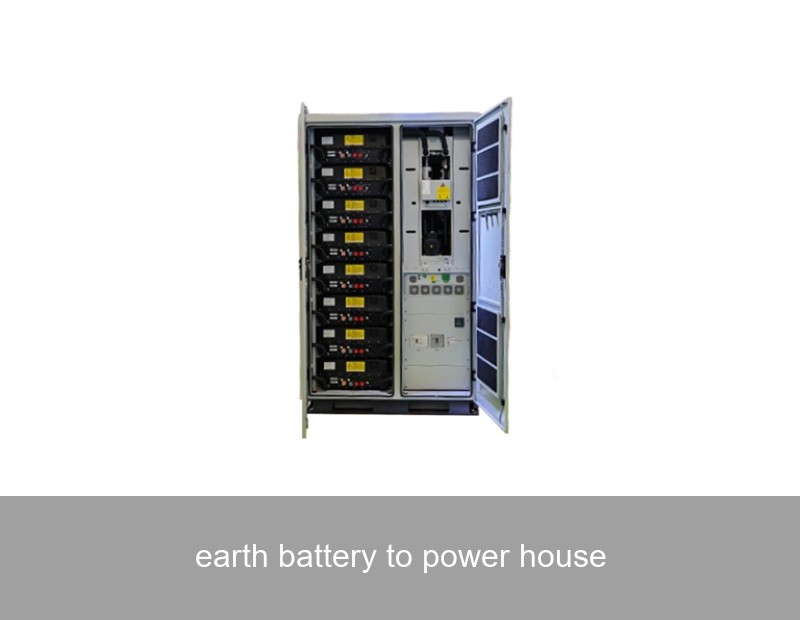
Imagine a battery so vast it lies beneath your feet, charged by the planet itself. The concept of an "earth battery to power house" has captured imaginations for decades, often painted as a mythical, free energy source. But what is the reality? Today, we're digging into the science of using the earth as a thermal battery, a proven and sophisticated technology that can dramatically reduce your home's energy footprint. This isn't science fiction; it's the principle behind geothermal heat pumps coupled with advanced thermal storage—a sustainable powerhouse for modern living.
Table of Contents
- What is an "Earth Battery" Really?
- The Phenomenon: Our Planet's Steady Thermal Pulse
- The Data: Efficiency Numbers That Will Shock You
- The Case Study: A Real-World Earth Battery in Action
- The Future: Integrating Earth with Advanced Electrochemical Storage
- Highjoule's Role: Bridging Thermal and Electrical Storage
What is an "Earth Battery" Really?
Let's clarify terminology. An "earth battery" in popular culture can be misleading. We are not talking about generating electricity directly from dirt. The viable, professional interpretation is Geothermal Energy Storage. The ground, just a few feet below the surface, maintains a remarkably stable temperature year-round—typically between 45°F and 75°F (7°C-24°C) depending on your location. A geothermal heat pump system uses this stability as a massive thermal exchange battery. In winter, it extracts heat from the relatively warm earth to heat your home. In summer, the process reverses, depositing your home's excess heat into the cooler ground. The earth itself acts as the source, sink, and storage medium for thermal energy.
The Phenomenon: Our Planet's Steady Thermal Pulse
The core challenge for any house is maintaining a comfortable temperature against outside extremes. Conventional HVAC systems fight these extremes directly, consuming enormous electricity or gas. The earth, however, provides a thermal baseline that requires far less energy to leverage. Think of it this way: instead of creating heat from scratch in a freezing winter, you're simply moving existing, stable heat from the ground into your home—a much more efficient process. This phenomenon is the bedrock of geothermal's power.
The Technology Behind the Thermal Exchange
A closed-loop geothermal system consists of:
- Ground Loops: Pipes buried horizontally in trenches or vertically in deep bores, filled with a water-antifreeze solution.
- Heat Pump: The unit inside your home that concentrates and transfers the thermal energy.
- Distribution System: Your existing ductwork or radiant floor heating to circulate conditioned air or water.

Image Source: U.S. Department of Energy (energy.gov) - Diagram illustrating a geothermal heat pump system.
The Data: Efficiency Numbers That Will Shock You
The efficiency of geothermal systems is measured by Coefficient of Performance (COP). For every 1 unit of electrical energy used to run the pump and compressor, a high-quality geothermal system can move 3 to 5 units of thermal energy. That's a 300-500% efficiency rate. Compare this to a high-efficiency gas furnace, which might reach 95% efficiency at best. According to the U.S. Environmental Protection Agency (EPA), geothermal heat pumps can reduce energy consumption—and corresponding emissions—by up to 44% compared to air-source heat pumps and 72% compared to standard electric resistance heating.
| Heating System Type | Typical Efficiency | Estimated Operating Cost (Relative) |
|---|---|---|
| Standard Electric Furnace | ~100% (1 COP) | High |
| High-Efficiency Natural Gas Furnace | ~95% AFUE | Medium |
| Air-Source Heat Pump | ~250-350% (2.5-3.5 COP)* | Medium-Low |
| Geothermal (Ground-Source) Heat Pump | ~400-500% (4-5 COP) | Low |
*Efficiency drops in very cold climates. Geothermal COP remains stable.
The Case Study: A Real-World Earth Battery in Action
Let's look at a concrete example from a colder climate. In 2022, a community of 50 residential homes in Boulder, Colorado, USA, was built with a shared, centralized geothermal borefield system. Each home has its own heat pump, but they all connect to a common "earth battery"—a network of over 150 vertical boreholes, each 500 feet deep.
- Result: The system provides 100% of the heating and cooling needs for all 50 homes.
- Data Point: Homeowners reported an average reduction of 60-70% in their heating bills compared to neighboring homes with conventional gas furnaces.
- Annual Carbon Impact: The community avoids an estimated 180 tons of CO2 emissions annually, equivalent to taking 40 cars off the road.
This project demonstrates the scalability of using the earth as a thermal battery, not just for single homes, but for entire neighborhoods, offering both economic and environmental resilience.
The Future: Integrating Earth with Advanced Electrochemical Storage
Here's where the story gets even more powerful. A true "earth battery to power house" system isn't complete with just thermal management. The geothermal heat pump itself runs on electricity. To achieve true energy independence and maximize the use of renewable sources like solar PV, you need to pair your geothermal system with a high-performance electrical battery storage system. This creates a holistic home energy ecosystem: solar panels generate clean electricity, a battery stores it for when you need it, and the geothermal system uses that clean power to efficiently manage your home's temperature. This synergy is the future of sustainable homes.
Highjoule's Role: Bridging Thermal and Electrical Storage
At Highjoule, we specialize in the advanced electrochemical storage side of this equation. While we don't install geothermal loops, our intelligent battery systems are the perfect complement to a geothermal-equipped home. Imagine a scenario where your geothermal heat pump is powered not by the grid during peak hours, but by the clean energy stored in your Highjoule system.
Our HES Series for residential applications offers:
- Seamless Solar Integration: Store excess solar energy to run your geothermal heat pump day or night.
- Intelligent Energy Management: Our software can prioritize using stored energy to power high-load systems like your heat pump, reducing demand charges and grid reliance.
- Backup Power Resilience: In a grid outage, keep your geothermal system and critical home loads running, maintaining comfort and safety when you need it most.
For larger commercial or microgrid applications, our CIS Series provides utility-scale storage that can stabilize grids increasingly powered by intermittent renewables, making the broader energy landscape more compatible with geothermal and other sustainable technologies. Founded in 2005, Highjoule is committed to providing the intelligent electrical storage pieces that complete the puzzle of a fully renewable-powered property.

Image Source: Highjoule.com - A Highjoule HES residential battery system installation.
A Note on "True" Earth Batteries
For the curious, research into electrochemical earth batteries (using dissimilar metals and soil electrolytes) does exist, primarily for very low-power sensor applications. The scientific consensus, however, confirms their power output is minuscule—milliwatts to watts—and utterly insufficient for household needs. For now and the foreseeable future, geothermal thermal storage paired with solar and advanced lithium or solid-state batteries is the proven path to an energy-independent home.
So, can an earth battery power your house? The answer is a resounding "yes," but it's a partnership. The earth provides an unparalleled thermal battery for your climate control, and companies like Highjoule provide the advanced electrical storage to fuel that system with clean, reliable power. The ultimate goal isn't just one magic solution; it's a smart, integrated system that works in harmony with the planet's natural rhythms.
Is your home ready to harness the stable power beneath it, and what would it take for you to integrate a complete thermal and electrical storage solution?
 Inquiry
 Online Chat