


Navigating the Different Types of Panels for Sale: A Buyer's Guide to Solar Efficiency
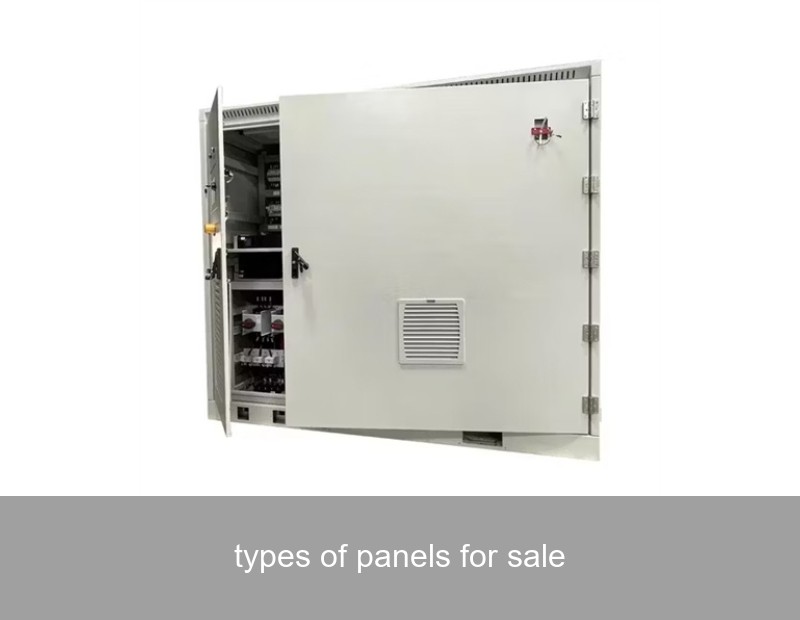
So, you've decided to harness the sun's power. It's a fantastic decision, both for your energy bills and the planet. But as you start researching, you quickly encounter a maze of technical terms and a seemingly endless list of types of panels for sale. Monocrystalline, polycrystalline, thin-film, bifacial—what does it all mean, and more importantly, which one is right for your home or business? Don't worry; you're not alone in this. Choosing the right solar panel is less about finding a single "best" option and more about matching the right technology to your specific needs, location, and budget. This guide will demystify the main categories of solar panels available today, providing you with the clarity needed to make an informed investment in your energy future.
Monocrystalline Silicon Panels: The Efficiency Leader
Often recognized by their uniform dark black color and rounded cell edges, monocrystalline panels are the veterans of high-efficiency solar. They are made from a single, pure crystal of silicon, which allows electrons to flow more freely. Think of it like a wide, smooth highway versus a bumpy country road.
- Key Characteristics: High efficiency (typically 20-23% for premium models), sleek aesthetics, excellent performance in low-light conditions, and long lifespan (often with 25+ year performance warranties).
- Best For: Projects where space is limited (like residential rooftops), where maximum energy output per square foot is crucial, or where aesthetics are a priority.
- Consideration: This premium performance usually comes at a higher initial cost per panel.

Image Source: Unsplash - Professional photography of solar installation
Polycrystalline Silicon Panels: The Value Proposition
With their distinctive blue, speckled appearance, polycrystalline panels are made from fragments of silicon crystals melted together. This process is less wasteful than manufacturing monocrystalline cells, which often translates to a friendlier price point.
- Key Characteristics: Good efficiency (typically 15-18%), lower cost per panel, a robust and proven technology.
- Best For: Larger installations where space constraints are less of an issue, such as ground-mounted solar farms or expansive commercial roofs, making them a cost-effective workhorse.
- Consideration: They generally have a slightly lower efficiency and higher temperature coefficient (meaning efficiency dips a bit more in very hot weather) compared to monocrystalline panels.
Thin-Film Panels: The Flexible Innovator
This category is a broad one, encompassing panels made by depositing thin layers of photovoltaic material (like Cadmium Telluride - CdTe, or Amorphous Silicon) onto a substrate like glass, metal, or plastic. They look like uniform, solid sheets.
| Type | Advantages | Common Applications |
|---|---|---|
| Cadmium Telluride (CdTe) | Low-cost manufacturing, good performance in high heat | Utility-scale solar farms |
| Amorphous Silicon (a-Si) | Flexible, lightweight, performs well in diffuse light | Building-integrated PV (BIPV), portable solar chargers |
Their main appeal is flexibility in application, not necessarily raw efficiency (which is typically lower, around 10-13%). However, for large, unshaded areas or unique architectural projects, they can be the perfect fit.
Bifacial Panels: Capturing Light from Both Sides
Imagine a solar panel that doesn't just capture direct sunlight but also harnesses the light reflected off the ground or roof surface. That's the promise of bifacial technology. These panels, often using monocrystalline cells, have a transparent backsheet, allowing rear-side light capture.
- Key Characteristics: Can increase total energy yield by 5-20% depending on the installation environment (e.g., over a reflective white roof or light-colored gravel).
- Best For: Ground-mounted systems, commercial flat roofs with reflective coatings, carports, and pergolas where significant albedo (reflectivity) is present.
Choosing the Right Panel for Your Project: It's a System, Not Just a Panel
Now, here's a crucial insight from our experience at Highjoule: Your solar panel is only as good as the system it's integrated into. The inverter that converts DC to AC power, the mounting structure, and critically, the energy storage solution, determine the true value you extract from your panels.
For instance, a high-efficiency monocrystalline panel paired with a subpar inverter or no storage will still leave you reliant on the grid at night. This is where a holistic design approach makes all the difference.
Beyond Panels: The Critical Role of Energy Storage
This brings us to the heart of modern energy independence. Solar panels produce energy intermittently—peak output is during sunny midday hours. But what about cloudy days, evenings, or during a grid outage? This is where battery energy storage systems (BESS) become non-negotiable for resilience and true self-consumption.
At Highjoule, we specialize in designing seamless integrations between solar arrays and advanced storage. Our HES Series for residential and commercial applications isn't just a battery; it's an intelligent energy manager. It stores excess solar energy for use when you need it most, provides backup power during outages, and can even be configured to participate in grid services in some regions. Pairing the right types of panels for sale with a Highjoule storage system transforms a simple solar generator into a 24/7 personal power plant, maximizing your return on investment and energy security.

Image Source: Unsplash - Home with solar and battery storage
A Real-World Case: Maximizing a Commercial Rooftop in Germany
Let's look at data from a real project. A medium-sized manufacturing facility in Bavaria, Germany, wanted to reduce its grid dependence and stabilize energy costs. Their flat, expansive roof was suitable for various types of panels for sale.
- Challenge: High daytime energy consumption, but significant evening shift work. Limited space efficiency needed due to rooftop equipment.
- Solution: A hybrid system was designed:
- Panels: High-efficiency monocrystalline bifacial modules, installed on raised frames over a reflective white roof membrane to utilize bifacial gain.
- Storage: A containerized Highjoule CIS Series industrial storage system with 500 kWh capacity.
- Result: The system now meets 85% of the facility's annual electricity needs. The bifacial panels yield an average of 8% more energy than standard monofacial models would on that surface. More importantly, the Highjoule BESS allows the facility to use over 70% of its self-generated solar power on-site, shifting energy use from day to night. According to data from the Fraunhofer Institute for Solar Energy Systems, such high self-consumption rates are key to economic viability in markets with reduced feed-in tariffs.
Future Trends in Solar Technology
The innovation doesn't stop. Perovskite solar cells are making headlines in labs for their potential to achieve ultra-high efficiencies at low cost, possibly in tandem with silicon cells. Furthermore, the concept of building-integrated photovoltaics (BIPV), where panels become part of the building material (like solar roof tiles or facades), is gaining traction, especially in Europe with its focus on architectural aesthetics and sustainable construction.
Regardless of the panel technology, the future is intelligent and integrated. Systems will not only generate and store but also predict usage patterns, communicate with the grid, and optimize every kilowatt-hour automatically.
We've explored the map of available types of panels for sale, but the journey to your optimal energy system is unique. What specific energy goal is driving your interest in solar—is it total energy independence, backup resilience, or simply locking in long-term electricity costs?
 Inquiry
 Online Chat