


How Much Does a Solar Cell Lithium-Ion Battery (LIB) System Really Cost?
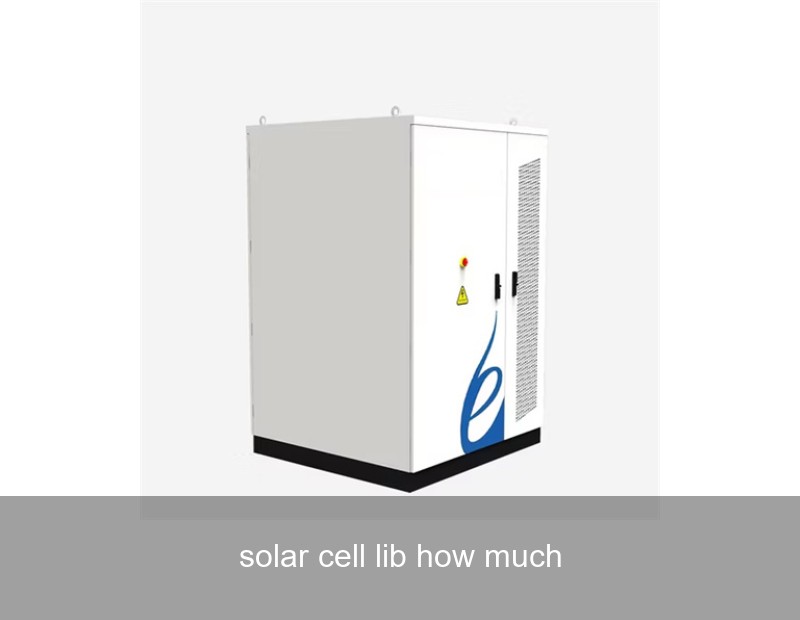
If you're considering solar panels for your home or business, you've likely asked the pivotal question: "Solar cell LIB, how much?" It's the natural next step. You know solar generates power during the day, but to truly maximize your investment and achieve energy independence, pairing it with a Lithium-Ion Battery (LIB) storage system is key. The answer, however, is more nuanced than a simple price tag. The cost of a solar battery system is an investment in resilience, efficiency, and long-term savings. Let's demystify the factors that determine the price and value of integrating a high-performance LIB with your solar array.
Table of Contents
The Real Cost Components: More Than Just the Battery
When homeowners or business owners inquire about cost, they often think only of the battery unit itself. In reality, a functional and safe solar-plus-storage system comprises several integrated components and services. The total installed cost typically includes:
- The Battery Module(s): The core Lithium-Ion cells, packaged into a modular unit with built-in battery management systems (BMS).
- The Hybrid Inverter or AC Coupling Solution: This critical device manages energy flow between your solar panels, battery, and home grid. It converts DC from solar/battery to AC for your appliances and vice-versa for charging.
- System Integration & Balance of Plant: This includes wiring, electrical panels, safety disconnects, mounting hardware, and energy meters.
- Professional Installation & Labor: Certified electrician costs, which vary by region and system complexity.
- Permits & Interconnection Fees: Costs associated with local building permits and utility approval to connect your system to the grid.
As a global leader since 2005, Highjoule simplifies this complexity. We provide comprehensive, all-in-one solutions like our HES Series for homes and CIS Series for commercial applications. These intelligent systems come pre-engineered, reducing integration hurdles and ensuring all components work in perfect harmony for optimal performance and safety.
Breaking Down the Price: Capacity, Power, and Integration
To understand pricing, you need to speak the language of storage. Two key metrics define a system's capability and cost:
| Metric | What It Means | Impact on Cost & Use Case |
|---|---|---|
| Usable Capacity (kWh) | The total amount of electrical energy the battery can store and deliver. Think of it as the size of your "energy tank." | A primary cost driver. A typical home system may range from 5 kWh to 20+ kWh. Larger capacity supports more extended backup during outages or greater self-consumption of solar. |
| Continuous Power (kW) | The rate at which the battery can deliver electricity at any given moment. Think of it as the width of the "fuel hose." | Determines how many large appliances (e.g., air conditioner, heat pump) can run simultaneously on battery power. Higher power ratings often correlate with higher inverter costs. |
For example, a system with 10 kWh capacity and 5 kW power can run a 1 kW refrigerator for 10 hours, but it could also run that fridge plus a 4 kW AC unit for 2 hours (1kW + 4kW = 5kW total draw). Highjoule's systems are designed with high discharge power relative to capacity, ensuring you can run essential loads when you need them most.

Image: A modern home energy storage system. Source: Unsplash
A Real-World Case Study: California's NEM 3.0 and the Storage Imperative
Policy changes can dramatically alter the financial equation for solar cell LIB systems. A prime example is California's shift to the Net Energy Metering (NEM) 3.0 tariff in April 2023. Under NEM 3.0, the credit solar owners receive for exporting excess power to the grid dropped by about 75% compared to previous rates (California Public Utilities Commission).
The Phenomenon: Suddenly, exporting solar energy at midday became far less valuable.
The Data: Analysis from the U.S. Department of Energy suggests that pairing storage with solar can increase the self-consumption of solar energy from ~30-50% to 80% or more. In the NEM 3.0 context, this directly translates to avoiding low-value exports and instead using cheap, self-generated solar power at night when grid rates are high.
The Case: Consider a mid-sized commercial property in San Diego with a 100 kW solar array. Before NEM 3.0, excess solar was exported for a generous credit. Post-NEM 3.0, the financial model shifted. By integrating a Highjoule CIS 150 system (150 kWh capacity), the business can now store its afternoon solar surplus and use it to power evening operations, effectively shielding itself from high peak-time utility rates. The system payback period, based on the new tariff structure, is estimated to be under 7 years, after which the energy cost savings contribute directly to the bottom line.
The Insight: The question of "solar cell LIB, how much?" must be reframed as "how much can I save or earn by avoiding grid costs and increasing self-reliance?" In markets like California and increasingly across Europe with dynamic tariffs, storage is no longer just for backup; it's a core financial optimizer for your renewable investment.
Beyond the Price Tag: The Highjoule Value Proposition
While upfront cost is important, the long-term value is defined by performance, longevity, and intelligence. This is where Highjoule's nearly two decades of expertise in advanced储能系统 truly shines.
- Longevity & Warranty: Our LIB systems use premium LiFePO4 (LFP) chemistry, known for its exceptional cycle life (often 6,000+ cycles) and superior thermal stability. We back this with robust warranties, ensuring your investment is protected for the long haul. The levelized cost of storage over 15+ years becomes highly competitive.
- Intelligent Energy Management: Our systems aren't just hardware. The Highjoule Energy OS is a smart software platform that can be configured for multiple modes: maximizing self-consumption, time-based control to avoid peak charges, or providing seamless backup power during an outage. It learns and adapts to your usage patterns.
- Scalability & Future-Proofing: Starting with a 10 kWh system? Our modular design allows you to easily add more capacity as your needs grow—whether you buy an electric vehicle or expand your business. This protects your initial investment.

Image: Monitoring a commercial-scale energy storage system. Source: Unsplash
Making the Right Investment for Your Needs
So, back to the original question. For a typical residential installation in the US or Europe, a complete, high-quality solar-plus-storage system with a 10-15 kWh battery can range from $15,000 to $25,000 before incentives. Crucially, significant incentives exist. In the US, the federal Investment Tax Credit (ITC) covers 30% of the cost of a solar *and* paired storage system (U.S. Department of Energy). Many European countries and individual U.S. states offer additional rebates and grants.
The final net cost is highly personalized. It depends on your energy consumption, solar production, local utility rates, available incentives, and your specific goals (e.g., full backup vs. bill savings).
What's the first step to moving from wondering about cost to understanding your personalized value?
The most effective way to get a meaningful answer to "solar cell LIB, how much?" is to engage with an expert who can analyze your unique energy profile. Highjoule works with a network of certified installers across Europe and North America who can provide a detailed assessment and system design tailored precisely to your home or business. They can model your future savings, factor in all applicable incentives, and present you with a clear picture of your path to energy independence.
Are you ready to transform your solar panels from a daytime generator into a 24/7 personal power plant? What would you do with the security and savings that a resilient, intelligent energy storage system could provide?
 Inquiry
 Online Chat