


ECCO Hybrid Energy Storage Cabinet: The Future of Intelligent Power Management
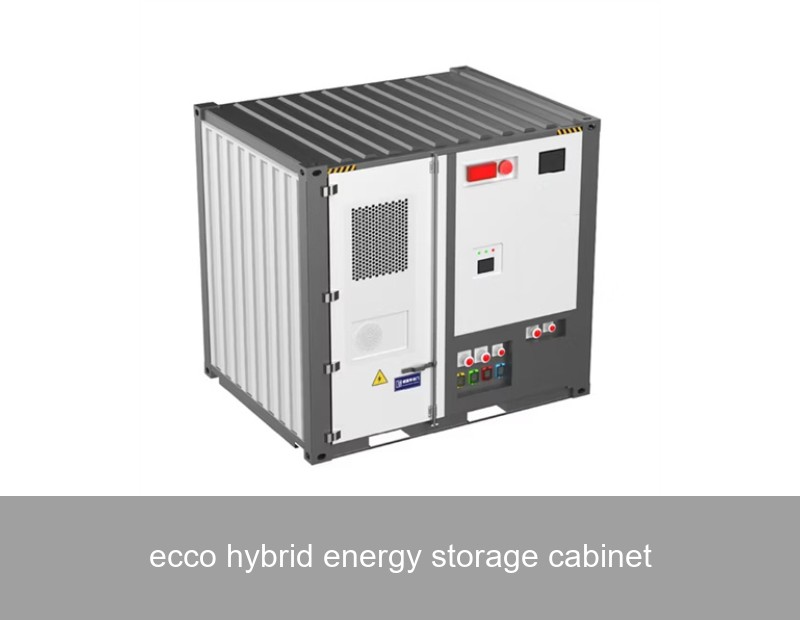
You've likely noticed the conversation around renewable energy shifting. It's no longer just about generating clean power from the sun or wind; the real buzz is about how to store and manage that power effectively. The challenge is clear: solar panels don't produce at night, and the grid can be unstable. This is where the concept of a hybrid energy storage system becomes critical, and specifically, innovations like the ECCO Hybrid Energy Storage Cabinet are redefining the landscape. This isn't just a battery in a box; it's an integrated, intelligent brain for your energy ecosystem.
Table of Contents
- What is an ECCO Hybrid Energy Storage Cabinet?
- The Grid Challenge: Why Hybrid Storage is No Longer Optional
- How It Works: The Intelligence Behind the Cabinet
- Real-World Impact: A German Manufacturing Case Study
- Highjoule's Solution: Engineering Resilience and Intelligence
- Your Energy Future: What's the Next Step?
What is an ECCO Hybrid Energy Storage Cabinet?
Let's break down the name. "ECCO" hints at ecological and economical. "Hybrid" is the key—it signifies the seamless integration of multiple technologies. Unlike a simple battery bank, an ECCO cabinet typically combines advanced lithium-ion battery modules with sophisticated power conversion systems (PCS) and intelligent energy management software (EMS) in one unified, cabinetized package.
Think of it as the central nervous system for your on-site power. It can draw from solar PV, the grid, and even backup generators, deciding in milliseconds the most efficient and cost-effective source to use or store. The "cabinet" design is crucial for safety, scalability, and ease of installation, making it a preferred solution for commercial and industrial applications.

Image: A modern, cabinet-based energy storage system in an industrial setting. (Source: Unsplash)
The Grid Challenge: Why Hybrid Storage is No Longer Optional
The energy landscape is undergoing a massive transformation. In Europe and the US, grids are aging while demand is rising. The influx of intermittent renewables, while positive, creates volatility. According to the International Energy Agency (IEA), the global capacity of grid-scale storage needs to expand dramatically to meet net-zero goals.
For a business owner or facility manager, this translates into three tangible problems:
- Sky-High Energy Costs: Time-of-use tariffs and demand charges can make up a significant portion of an electricity bill.
- Operational Risk: Power outages or frequency dips can halt production, leading to massive financial losses.
- Sustainability Goals: Companies are under pressure to reduce their carbon footprint and increase renewable consumption.
This is the phenomenon. The data shows a clear need for a buffer, a stabilizer. That's the precise role of a hybrid energy storage cabinet.
How It Works: The Intelligence Behind the Cabinet
The magic of a system like the ECCO cabinet lies in its layered intelligence. Here’s a simplified view of its operation:
| Component | Function | Benefit |
|---|---|---|
| Battery Modules | Store electrical energy (DC) | Provides the energy buffer, using high-cycle life Li-ion chemistry. |
| Power Conversion System (PCS) | Converts DC to AC and vice versa | Enables bidirectional flow, charging from AC sources and discharging to AC loads. |
| Energy Management System (EMS) | The "brain" with advanced algorithms | Analyzes consumption, weather, tariff rates, and grid signals to optimize dispatch. |
| Thermal Management & Safety | Integrated cooling and monitoring | Ensures safety, longevity, and consistent performance in all conditions. |
In practice, on a sunny day, the EMS might prioritize charging the cabinet with excess solar. In the evening peak, when grid prices spike, it discharges to power the facility, avoiding costly demand charges. During a grid fault, it can island critical loads, ensuring continuity.
Real-World Impact: A German Manufacturing Case Study
Let's move from theory to reality. A mid-sized automotive parts manufacturer in Bavaria, Germany, faced exactly these issues. Their objectives were to reduce energy costs, secure production against grid instability, and meet corporate CO2 targets.
They installed a 500 kWh / 750 kVA hybrid energy storage system, integrated with their existing 1 MW rooftop solar array. The results, monitored over 12 months, were compelling:
- Cost Savings: Achieved a 40% reduction in peak demand charges and optimized self-consumption of solar, leading to a 28% decrease in overall electricity costs.
- Reliability: The system provided seamless backup for critical assembly lines during two grid disturbances, preventing an estimated €180,000 in production downtime.
- Sustainability: Increased their on-site renewable consumption from 55% to over 85%, significantly cutting scope 2 emissions.
This case, documented in part by the Fraunhofer Institute for Solar Energy Systems, highlights the multi-faceted ROI of a well-integrated hybrid storage solution.

Image: An engineer monitoring a sophisticated energy management system. (Source: Unsplash)
Highjoule's Solution: Engineering Resilience and Intelligence
This is where Highjoule's nearly two decades of expertise comes into play. Since 2005, we've been at the forefront of designing systems that solve these complex energy challenges. Our approach to the hybrid energy storage cabinet is built on three pillars:
- Adaptive Intelligence: Our proprietary EMS platform, GridSynergy AI, doesn't just react—it learns. It forecasts energy generation and consumption patterns, making proactive decisions to maximize economic and operational value.
- Modular & Scalable Design: Our cabinet solutions, like the Highjoule H-Cube Series, are built with modularity at their core. You can start with a 100 kWh system and scale to multiple megawatt-hours as your needs grow, all within the same standardized, safe cabinet architecture.
- Full-Stack Integration: We don't just supply hardware. Highjoule provides end-to-end solutions—from initial consultancy and system design to installation, grid compliance support (like UL 9540 in the US and CE marking in Europe), and long-term performance monitoring.
For a commercial building in California navigating NEM 3.0, or a factory in the UK dealing with volatile market prices, the Highjoule system acts as a strategic asset. It turns passive energy consumption into active, intelligent energy management.
The Technical Edge: Safety and Longevity
Underpinning our solutions is an uncompromising focus on safety. Our cabinets feature multi-level protection (cell, module, rack, system), advanced liquid cooling for optimal temperature uniformity, and rigorous testing that exceeds industry standards. This ensures not just safety but also extends the system's operational life, protecting your investment.
Your Energy Future: What's the Next Step?
The transition to a resilient, cost-effective, and sustainable energy setup is not a distant future concept—it's a present-day imperative. The technology, as exemplified by advanced hybrid energy storage cabinets, is proven and readily available. The question is no longer "if" but "how" and "when."
What would a 30% reduction in your facility's energy costs do for your bottom line this year? How would guaranteed power for your critical operations change your risk profile?
We invite you to start a conversation. Share your biggest energy challenge with us, and let's explore what an intelligent, Highjoule-powered energy storage solution could look like for you.
 Inquiry
 Online Chat