


Decoding Lithium Battery ESS Price: A Guide to Smart Investment in Energy Storage
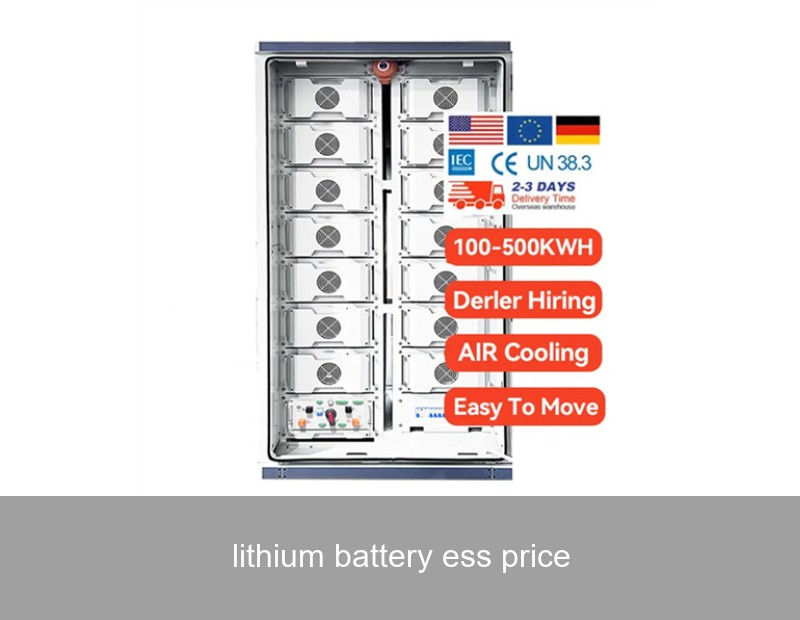
If you've recently requested quotes for a lithium battery Energy Storage System (ESS), you've likely experienced a moment of confusion. The figures presented can vary dramatically—sometimes by tens of thousands. This isn't necessarily a red flag for poor vendors; rather, it's a symptom of a complex, maturing market. Understanding what drives the lithium battery ESS price is the first step to making an informed decision that balances upfront cost with decades of reliable, sustainable power. Let's peel back the layers and look at what you're really paying for.

A Highjoule technician performing final checks on a commercial-scale lithium battery ESS installation. The quality of integration significantly impacts long-term system value.
The Price Puzzle: Why Your Lithium Battery ESS Quote Varies Wildly
You want to reduce energy bills, gain backup power, or support your sustainability goals. You search for "lithium battery ESS price" and get numbers ranging from $400 to over $1,200 per kilowatt-hour (kWh). This wide band exists because a storage system is far more than just a box of batteries. Think of it like asking for the "price of a house." Location, size, materials, and finishes all play a crucial role. Similarly, the final lithium battery ESS price encapsulates hardware, intelligence, safety, installation, and long-term service. A low upfront quote might be omitting critical components or using lower-grade cells, which could compromise performance and lifespan, effectively increasing your cost per cycle over time.
Beyond the Sticker: The 5 Core Factors Driving Lithium Battery ESS Price
1. Battery Cell Chemistry & Quality: The Heart of the Matter
Not all lithium-ion cells are created equal. The most common types in stationary storage are:
- Lithium Iron Phosphate (LFP): The dominant chemistry for home and commercial ESS today. It offers superior safety (thermal stability), a longer cycle life (often 6,000+ cycles), and is cobalt-free. While its energy density is slightly lower, its longevity and safety make it a cost-effective choice over the system's lifetime.
- Nickel Manganese Cobalt (NMC): Known for higher energy density, often used in EVs and some storage applications. It may have a lower upfront cost per kWh but typically has a shorter cycle life than LFP.
The quality and sourcing of these cells are paramount. Tier-1 manufacturers produce cells with extreme consistency, which allows the Battery Management System (BMS) to operate them optimally. Lower-grade cells degrade faster and can lead to premature system failure.
2. System Capacity & Power: Sizing Up the Cost
It's crucial to distinguish between energy (kWh) and power (kW). Your energy capacity (kWh) is your "fuel tank"—how much electricity you can store. Your power rating (kW) is the "size of the hose"—how fast you can charge or discharge it. A system designed to run your entire factory for 4 hours needs high capacity, while one aimed at shaving short-term peak demand needs high power. An undersized inverter (power component) on a large battery bank is a common compromise that caps your usable energy, affecting the true value of your lithium battery ESS price.
| Application | Typical Capacity | Key Price Drivers | Price per kWh Range (Installed)* |
|---|---|---|---|
| Residential | 5 - 20 kWh | Brand, aesthetics, grid-interface features | $800 - $1,200 |
| Commercial & Industrial | 50 - 500+ kWh | Scalability, advanced peak shaving software, commercial-grade inverters | $600 - $900 |
| Utility & Microgrid | 1 MWh+ | Containerization, grid services capability, extreme longevity requirements | $400 - $700 |
*Prices are indicative and vary by region, labor costs, and specific system design. Source: Compiled from industry reports including U.S. Department of Energy data.
3. The Intelligence Layer: BMS & Software
This is where leading providers like Highjoule separate themselves. The hardware stores energy, but the software unlocks its value. A sophisticated BMS monitors every cell for voltage, temperature, and health, ensuring safety and maximizing lifespan. Beyond that, intelligent energy management software (like Highjoule's HarmoniOS) allows the system to:
- Automatically shift solar consumption to maximize self-use.
- Discharge during expensive peak utility rate periods (demand charge management).
- Participate in grid-balancing programs (where available).
This software turns a capital expense into a revenue-generating or cost-avoidance asset, fundamentally changing the return on investment calculation and justifying a potentially higher initial lithium battery ESS price.
4. Installation, Permitting & "Balance of System"
The "balance of system" (BoS)—wiring, conduits, safety disconnects, mounting, and the inverter—can account for 30-50% of total costs. Professional installation and navigating local permitting (especially stringent in North America and Europe) add significant labor. A quote that seems too good to be true may be for hardware only, leaving you with substantial hidden costs.
5. Brand, Warranty & Long-Term Value
A 10-year or 10,000-cycle warranty on a system with 70% retained capacity is now industry standard for quality providers. This warranty is a promise of performance and is backed by the manufacturer's financial stability. Investing in a reputable brand like Highjoule means investing in decades of reliable operation, comprehensive support, and peace of mind. The cheapest system often carries the highest long-term risk.
A Real-World Case: The German Bakery's Energy Recipe
Let's ground this in data. A mid-sized bakery in Bavaria, Germany, faced high electricity costs, particularly during its pre-dawn operational peak. Their goals: reduce demand charges and ensure backup for cold storage.
- Challenge: Early morning peak load of 85kW, high German industrial electricity rates.
- Solution: A tailored Highjoule C&I ESS with 120 kWh LFP capacity and a 100kW inverter.
- Outcome: The system was programmed for aggressive peak shaving. It resulted in a 22% reduction in their monthly electricity bill from demand charge savings alone. Furthermore, the system provides seamless backup power for refrigeration, protecting inventory. The projected payback period is under 7 years, on a system with a 15-year design life.
This case shows that the true metric is not the lowest lithium battery ESS price, but the lowest levelized cost of stored energy over the system's life, factoring in savings and reliability.

Commercial and industrial sites, like bakeries, use intelligent ESS to cut peak demand charges, a significant portion of their energy bill.
Highjoule's Approach: Delivering Predictable Value, Not Just a Product
Since 2005, Highjoule has moved beyond simply supplying hardware. We provide integrated, intelligent power solutions. For our residential clients, the Highjoule HomePower series offers scalable, sleek LFP systems with AI-driven energy optimization that learns household patterns. For our commercial and industrial partners, the Highjoule GridMax platform is a modular, containerized solution built for rigorous duty cycles and sophisticated revenue stacking. Our microgrid solutions combine generation, storage, and advanced control for true energy independence. In every case, we focus on total cost of ownership. Our transparent quoting includes design, certified installation, commissioning, and a robust warranty—ensuring the lithium battery ESS price you see is the value you get, for decades.
The Future Cost Trajectory: What Experts Predict
BloombergNEF's annual battery price survey indicates that lithium-ion battery pack prices have fallen nearly 90% since 2010. While raw material volatility may cause short-term fluctuations, the long-term trend for lithium battery ESS price is downward, driven by manufacturing scale, technology improvements, and supply chain maturation. However, most future savings will likely come from software intelligence, installation efficiency, and standardized BoS—areas where expert integrators excel.
Finding Your True Cost-Per-Cycle: The Essential Question
So, how do you cut through the complexity? Shift your focus from just the upfront capital expense. Ask yourself and potential suppliers: "What is my projected cost per kilowatt-hour over the life of this system?" This calculation considers the total installed price, expected cycle life, degradation, and operational savings. A slightly higher initial investment in a superior, intelligently managed system like Highjoule's often yields a far lower lifetime cost.
Ready to move beyond a simple price quote and discover the true value an energy storage system can bring to your home or business? What specific energy challenge—be it unpredictable bills, grid instability, or sustainability targets—could a tailored ESS solution solve for you?
 Inquiry
 Online Chat