


Choosing Among the Top 4 Battery Suppliers for Your Energy Storage Project
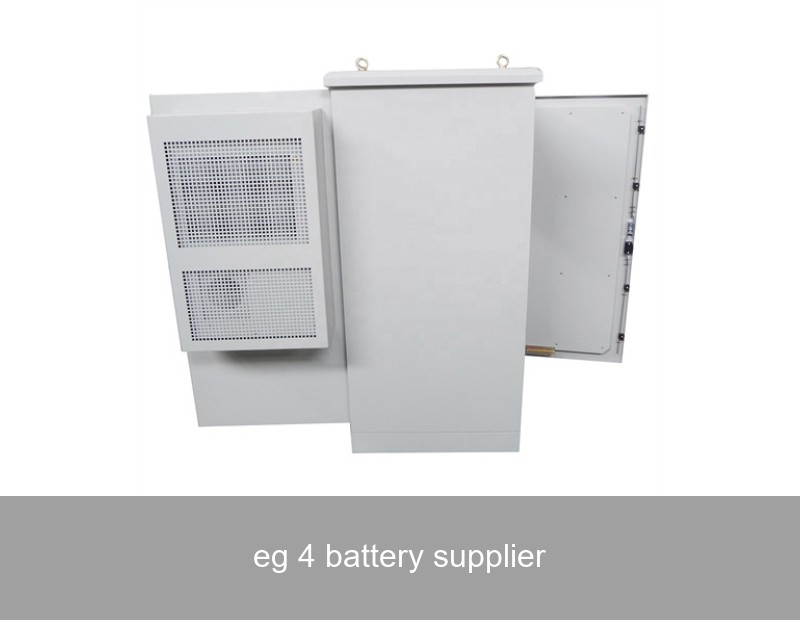
If you're a project developer, business owner, or energy manager looking to integrate a battery energy storage system (BESS), you've likely faced a common dilemma: the market is flooded with options. How do you sift through the noise and identify a truly reliable partner among the top battery suppliers? It's not just about the cells in a rack; it's about long-term performance, safety, and intelligent integration. This article will guide you through the critical considerations and introduce you to the key players, including the value a seasoned system integrator like Highjoule brings to the table.
Table of Contents
- The Phenomenon: Beyond the Battery Cell Hype
- The Data: What Separates Leaders from the Pack
- The Case Study: A Real-World Application in California
- The Insight: The Integrator's Advantage
- Evaluating the Landscape: Key Supplier Archetypes
- Where Highjoule Fits In: Your System Orchestrator
The Phenomenon: Beyond the Battery Cell Hype
Walk into any major energy conference, and you'll see glossy booths from battery suppliers showcasing their latest lithium-ion chemistry with impressive cycle life and energy density specs. The focus is overwhelmingly on the cell—the fundamental building block. However, for an end-user, the cell is just the beginning. The real challenge lies in what happens when you string thousands of those cells together: thermal management, DC/AC conversion, system-level controls, grid communication, and long-term degradation management. Choosing a supplier often mistakenly becomes a comparison of datasheet numbers, while the more critical factors of system integration and software intelligence are overlooked.
The Data: What Separates Leaders from the Pack
Let's talk numbers. According to a 2023 report by the National Renewable Energy Laboratory (NREL), the levelized cost of storage (LCOS) has fallen dramatically, but variability between projects remains high. This variability isn't primarily due to cell cost differences; it's attributed to balance-of-system costs, software efficacy, and operational lifespan. The data suggests that a supplier providing a holistic, integrated system can reduce LCOS by up to 25% compared to a piecemeal approach using commoditized cells. Key performance indicators (KPIs) you should scrutinize extend beyond the cell:
| KPI | Typical Range | Why It Matters |
|---|---|---|
| Round-Trip Efficiency (System Level) | 88% - 95% | Directly impacts your ROI; every percentage point lost is revenue gone. |
| Response Time to Grid Signals | <100ms to 1s | Critical for frequency regulation services and grid stability. |
| Degradation Rate (Year 1, then annual) | 3-5%, then ~1.5-2% | Predicts your asset's usable life and warranty alignment. |
| Thermal Management Power Draw | 1-3% of system rating | A parasitic load that affects net efficiency, especially in extreme climates. |
The Case Study: A Real-World Application in California
Consider a mid-sized winery in Napa Valley, California. Their challenges were peak demand charges that spiked during irrigation and processing seasons, and an unreliable grid prone to public safety power shutoffs (PSPS). They evaluated several quotes from different battery supplier channels: a pure cell manufacturer, a containerized solution vendor, and a full-system integrator. Their choice was driven by the need for resilience and participation in the CAISO (California Independent System Operator) market.
The project deployed a 2 MWh / 1 MW system. The key wasn't just the LFP (Lithium Iron Phosphate) cells, but the integrated energy management system (EMS) that performed three functions simultaneously: peak shaving, backup power during outages, and automated bidding into CAISO's frequency regulation market. In the first year of operation, the system reduced the winery's demand charges by 68% and generated over $85,000 in grid service revenue. During a 36-hour PSPS event, it kept critical cooling and fermentation control systems online, preventing an estimated $250,000 in product loss. This holistic outcome was possible because the supplier provided not just storage, but intelligent, grid-interactive storage.

The Insight: The Integrator's Advantage
The winery's story highlights the core insight: the most valuable battery supplier is often not the one with the cheapest cell, but the one with the most sophisticated brain for the system. Think of it this way: you can buy the world's best engine (the cell), but if the transmission, chassis, and onboard computer (the power conversion system, thermal management, and EMS) aren't perfectly matched and optimized, you won't win the race. An integrator's deep expertise in software, grid codes, and safety standards transforms a passive battery bank into an active, revenue-generating grid asset.
Evaluating the Landscape: Key Supplier Archetypes
When shortlisting your top 4 battery supplier candidates, you'll generally encounter four archetypes:
- Cell Manufacturers: Giants like CATL, LG Energy Solution, or Samsung SDI. They excel at electrochemical innovation and scale. Your advantage: potentially cutting-edge cell tech. Your challenge: you must integrate everything else yourself.
- Module & Pack Integrators: They assemble cells into standardized modules or racks. This simplifies procurement but still leaves system design and grid integration in your hands.
- Full-System OEMs: Companies that deliver containerized or skid-mounted "plug-and-play" solutions. They provide a complete, warrantied system. This is a popular choice for many turnkey projects.
- Advanced Technology Integrators (Like Highjoule): This group goes a step further. They don't just package components; they design the system from the software down, often developing proprietary EMS and optimization algorithms. They focus on maximizing the economic outcome for your specific use case and location.
Where Highjoule Fits In: Your System Orchestrator
This is where Highjoule's nearly two decades of experience comes into sharp focus. Since 2005, we've evolved from a components provider to a global leader in intelligent storage solutions. We understand that our role as a battery supplier is to be your performance guarantor. For our commercial and industrial clients across Europe and North America, we provide the Highjoule H-Series platform.
The H-Series is more than hardware; it's an ecosystem. At its core is our AegisAI™ energy management platform, which uses predictive analytics and real-time market data to optimize every kilowatt-hour for maximum economic return—whether through arbitrage, demand charge management, or grid services. We partner with leading cell manufacturers, but our value is layered on top: in our robust power conversion systems, our liquid-cooled thermal architecture that ensures longevity, and our seamless compliance with grid codes like UL 9540 in the US and CE marking in Europe.
For a microgrid project in Southern Germany, for instance, we didn't just supply batteries. We integrated solar PV, wind, and a legacy CHP (combined heat and power) unit with a 4 MWh H-Series system. Our AegisAI™ platform dynamically balances generation, storage, and load, prioritizing self-consumption and providing primary frequency response to the German grid. This level of orchestration is what transforms a capital expenditure into a strategic, profitable asset.

Making the Final Decision: Questions to Ask Any Shortlisted Supplier
As you narrow down your list of potential battery supplier partners, move beyond datasheets and ask these operational and financial questions:
- Can you provide a detailed performance model showing projected revenue streams and savings for my specific site and utility rate structure?
- How does your EMS handle multi-use cases concurrently without voiding warranties?
- What is your process for remote diagnostics, firmware updates, and proactive maintenance?
- Can you share a reference project with similar use cases and show actual vs. projected performance data?
Your Next Step in Energy Independence
The journey to selecting the right energy storage partner is complex, but the destination—a resilient, cost-effective, and sustainable energy footprint—is clear. The landscape of battery supplier options is vast, but the distinction between a component vendor and a true solutions partner is profound. As you evaluate your top contenders, ask yourself: are they simply selling you a container of batteries, or are they committed to ensuring the financial and operational success of your project for the next 15+ years?
What specific energy challenge—be it soaring demand charges, grid instability, or renewable integration—is most critical for your operation to solve in the next 12 months, and how would a truly intelligent storage system address it?
 Inquiry
 Online Chat