


Understanding the Modern Electric Power Supply System: From Grid Reliance to Energy Independence
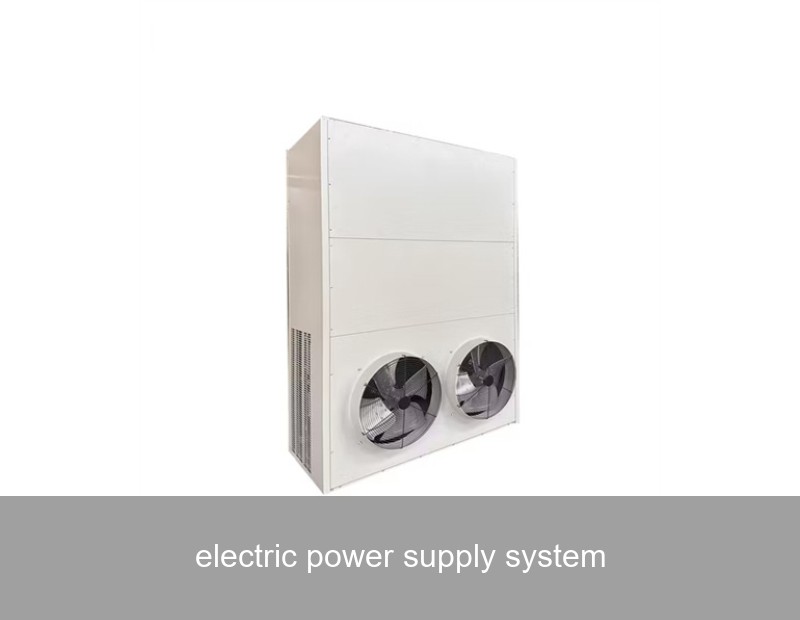
When you flip a light switch or charge your phone, you're engaging with one of the most complex engineering marvels of the modern world: the electric power supply system. For over a century, this system has been defined by large, centralized power plants sending electricity over vast networks of transmission lines. But a profound transformation is underway. The rise of renewables, the push for resilience, and advancements in energy storage are reshaping what a power system can be. This evolution moves us from a one-way flow of electricity to an intelligent, decentralized, and sustainable network. At Highjoule, we're at the heart of this shift, providing the advanced battery energy storage systems (BESS) that make a modern, reliable, and clean electric power supply system a reality for businesses, industries, and communities.
Table of Contents
- The Strain on the Traditional Grid: A System Under Pressure
- What the Data Reveals: The Need for Flexibility and Speed
- Case Study: How a German Industrial Park Reinvented Its Power Supply
- The Key Component: Energy Storage as the Grid's "Shock Absorber"
- Highjoule's Role: Building Intelligent, Adaptive Power Systems
- The Future Horizon: Your Path to Energy Resilience
The Strain on the Traditional Grid: A System Under Pressure
Think of the traditional grid like a highway system built for the traffic of the 1950s. It was designed for predictable, steady flows from a few large sources (like coal or nuclear plants) to many consumers. Today, that highway is experiencing rush hour all day long, with new, unpredictable entry and exit ramps popping up everywhere. These "ramps" are solar panels on homes, wind farms in rural areas, and electric vehicle chargers in every parking lot. This creates two fundamental challenges:
- Intermittency: The sun doesn't always shine, and the wind doesn't always blow. This variability can cause instability in the grid's frequency and voltage, potentially leading to brownouts or blackouts.
- Bidirectional Flow: The grid was built for one-way traffic. Now, with solar homes feeding excess power back, the flow can reverse, straining local transformers and infrastructure not designed for it.
This strain isn't just theoretical. It translates to higher costs for grid upgrades, increased risk of outages, and a slower transition to renewable energy. The question becomes: how do we manage this complexity and build a more resilient electric power supply system?
What the Data Reveals: The Need for Flexibility and Speed
The numbers paint a clear picture of the changing energy landscape and the critical need for new solutions. According to the International Energy Agency (IEA), renewable electricity capacity is set to expand by over 60% between 2020 and 2026, with solar PV alone accounting for nearly 60% of that growth. In the U.S., the Energy Information Administration (EIA) notes that battery storage capacity has been growing at an exponential rate, a direct response to the need for grid balancing.
| Challenge | Traditional Grid Limitation | Modern Solution Requirement |
|---|---|---|
| Frequency Regulation | Slow-ramping gas plants (minutes) | Sub-second response from storage |
| Peak Demand ("Duck Curve") | Expensive, polluting "peaker" plants | Discharge stored solar/wind energy |
| Outage Protection | Passive reliance on grid | Islanding capability with local storage |
The data underscores a simple truth: the physics of electricity demand solutions that are fast, flexible, and intelligent. This is where the next generation of the electric power supply system comes into focus, built around intelligent energy storage.
Case Study: How a German Industrial Park Reinvented Its Power Supply
Let's look at a real-world example from Bavaria, Germany. A medium-sized industrial park, housing several manufacturing and food processing facilities, faced three major issues: volatile and high energy costs, an unreliable local grid causing production stoppages, and corporate sustainability targets they were struggling to meet.
Their solution was to create a localized, intelligent electric power supply system. They installed a 2.5 MW solar carport system and paired it with a 4.8 MWh Highjoule CubeStack battery storage system. The Highjoule system's integrated energy management system (EMS) acts as the brain of the operation.

Image: A modern industrial solar and storage installation. (Photo by American Public Power Association on Unsplash)
Here’s how it works in practice:
- Energy Cost Optimization: The EMS charges the batteries with cheap solar energy during the day and inexpensive grid power at night. It then discharges during peak price hours (4-8 PM), reducing the park's energy bills by over 35%.
- Enhanced Resilience: When the public grid experiences a fault, the Highjoule system automatically disconnects and powers critical loads within milliseconds—a process called "islanding." This has eliminated costly production downtime for the tenants.
- Sustainability Gains: The park now generates and consumes over 60% of its electricity locally from solar, drastically cutting its carbon footprint and meeting its ESG goals.
This case demonstrates that a modern, decentralized electric power supply system isn't a futuristic concept; it's a practical, profitable solution deployed today.
The Key Component: Energy Storage as the Grid's "Shock Absorber"
At the core of this transformation is the battery energy storage system. Think of it as the shock absorber and buffer for the entire electric power supply system. It doesn't generate power, but it intelligently manages it, solving the critical mismatch between when energy is produced (by solar/wind) and when it's needed.
A modern BESS like those from Highjoule does much more than just store electrons. It provides essential grid services:
- Frequency Response: It can inject or absorb power in fractions of a second to keep the grid's frequency stable, something traditional power plants physically cannot do fast enough.
- Voltage Support: It helps maintain proper voltage levels on local lines, improving power quality for all connected users.
- Capacity Deferral: By shaving peak demand, it allows utilities to delay expensive upgrades to substations and power lines.
The technology inside matters. Highjoule systems utilize lithium iron phosphate (LFP) battery chemistry, renowned for its safety, long cycle life (exceeding 6,000 cycles), and stability. Coupled with our proprietary thermal management and cell-level monitoring, this ensures the system delivers reliable performance for over 15 years.
Highjoule's Role: Building Intelligent, Adaptive Power Systems
Since 2005, Highjoule has evolved from a storage hardware provider to a full-solution architect for the modern electric power supply system. We understand that every application—from a large utility-scale project to a commercial microgrid—has unique needs. Our portfolio is designed to meet this spectrum:
- CubeStack Commercial & Industrial (C&I) Series: Our flagship modular system. Pre-integrated, containerized, and scalable from 500 kWh to multi-MWh projects. It's the ideal "out-of-the-box" solution for factories, data centers, and renewable integration, just like in our Bavarian case study.
- GridMax Utility-Scale Platform: Engineered for large-scale renewable farms and grid ancillary services. It features advanced grid-forming inverter technology that can actually help stabilize the grid, a crucial capability as we move towards inverter-dominated networks.
- HomeGuard Residential Systems: Providing energy security and bill savings for homeowners, seamlessly integrating with rooftop solar to create a self-sufficient household power supply.
Our secret sauce is the Highjoule Neuron™ Energy Management Platform. This AI-driven software doesn't just control the battery; it optimizes the entire site's energy ecosystem, forecasting energy production and consumption, analyzing market prices, and automatically choosing the most economical and resilient operating strategy every single day.

Image: Advanced energy management software is key to optimizing power systems. (Photo by Science in HD on Unsplash)
The Future Horizon: Your Path to Energy Resilience
The transition is clear. The future electric power supply system will be a hybrid: a robust central grid complemented by thousands of intelligent, decentralized nodes—factories, neighborhoods, even individual homes—that can operate collaboratively or independently. This isn't just about technology; it's about energy democracy, resilience, and sustainability.
So, as you look at your own energy costs, reliability concerns, and sustainability mandates, consider this: What would a fault in the central grid cost your business tomorrow? How much of your operational budget is dictated by volatile energy markets? Is your current power supply system an asset or a vulnerability?
We invite you to explore what your own modern electric power supply system could look like. What is the first step your organization could take towards greater energy intelligence and independence?
 Inquiry
 Online Chat