


Electricity Generation from Solar Energy: Powering a Sustainable Future, Day and Night
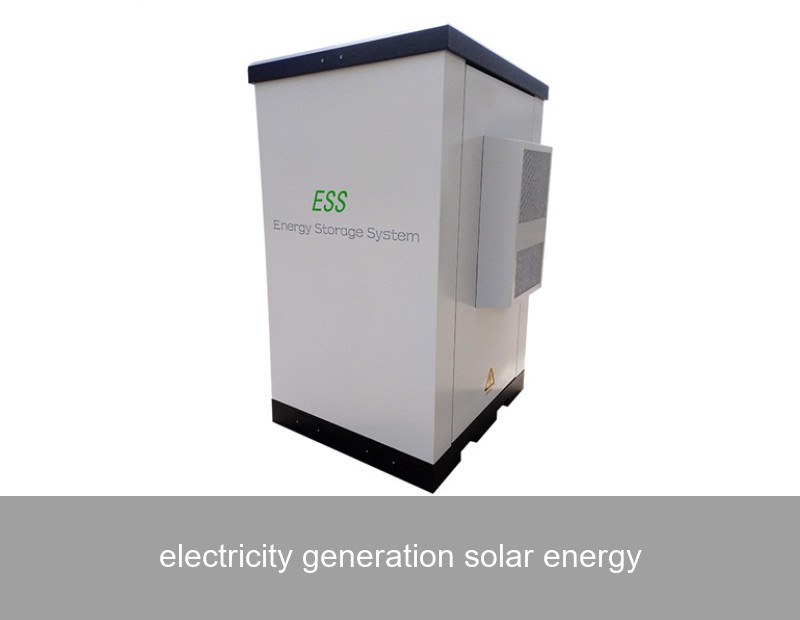
Have you ever watched the sun set on a clear evening and wondered, "What if we could keep using all that clean energy it provided today?" You're not alone. The rapid growth of electricity generation from solar energy is one of the most hopeful stories of our time. Yet, it presents a fascinating challenge: the sun, our ultimate power plant, doesn't shine on demand. This is where innovation steps in, transforming solar from an intermittent source into a reliable, 24/7 pillar of our energy grid. Let's explore how this is happening and what it means for homes, businesses, and our planet.
Table of Contents
- The Phenomenon: Abundant Sun, Intermittent Power
- The Data: Solar's Meteoric Rise and the "Duck Curve"
- Case Study: A German Industrial Plant's Solar Transformation
- The Solution: Intelligent Storage - The Heart of Modern Solar
- Highjoule's Role: Advanced Systems for Real-World Demands
- The Future of Solar Generation: Beyond the Panel
The Phenomenon: Abundant Sun, Intermittent Power
The core principle of electricity generation from solar energy is elegantly simple. Photovoltaic (PV) panels convert sunlight directly into direct current (DC) electricity, which is then inverted to alternating current (AC) for our use. It's a clean, silent, and increasingly cost-effective process. However, this generation profile creates a mismatch with our energy consumption, which often peaks in the early morning and evening—precisely when solar output is low or nonexistent. This isn't just a technical hiccup; it's the central puzzle that the renewable energy sector is solving to ensure grid stability and maximize the value of every sunbeam.

Image Source: Unsplash - Illustrating the intermittency of solar generation.
The Data: Solar's Meteoric Rise and the "Duck Curve"
The numbers are staggering. According to the International Energy Agency (IEA), renewable capacity additions jumped nearly 50% in 2023, with solar PV accounting for three-quarters of this growth. In markets like California and parts of Europe, there are already days where solar meets nearly all daytime electricity demand. But this success has a visible shape: the infamous "duck curve." This graph, first named by the California Independent System Operator, shows a deep midday dip in net demand (when solar floods the grid) followed by a steep evening ramp-up (as the sun sets and people return home). This steep ramp challenges traditional power plants and underscores the critical need for solutions that can store midday surplus and release it during the evening peak.
Case Study: A German Industrial Plant's Solar Transformation
Let's look at a real-world example from Bavaria, Germany. A mid-sized automotive parts manufacturer committed to decarbonizing its operations. They installed a 2.1 MW rooftop solar array, which covered ~40% of their annual electricity need. However, without storage, they were exporting excess power at low midday prices and buying expensive grid power in the early morning and late afternoon.
Their solution was to integrate a bespoke battery energy storage system (BESS). Here are the results after one year of operation:
| Metric | Before BESS | After BESS |
|---|---|---|
| Solar Self-Consumption | 35% | 92% |
| Grid Energy Cost Reduction | -- | 68% |
| Backup Power for Critical Lines | None | 4 hours at full load |
| CO₂ Footprint Reduction | ~210 tons/year | ~580 tons/year |
This case illustrates the transformative leap from simple electricity generation from solar energy to intelligent, stored solar power. The BESS turned their solar asset from a partial solution into the core of a resilient, cost-saving energy strategy.
The Solution: Intelligent Storage - The Heart of Modern Solar
This is where the story evolves. The true potential of solar is unlocked not just by the panels, but by the brain and battery behind them. A modern solar-plus-storage system does three key things:
- Time-Shifts Energy: It stores cheap, abundant midday solar for use during expensive peak periods.
- Stabilizes the Grid: Advanced inverters can provide grid services like frequency regulation, helping to balance supply and demand in real-time.
- Ensures Resilience: It keeps the lights on during grid outages, a feature increasingly valuable for both homes and businesses.
The technology at the core—Lithium Iron Phosphate (LFP) batteries—has become the industry standard for its safety, long cycle life, and stability. But the hardware is only part of the equation. The real magic lies in the software: the energy management system (EMS) that intelligently decides when to charge, when to discharge, and how to optimize for cost, carbon savings, or resilience.
Highjoule's Role: Advanced Systems for Real-World Demands
At Highjoule, with nearly two decades of experience since 2005, we've moved beyond seeing storage as just a battery in a box. We design integrated solar energy storage systems that are purpose-built for the complexities of commercial, industrial, and residential applications. Our approach focuses on delivering not just components, but a guaranteed outcome: reliable, sustainable, and economical power.
For instance, our H-Series Commercial ESS is engineered for the harsh demands of industrial settings. It features:
- Containerized or modular designs for easy scaling.
- Our proprietary ApexOS™ energy management platform, which uses AI-driven forecasting to maximize ROI by predicting energy prices and solar generation.
- Active safety systems that go beyond standard certifications, including gas and thermal runaway detection.
For residential and small business applications, our Nexus Home Energy Hub seamlessly integrates with existing or new solar arrays. It gives homeowners complete control, allowing them to prioritize self-consumption, participate in virtual power plant (VPP) programs where available, or ensure essential circuits remain powered during outages. We believe that robust electricity generation from solar energy must be paired with equally intelligent storage to deliver on its promise.

Image Source: Unsplash - Representing advanced energy storage system control.
The Future of Solar Generation: Beyond the Panel
So, what's next for electricity generation from solar energy? The future is about deeper integration and smarter ecosystems. We're looking at:
- Vehicle-to-Grid (V2G): Your electric car battery acting as a mobile storage unit for your home and the grid.
- AI-Optimized Microgrids: Communities or campuses generating, storing, and sharing their own solar power independently, with AI balancing the complex flows. Highjoule's microgrid solutions are already enabling this for remote communities and critical infrastructure.
- Second-Life Batteries: Repurposing EV batteries for stationary storage, creating a circular economy. Research into this is ongoing, as noted by institutions like the National Renewable Energy Laboratory (NREL).
The journey of a photon from the sun to powering your evening is becoming longer, smarter, and far more useful. It's no longer just about generation; it's about total energy management.
Given that the economics and technology for solar and storage are now more compelling than ever, what is the first step your business or household could take to move from being a passive consumer to an active manager of your clean energy future?
 Inquiry
 Online Chat