


Beyond the Generator: The Modern Emergency Power Supply System for a Resilient Future
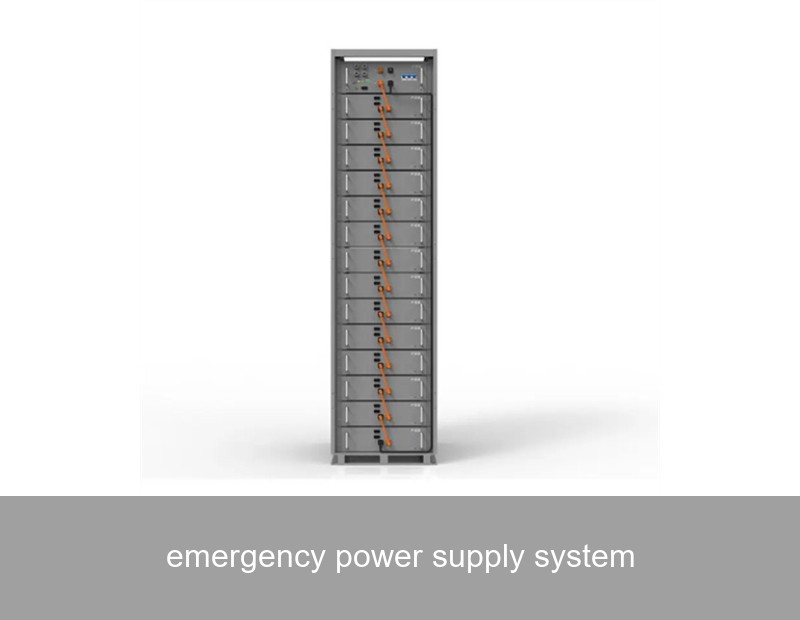
a severe storm knocks out the grid in your region. For homes, it's an inconvenience. For businesses, hospitals, and critical infrastructure, it's a crisis. The traditional rumble of diesel generators has long been the default sound of backup power. But today, the conversation around emergency power supply system technology is shifting dramatically. It's no longer just about having any backup; it's about having a smart, clean, and reliable one that activates in milliseconds, not minutes. This article explores why modern battery-based systems are becoming the cornerstone of true energy resilience.
Table of Contents
- The Phenomenon: Grid Instability is the New Normal
- The Data: The Staggering Cost of Downtime
- The Case Study: A European Hospital's Silent Guardian
- The Insight: Key Components of a Modern Emergency Power System
- Highjoule's Integrated Solution: Intelligence Meets Resilience
- The Future: Your Next Step Towards Uninterrupted Power
The Phenomenon: Grid Instability is the New Normal
Across Europe and the United States, grid operators are facing a perfect storm. Aging infrastructure is being strained by increasing electrification, extreme weather events are becoming more frequent and severe, and the transition to intermittent renewable sources, while essential, introduces new challenges for grid balancing. The result? A higher probability of outages, brownouts, and voltage fluctuations. For facility managers and business owners, this isn't a distant threat—it's a recurring operational risk. The old model of a loud, polluting generator that starts after the power fails is increasingly seen as inadequate for protecting sensitive digital infrastructure, continuous manufacturing processes, or life-saving medical equipment.

Image Source: Unsplash - Critical infrastructure like data centers require seamless emergency power. (Photo by Luke Chesser)
The Data: The Staggering Cost of Downtime
Let's talk numbers. The financial impact of a power interruption is no longer hypothetical. According to a report by the U.S. Department of Energy, power outages cost the U.S. economy an estimated $150 billion annually. For individual sectors, the numbers are even more striking:
| Industry | Estimated Cost per Hour of Downtime |
|---|---|
| Data Centers | $9,000+ |
| Telecommunications | $40,000+ |
| Hospitality | $2-5,000+ |
| Manufacturing (Automotive) | $1.3 Million+ |
Beyond direct financial loss, consider regulatory penalties, data corruption, product spoilage, and—most importantly—the risk to human safety in healthcare or public safety facilities. A reactive emergency power supply system is a liability. A proactive one is an investment in continuity. (Data sourced from U.S. Department of Energy reports and industry analyses [1]).
The Case Study: A European Hospital's Silent Guardian
Let's make this concrete. A 300-bed regional hospital in Southern Germany faced a critical challenge. Their existing diesel generators were reliable but took 8-12 seconds to engage, causing brief but unacceptable interruptions for their ICU and surgical suites. Furthermore, local environmental regulations were tightening on diesel emissions.
Their solution was a hybrid emergency power supply system. The core is a 500 kWh lithium-ion battery storage system, integrated with their existing generators and rooftop solar PV. Here's how it works now:
- Millisecond Response: When a grid fault is detected, the battery storage system takes over the critical loads instantly, with zero interruption.
- Generator as Backup to the Backup: The diesel generators now have time to start and synchronize smoothly. Once ready, they recharge the batteries and support longer outages.
- Daily Savings: During normal operation, the system performs peak shaving, reducing the hospital's demand charges from the grid, and stores excess solar energy for later use.
The result? 100% uptime for critical care units, a 30% reduction in generator runtime (and fuel costs/emissions), and significant savings on monthly electricity bills. The system paid for itself in under 4 years through operational savings alone, not counting the invaluable benefit to patient safety [2].
The Insight: Key Components of a Modern Emergency Power System
So, what defines a cutting-edge system? It's an integrated ecosystem, not just a single product.
- Advanced Battery Storage (BESS): The heart of the system. Modern lithium-ion (like LFP chemistry) batteries offer high power density, long cycle life, and rapid discharge. They are the "first responder" to an outage.
- Intelligent Power Conversion System (PCS): This is the brain. It manages AC/DC conversion, grid synchronization, and the seamless transfer between grid, battery, generator, and renewable sources.
- Energy Management System (EMS): The strategic commander. This software platform forecasts energy usage, optimizes when to charge/discharge based on tariffs or weather, and provides real-time monitoring and diagnostics.
- Integration with Renewables: Solar PV or wind can become a fuel source for your backup power, enhancing sustainability and independence during extended outages.
Highjoule's Integrated Solution: Intelligence Meets Resilience
At Highjoule, we've been at the forefront of this evolution since 2005. We understand that a robust emergency power supply system must be both incredibly reliable and economically intelligent. Our approach is not to sell a standalone battery, but to deliver a guaranteed outcome: uninterrupted power.
Our HPS Series (Hybrid Power System) is engineered specifically for commercial and industrial emergency backup. It combines our high-cycle life LFP battery racks with a bi-directional inverter that also manages generator start signals. What sets it apart is the Highjoule Neuron EMS.
Imagine an EMS that doesn't just react. It learns your facility's load patterns, integrates weather forecasts for your on-site solar, and knows your utility's time-of-use rates. During normal operation, it strategically discharges the battery to avoid peak demand charges—saving you money every day. The system is always primed and ready for an emergency, having paid for its own operational readiness. When the grid fails, the transition is seamless and silent.
For larger-scale needs like microgrids for campuses or industrial parks, our GridStack Utility-Scale BESS provides grid-forming capabilities, meaning it can create a stable "island" of power independently. Whether it's a data center, a manufacturing plant, or a water treatment facility, Highjoule designs the system around your specific critical load profile and resilience requirements.

Image Source: Unsplash - A technician monitoring a modern Battery Energy Storage System (BESS). (Photo by ThisisEngineering)
Why Choose Highjoule for Your Emergency Power Needs?
- Proven Track Record: Nearly two decades of global deployments in demanding environments.
- Full-System Design: We provide the complete solution—hardware, software, integration, and ongoing support.
- Financial Intelligence: Our systems are designed to generate ROI through daily energy arbitrage and demand charge management.
- Future-Proof: Our modular systems can be scaled as your needs grow, and our software receives regular updates for new grid service opportunities.
The Future: Your Next Step Towards Uninterrupted Power
The landscape of emergency power has fundamentally changed. The question is no longer "Do we need a backup?" but "What kind of intelligent, multi-functional system will protect our operations and our bottom line?" The technology exists today to turn your emergency power supply from a cost center into a strategic asset.
What would a 30% reduction in your monthly peak demand charges do for your operational budget? How would the certainty of millisecond-level protection change your risk management profile? We invite you to start a conversation with our technical team for a complimentary resilience assessment. What's the single most critical process in your operation that absolutely cannot afford to lose power, even for a second?
 Inquiry
 Online Chat