


Empresas de Energías Renovables en Argentina: Powering a Sustainable Future
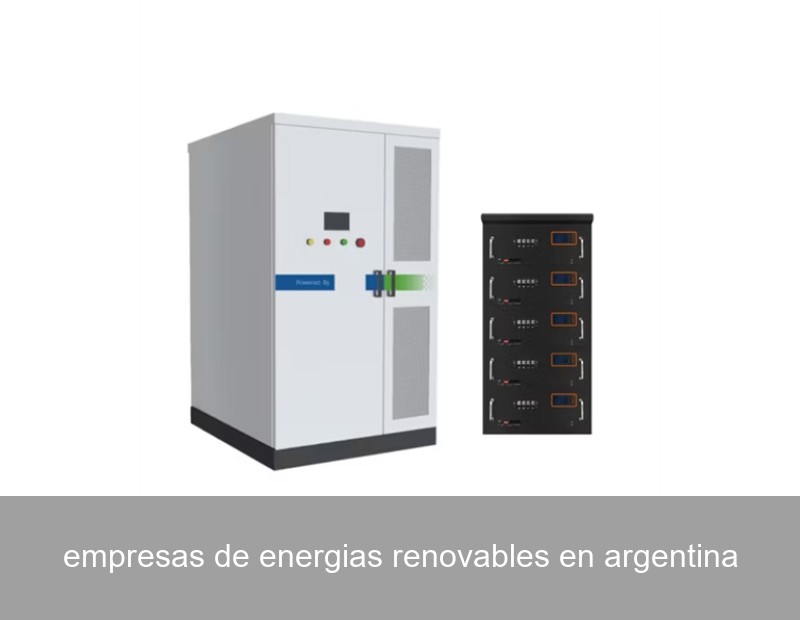
Have you noticed how the global conversation around energy has fundamentally shifted? It's no longer just about keeping the lights on; it's about how we power our world. In Argentina, a country blessed with abundant wind in Patagonia and intense sun in the Northwest, this shift is more than talk—it's a national mission. Empresas de energías renovables en Argentina (renewable energy companies in Argentina) are at the forefront of this transformation, turning natural potential into reliable, clean electricity. But as any energy expert will tell you, the sun doesn't always shine, and the wind doesn't always blow. This inherent intermittency is the single biggest challenge for renewable integration. The true key to unlocking a 24/7 clean energy future isn't just generation—it's intelligent storage. This is where advanced Battery Energy Storage Systems (BESS) become the indispensable partner for every solar and wind project, ensuring stability and maximizing return on investment.
Table of Contents
The Argentine Opportunity: More Than Just Potential
Argentina's renewable energy landscape is one of the most promising in Latin America. Driven by the RenovAr program and ambitious national targets, the country has seen a surge in investment. According to data from the Secretaría de Energía, renewable sources contributed over 13% of the national electricity demand in 2022, a significant leap from previous years. This growth is primarily fueled by wind and solar, with provinces like Chubut, Santa Cruz, and Jujuy becoming renewable hubs.
However, rapid growth brings technical challenges to the grid. The variability of these resources can lead to frequency instability and curtailment (where excess energy is wasted because it can't be used or stored). For empresas de energías renovables en Argentina, this translates into two critical business issues: revenue uncertainty and grid compliance risks. The solution lies in adding a layer of intelligence and flexibility to these clean energy assets.

Image Source: Unsplash - Representative image of wind energy potential akin to Argentine Patagonia.
The Data Behind the Challenge
Let's look at the numbers. A typical solar plant in Northwest Argentina might have a capacity factor around 25-30%, meaning it produces at full capacity only a quarter of the time. Evening demand peaks often coincide with plummeting solar production. This creates a supply gap that is often filled by fast-ramping fossil fuel plants, undermining the environmental and economic goals of the renewable project. Storage acts as a time-machine for electrons, capturing midday surplus and dispatching it during peak evening hours, effectively increasing the plant's usable capacity factor and value.
The Storage Imperative: Beyond Generation
Think of the electricity grid as a sophisticated, real-time balancing act. Generation must always match consumption. Renewable energy, while clean, is a "non-dispatchable" source—we can't command the sun to shine brighter at 8 PM. Battery Energy Storage Systems (BESS) solve this by becoming a dispatchable resource. They provide critical grid services that are essential for higher penetration of renewables:
- Frequency Regulation: Instantaneously injecting or absorbing power to keep the grid's frequency stable.
- Ramp Rate Control: Smoothing out sudden increases or decreases in power output from solar or wind farms.
- Energy Time-Shift (Arbitrage): Storing cheap energy during low-demand/high-generation periods and selling it during high-price periods.
- Capacity Firming: Guaranteeing a reliable, consistent power output from a variable renewable source, making it behave more like a traditional power plant.
For developers and operators of renewable projects in Argentina, integrating BESS is no longer a luxury; it's a strategic move for project bankability, revenue optimization, and long-term grid compatibility.
Case Study: Juwi's Hybrid Power Plant in Jujuy
A concrete example from the market illustrates this perfectly. International developer juwi, in partnership with the local government of Jujuy, commissioned the Cauchari Solar Park. While the initial phases are massive PV installations, the vision and the trend are clear towards hybridization. The next logical step for such mega-projects is to co-locate storage.
Let's consider a hypothetical but data-driven scenario based on real grid needs: A 100MW solar farm in Jujuy pairs with a 60MWh BESS. The system is configured for energy time-shifting and firming.
| Metric | Without BESS | With Highjoule BESS |
|---|---|---|
| Effective Dispatchable Capacity (at 8 PM) | ~5-10 MW | ~40-50 MW (firmed) |
| Potential Curtailment Loss (Annual) | Up to 8-12% of generation | Near 0% |
| Additional Revenue Streams | Primarily energy sales only | Energy + Frequency Regulation + Capacity Payments |
This model, which is being actively explored and deployed in similar markets globally, showcases how empresas de energías renovables en Argentina can evolve into integrated clean power utilities. The storage component transforms a variable resource into a reliable, grid-friendly one. You can explore more on Argentina's ambitious projects via reports from the International Energy Agency (IEA).
Highjoule's Role: Intelligent Storage for Argentine Projects
This is where Highjoule's nearly two decades of expertise come into play. As a global leader in advanced BESS solutions since 2005, we understand that successful storage integration is not just about supplying batteries. It's about delivering a complete, intelligent system tailored to the specific economic and grid conditions of a market like Argentina.
For Argentine renewable companies, Highjoule offers:
- High-Energy Density & Utility-Scale Systems: Our containerized BESS solutions, like the HJ MegaStore, are engineered for the harsh environments found in the Puna region or Patagonia, offering superior cycle life and thermal management.
- Advanced Energy Management System (EMS): The true brain of the operation. Our AI-driven EMS can optimize dispatch strategies in real-time, maximizing revenue by participating in multiple value streams—whether it's energy arbitrage in the wholesale market (WEM) or providing ancillary services to CAMMESA.
- End-to-End Project Support: From initial feasibility and financial modeling to grid compliance studies, engineering, procurement, construction (EPC), and long-term performance monitoring, we partner with developers for the entire project lifecycle.
Imagine your solar or wind farm not just as a generator, but as a smart, agile power plant. Highjoule's technology makes that possible, ensuring that the clean energy you produce is delivered reliably and profitably.

Image Source: Unsplash - Representative image of a technician maintaining a modern BESS unit.
Technology Tailored for the Market
Our systems are designed with the specific needs of growing markets in mind. We focus on safety (with multi-layer protection systems), reduced operational costs, and scalability. A project can start with a modest storage capacity and scale up as market rules evolve and revenue opportunities solidify, protecting our clients' initial investment.
The Future Outlook for Renewables in Argentina
The trajectory for empresas de energías renovables en Argentina is set toward diversification and sophistication. The next phase of growth will involve:
- Green Hydrogen Production: Using excess renewable energy for electrolysis, particularly in windy southern regions.
- Microgrids for Industrial & Remote Communities: Providing energy security and reducing reliance on diesel gensets, with BESS as the core stabilizing component.
- Corporate PPAs with Firming: More multinational companies seeking 24/7 clean power, a demand that can only be met with solar/wind + storage packages.
These avenues all depend on the ability to manage, store, and intelligently dispatch electrical energy. The renewable pioneers of tomorrow will be those who master the storage equation today. For further reading on global storage trends driving renewable adoption, credible resources like Energy-Storage.news provide ongoing analysis.
A Question for Forward-Thinking Developers
As you plan your next 50MW solar park or evaluate the repowering of a wind farm, ask yourself this: Is my project designed for the grid of yesterday, or is it equipped with the intelligence and flexibility to thrive in the dynamic, renewable-heavy grid of tomorrow? What specific grid constraint in your project's region could be turned into a revenue opportunity with the right storage strategy?
 Inquiry
 Online Chat