


Batería para Planta Solar: The Key to Unlocking 24/7 Renewable Energy
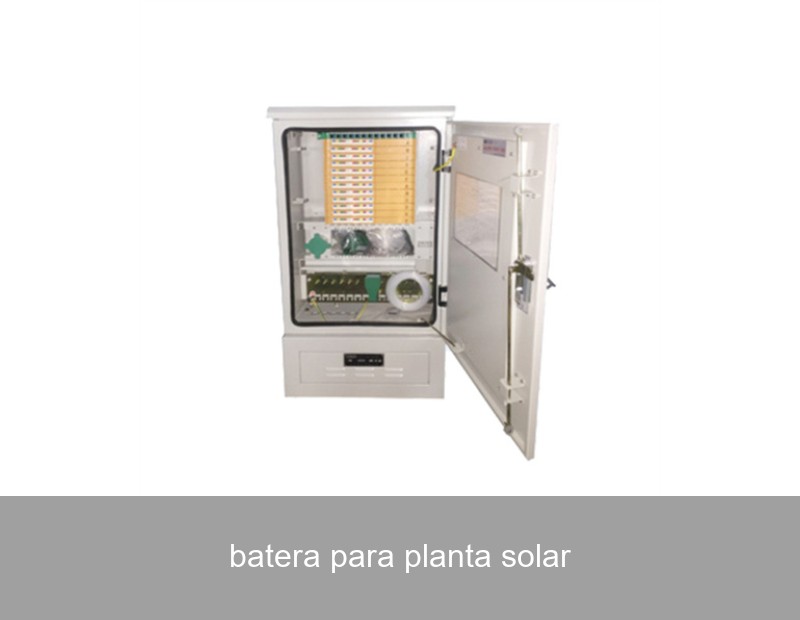
Imagine a solar power plant at peak noon, generating immense clean energy. Now, imagine that same plant after sunset, completely silent. This has been the fundamental challenge of solar energy: its intermittency. The sun doesn't shine on demand. This is where the batería para planta solar (battery for solar power plant) transitions from an optional component to the central nervous system of a modern, reliable renewable energy facility. It's the indispensable technology that stores the sun's abundance for use during cloudy periods or at night, transforming solar from a part-time contributor to a firm, dispatchable power source. For grid operators, businesses, and communities, integrating a robust battery energy storage system (BESS) is no longer just about sustainability—it's about energy resilience, economic optimization, and grid stability.
Table of Contents
- The Intermittency Challenge: More Than Just Nighttime
- How Solar Plant Batteries Work: Beyond Simple Storage
- Key Benefits of Integrating a Batería para Planta Solar
- Real-World Case Study: Grid Stability in Texas
- Choosing the Right System: Technology and Partner
- Highjoule's Tailored Solutions for Solar Plants
- The Future Outlook
The Intermittency Challenge: More Than Just Nighttime
The phenomenon is clear: solar generation follows a predictable yet uncontrollable curve. The "duck curve," a term popularized by the California Independent System Operator (CAISO), perfectly illustrates the problem. As solar production soars during midday, net grid demand plummets. Then, as the sun sets and people return home, demand spikes rapidly while solar generation vanishes. This creates a steep ramp that traditional power plants must scramble to meet, often relying on less efficient and more polluting peaker plants.
This volatility isn't just an operational headache; it has real financial and reliability consequences. In markets like California, Texas (ERCOT), and across Europe, periods of excess solar can even lead to negative electricity prices, where producers pay to offload power. Conversely, during evening peaks, electricity prices can skyrocket. Without a batería para planta solar, a plant is at the mercy of these market swings, unable to capture value when it's most advantageous.

Credit: Unsplash / American Public Power Association. Solar farms generate immense power, but storage is key to managing its delivery.
How Solar Plant Batteries Work: Beyond Simple Storage
Think of a battery system for a solar plant not just as a giant power bank, but as a sophisticated energy asset manager. Its core functions are:
- Energy Time-Shift (Arbitrage): Stores cheap solar energy produced at noon and discharges it during high-price evening peaks.
- Frequency Regulation: Provides minute-to-minute adjustments to maintain the grid's stable frequency (60 Hz in the US, 50 Hz in Europe), a critical service often monetized.
- Ramp Rate Control: Smooths out the sharp increases and decreases in solar output, making it easier for the grid to integrate.
- Black Start Capability: Some advanced systems can help restart the grid after a total blackout.
The technology of choice for large-scale applications is overwhelmingly lithium-ion, specifically Lithium Iron Phosphate (LFP). LFP chemistry offers a superior balance of safety, longevity (typically 6,000+ cycles), and cost-effectiveness for stationary storage, making it the ideal batería para planta solar technology. According to the U.S. Energy Information Administration (EIA), large-scale battery storage capacity is set to grow exponentially, a testament to its critical role[1].
Key Benefits of Integrating a Batería para Planta Solar
Integrating storage transforms the value proposition of a solar plant. Let's break down the tangible benefits:
| Benefit Category | Description | Impact |
|---|---|---|
| Economic Optimization | Enables energy arbitrage and participation in ancillary service markets (frequency regulation, capacity). | Significantly increases project revenue and ROI, protects against price volatility. |
| Grid Stability & Reliability | Provides fast-responding power to balance supply and demand, smoothing solar output. | Enables higher penetration of renewables, reduces reliance on fossil-fuel peaker plants. |
| Energy Resilience | Can island critical loads or provide backup power during grid outages (especially for microgrids). | Ensures continuous power for industrial processes, communities, or essential services. |
| Future-Proofing | Adapts to evolving grid codes and market structures that increasingly reward flexibility. | Extends the economic life and relevance of the solar asset for decades. |
Real-World Case Study: Grid Stability in Texas
Let's look at a concrete example from the ERCOT market in Texas, USA. The region has seen massive solar growth, but its isolated grid is prone to volatility. In 2023, a 100 MW solar farm coupled with a 60 MWh batería para planta solar played a pivotal role during a late-summer heatwave.
The Phenomenon: Grid demand hit a record high as air conditioners ran non-stop. Simultaneously, cloud cover caused a sudden, sharp drop in solar generation across the region—a double challenge.
The Data & Action: The co-located battery system, operating on sub-second response times, detected the solar drop and grid frequency dip. It immediately discharged its stored energy at full capacity (100 MW) for 35 minutes, bridging the gap until other resources could be dispatched. This prevented potential emergency alerts and stabilized local voltage.
The Insight: This case, documented in grid operator reports, shows that a batería para planta solar isn't just for shifting energy over hours. Its rapid response is a crucial insurance policy against sudden generation losses, making the entire grid more resilient. The project earned substantial revenue both from energy arbitrage that day and from its frequency response capabilities, showcasing the multi-revenue stream model[2].
Choosing the Right System: Technology and Partner
Selecting the right batería para planta solar involves more than comparing $/kWh. Key considerations include:
- DC-Coupled vs. AC-Coupled: DC-coupled systems connect the battery directly to the solar array's DC current, often yielding higher round-trip efficiency. AC-coupled systems connect to the AC side, offering more flexibility for retrofits and independent operation.
- Energy Management System (EMS): The brain of the operation. A sophisticated EMS is what allows the system to perform multiple value-stacking applications (e.g., arbitrage + frequency regulation) simultaneously, maximizing ROI.
- Safety & Compliance: Look for systems with proven, safe LFP chemistry, robust thermal management, and certifications like UL 9540 (US) or equivalent IEC standards (Europe).
- Partner Expertise: The provider should offer end-to-end service—design, integration, commissioning, and long-term performance monitoring and support.
Highjoule's Tailored Solutions for Solar Plants
At Highjoule, with nearly two decades of experience since 2005, we engineer storage solutions that make solar plants smarter and more profitable. Our H-Series Utility BESS is specifically designed as a batería para planta solar for large-scale applications.
What sets our solution apart is the Highjoule Apex™ Energy Management Platform. This AI-driven software doesn't just store and release energy; it continuously analyzes market prices, weather forecasts, and grid signals to autonomously optimize dispatch for the highest possible revenue. Whether your plant is in the deregulated markets of Texas, participating in frequency response in the UK, or providing capacity in Germany, Apex™ ensures your asset performs at its peak financial potential.
We provide a full turnkey service, from initial feasibility and system design using our LFP battery racks, through to grid integration and 24/7 remote monitoring. Our systems are built with scalability in mind, allowing you to easily expand storage capacity as your needs evolve.

Credit: Unsplash / ThisisEngineering. Advanced control systems are crucial for managing complex battery storage assets.
The Future Outlook
The trajectory is unmistakable. As grid codes evolve and markets increasingly penalize intermittency while rewarding flexibility, a solar plant without storage will become economically disadvantaged. Innovations in battery chemistry, like sodium-ion, and falling costs will only accelerate this trend. The future solar power plant is a hybrid, flexible power station, with the batería para planta solar at its core enabling it to provide firm, clean power on demand.
The question for asset owners and developers is no longer "Should we add storage?" but "How do we design and integrate the right storage solution to future-proof our investment and maximize its value today?" What specific grid challenge or market opportunity in your region is driving you to evaluate a battery system for your solar project?
 Inquiry
 Online Chat